 flip
flipJawarish with Almonds, Dates and Sweet Spices
Jawarish with Almonds, Dates and Sweet Spices
Why this dish? Al-Kindi was not only a philosopher: he also wrote on medicine and pharmacology, and he authored an Aqrabadhin (formulary of remedies) in which he even attempted to measure the potency of drugs. This spiced paste to chew after the meal, jawarish, belongs precisely to this art of healing through flavors that fascinated him.
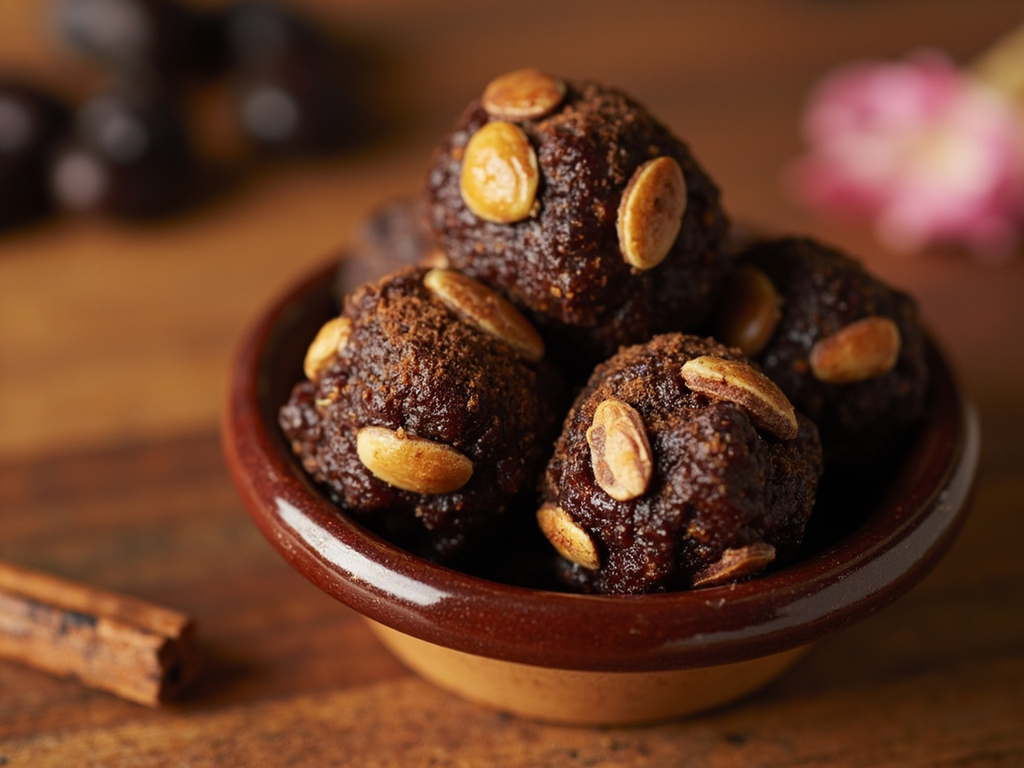
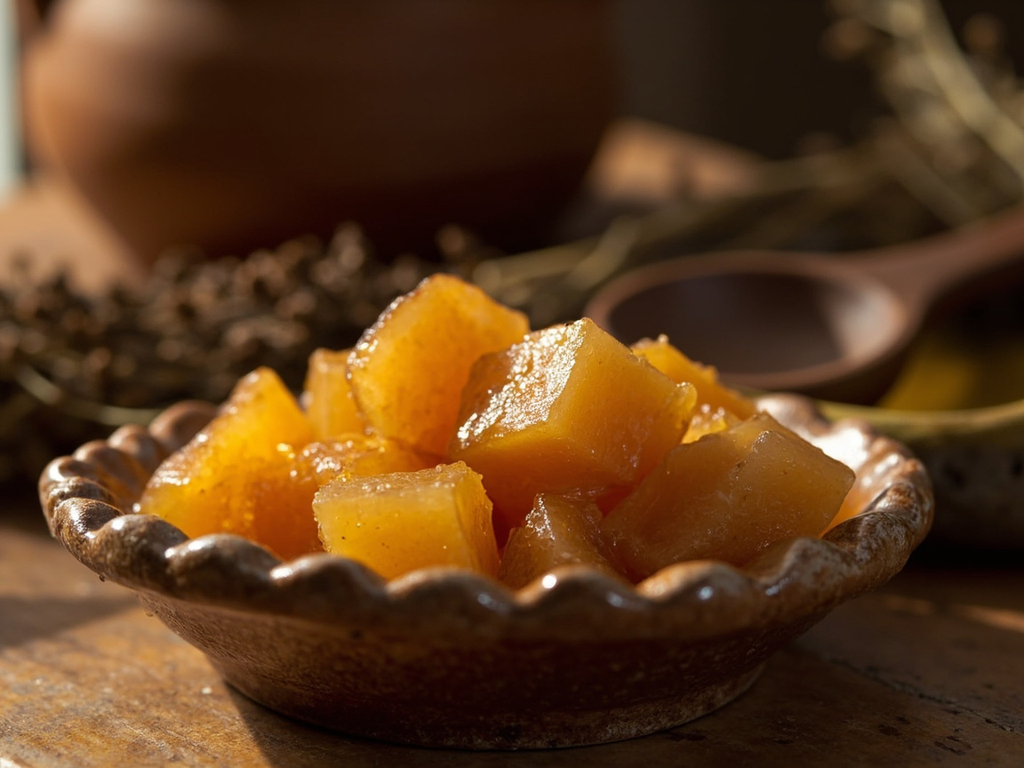
A thick, sweet paste, chewed in small amounts after the meal, made from dates and honey bound with ground almonds and perfumed with warm spices (ginger, cinnamon, clove). It was believed to aid digestion and warm the stomach.
Listen to the physician as much as the philosopher, for both seek measure. After a somewhat heavy meal, I take a walnut-sized piece of this spiced paste, jawarish, which the apothecaries compose with art. I devoted a book to weighing the strength of remedies, to know how much of a hot drug is needed to correct a cold humor — for everything is a matter of degree and proportion. Chew a little: ginger and cinnamon warm the stomach, honey sweetens, and the date binds it all. Thus the body, well regulated, leaves the mind free to think.
- •Dates — a good handful (pasty sweet base)
- •Honey — a little (binder and sweetness)
- •Ground almonds — a handful (texture)
- •Dried ginger, cinnamon, clove — in measured doses ('hot' spices)
- •Rose water — a dash (perfume)
Jawarish with Almonds, Dates and Sweet Spices
A thick, sweet paste, chewed in small amounts after the meal, made from dates and honey bound with ground almonds and perfumed with warm spices (ginger, cinnamon, clove). It was believed to aid digestion and warm the stomach.
Why this dish? Al-Kindi was not only a philosopher: he also wrote on medicine and pharmacology, and he authored an Aqrabadhin (formulary of remedies) in which he even attempted to measure the potency of drugs. This spiced paste to chew after the meal, jawarish, belongs precisely to this art of healing through flavors that fascinated him.
Listen to the physician as much as the philosopher, for both seek measure. After a somewhat heavy meal, I take a walnut-sized piece of this spiced paste, jawarish, which the apothecaries compose with art. I devoted a book to weighing the strength of remedies, to know how much of a hot drug is needed to correct a cold humor — for everything is a matter of degree and proportion. Chew a little: ginger and cinnamon warm the stomach, honey sweetens, and the date binds it all. Thus the body, well regulated, leaves the mind free to think.
Ingredients (period version)
- Dates — a good handful (pasty sweet base)
- Honey — a little (binder and sweetness)
- Ground almonds — a handful (texture)
- Dried ginger, cinnamon, clove — in measured doses ('hot' spices)
- Rose water — a dash (perfume)
Ingredients
- Pitted dates — 150 g (pasty sweet base)
- Honey — 1 tbsp (binder and sweetness)
- Ground almonds — 60 g (texture)
- Ground ginger — 1/2 tsp ('hot' spice)
- Cinnamon — 1/2 tsp (spice)
- Ground clove — 1 pinch (spice)
- Rose water — 1 tsp (perfume)
Method
- Blend or pound the dates into a thick paste.
- Mix in the honey, rose water and ground almonds.
- Add ginger, cinnamon and clove, and work into a homogeneous paste.
- Roll into small balls or flatten and cut into diamonds.
- Let firm up for an hour; store in an airtight container and enjoy in very small amounts after the meal.
How it was made : Jawarish (from Persian gowaresh = 'digestion') were electuaries — sweet medicinal pastes — described in medieval formularies such as Al-Kindi's Aqrabadhin and later those of al-Razi. At the border between remedy and confection, they illustrate a medicine that willingly treated through cooking and spices.
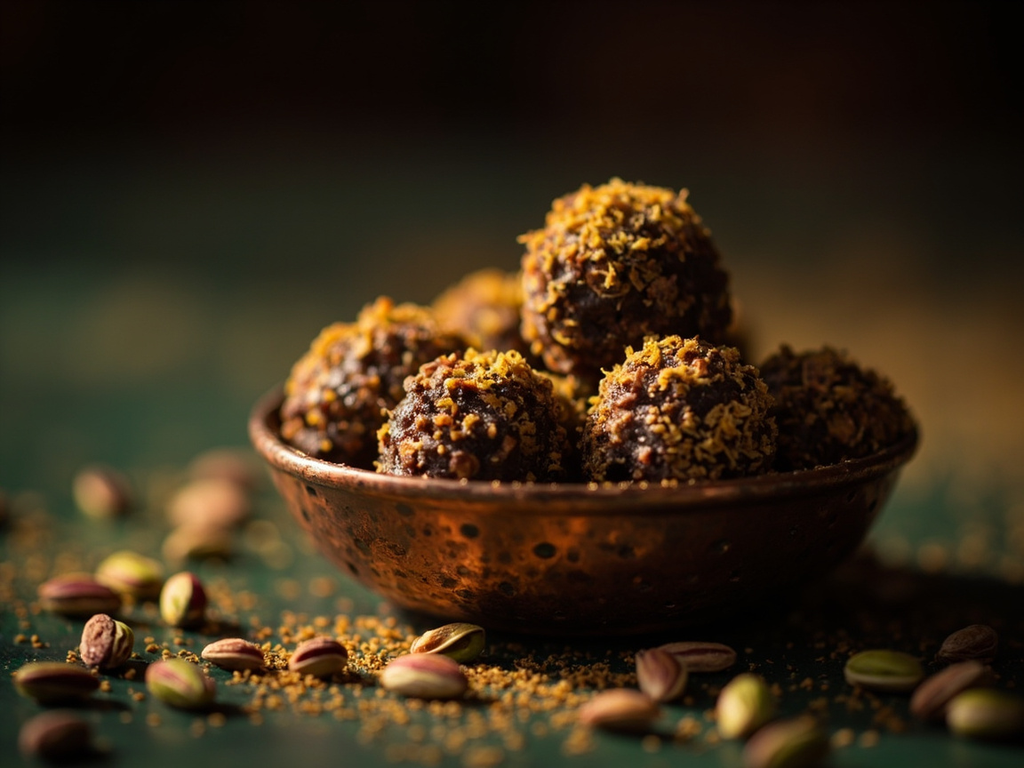
The contemporary twist : Coat the balls in crushed pistachios and present them as 'apothecary's truffles' in a small copper cup.
Sources : Al-Kindi, Aqrabadhin (pharmacological formulary, 9th c.) ; Martin Levey, The Medical Formulary or Aqrābādhīn of al-Kindī, University of Wisconsin Press, 1966
Al-Kindi · Charactorium