 flip
flipChristmas pudding
Christmas pudding
Why this dish? A devout Catholic and mother of seven, Anscombe lived the year marked by the liturgical calendar. The Christmas pudding, prepared weeks in advance, flambéed and carried to the table in a large household, embodies this English Christian Christmas she held central — and whose richness contrasted with the frugality of the rest of the year.
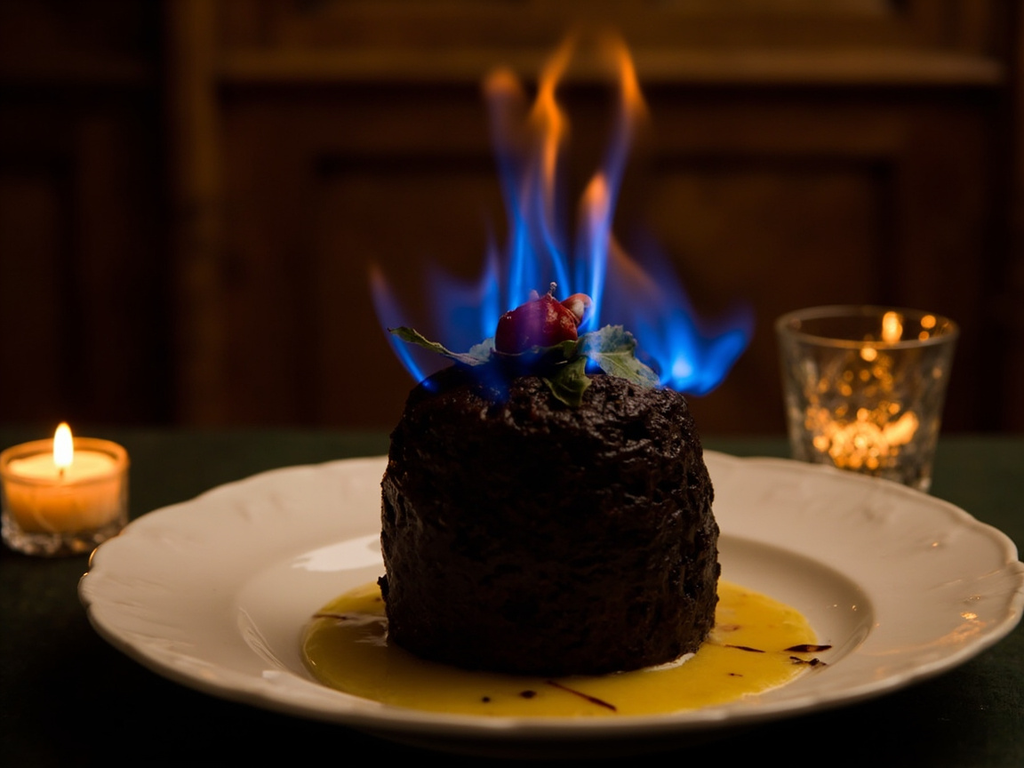
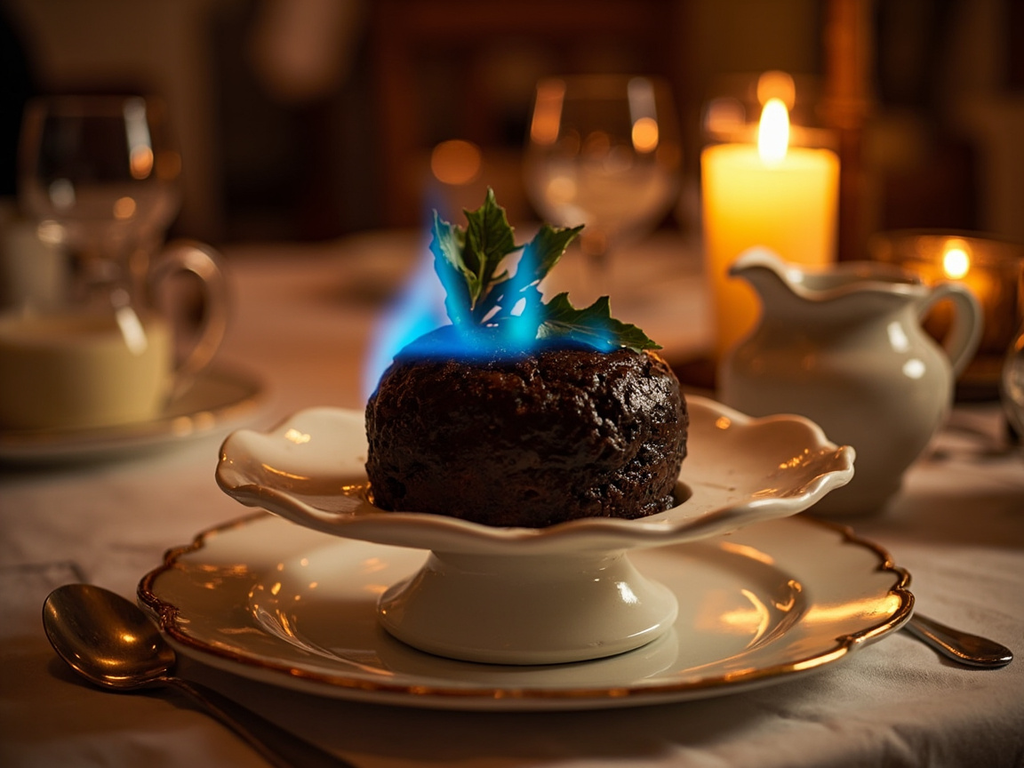
A dark, dense dome of dried fruit, spices and suet, long steamed, matured, then flambéed with cognac and served with cream or brandy butter. The sweet, fragrant crowning glory of the Christmas meal.
Here is a dish that requires foresight, a virtue all too rare. We make it weeks before the feast, each of the children stirring the spoon and making a wish — an innocent custom I see no reason to abolish. Suet, yes, real kidney fat: it gives the pudding its body and generosity, and one would be wrong to substitute some modern ersatz. We flame it with cognac, bring it in in the dark, and even philosophical disputes pause for a moment before the blue flame.
- •Raisins and currants — a large bowlful (fruity body)
- •Candied citrus peel — a handful (flavour)
- •Shredded beef suet — a good piece (fat and structure)
- •Breadcrumbs and flour — in parts (structure)
- •Brown sugar — generous (sweetness and colour)
- •Spices (nutmeg, cinnamon, ginger, clove) — to taste (aromatic signature)
- •Eggs and stout (dark beer) — to bind (moisture)
- •Cognac or rum — a glass (maturing and flambéing)
Christmas pudding
A dark, dense dome of dried fruit, spices and suet, long steamed, matured, then flambéed with cognac and served with cream or brandy butter. The sweet, fragrant crowning glory of the Christmas meal.
Why this dish? A devout Catholic and mother of seven, Anscombe lived the year marked by the liturgical calendar. The Christmas pudding, prepared weeks in advance, flambéed and carried to the table in a large household, embodies this English Christian Christmas she held central — and whose richness contrasted with the frugality of the rest of the year.
Here is a dish that requires foresight, a virtue all too rare. We make it weeks before the feast, each of the children stirring the spoon and making a wish — an innocent custom I see no reason to abolish. Suet, yes, real kidney fat: it gives the pudding its body and generosity, and one would be wrong to substitute some modern ersatz. We flame it with cognac, bring it in in the dark, and even philosophical disputes pause for a moment before the blue flame.
Ingredients (period version)
- Raisins and currants — a large bowlful (fruity body)
- Candied citrus peel — a handful (flavour)
- Shredded beef suet — a good piece (fat and structure)
- Breadcrumbs and flour — in parts (structure)
- Brown sugar — generous (sweetness and colour)
- Spices (nutmeg, cinnamon, ginger, clove) — to taste (aromatic signature)
- Eggs and stout (dark beer) — to bind (moisture)
- Cognac or rum — a glass (maturing and flambéing)
Ingredients
- Raisins, sultanas, currants — 500 g total (fruity body)
- Candied orange and lemon peel — 100 g (flavour)
- Beef suet (or vegetable suet) — 120 g (fat and structure)
- Fresh breadcrumbs — 120 g (structure)
- Flour — 60 g (structure)
- Soft brown sugar — 120 g (sweetness and colour)
- Mixed nutmeg, cinnamon, ginger, clove — 2 tsp (aromatic signature)
- Eggs — 2 (binder)
- Stout (dark beer) — 150 ml (moisture)
- Cognac — 6 cl + extra for flambéing (maturing and flambéing)
Method
- Mix all fruits, suet, breadcrumbs, flour, brown sugar and spices in a large bowl.
- Beat the eggs with the stout and cognac, stir into the mixture until a moist, sticky dough forms.
- Pour into a buttered pudding basin, cover with pleated greaseproof paper then a tied cloth.
- Steam (covered bain-marie) for 5 to 6 hours, adding boiling water as needed.
- Cool completely, then store in a cool place for several weeks, 'feeding' it with a little cognac each week.
- On the day, steam for a further 2 hours. Unmould, heat a little cognac, flame over the pudding and serve immediately with custard or brandy butter.
How it was made : Heir to the 17th-century 'plum puddings', the Victorian Christmas pudding was prepared on 'Stir-up Sunday', the last Sunday before Advent: the family stirred the mixture from east to west, in memory of the Magi. A silver coin was once hidden as a lucky charm. The long steaming and suet allow it to keep for weeks.
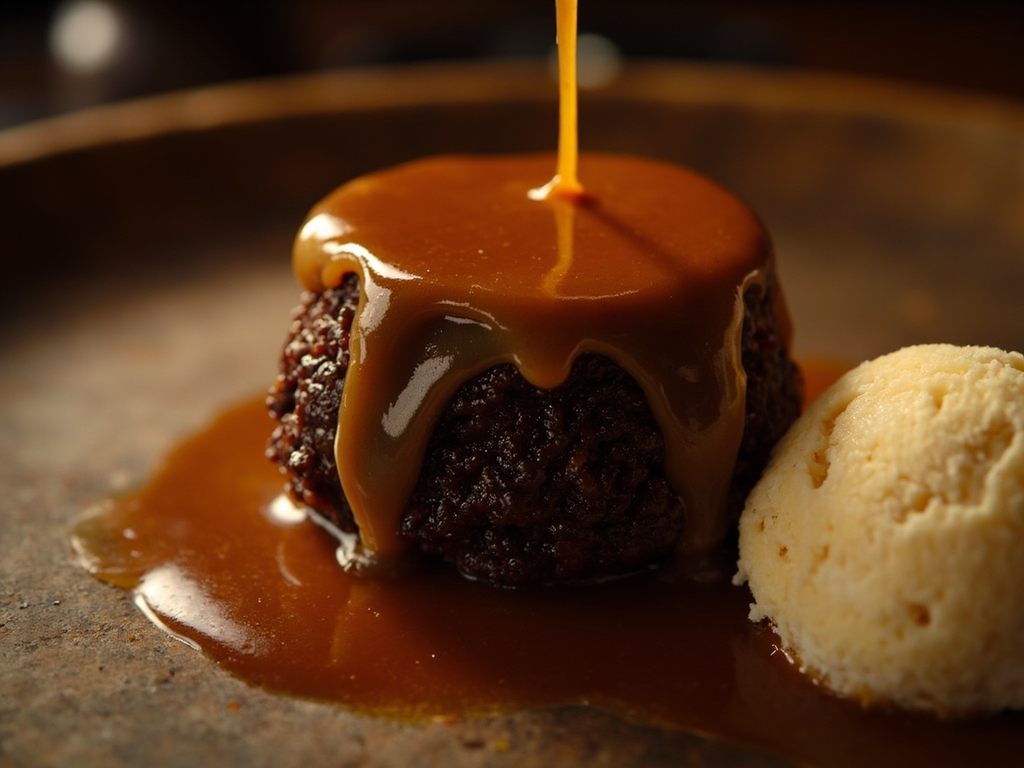
The contemporary twist : Serve a warm slice with a quenelle of vanilla ice cream and a dusting of grated orange zest; replace beef suet with vegetable suet for a version everyone can share.
Sources : Mrs Beeton, Book of Household Management (1861) · Jane Grigson, English Food (1974)
Elizabeth Anscombe · Charactorium