 flip
flipSteamed Christmas Plum Pudding
Steamed Christmas Plum Pudding
Why this dish? The plum pudding was the unchanging crown of the English Christmas meal that Hardy knew all his life, at Cranleigh as a child, and later at the colleges of Cambridge and Oxford. Dark, dense, flamed with cognac and brought in with great ceremony: the British celebration reduced to a single dish.
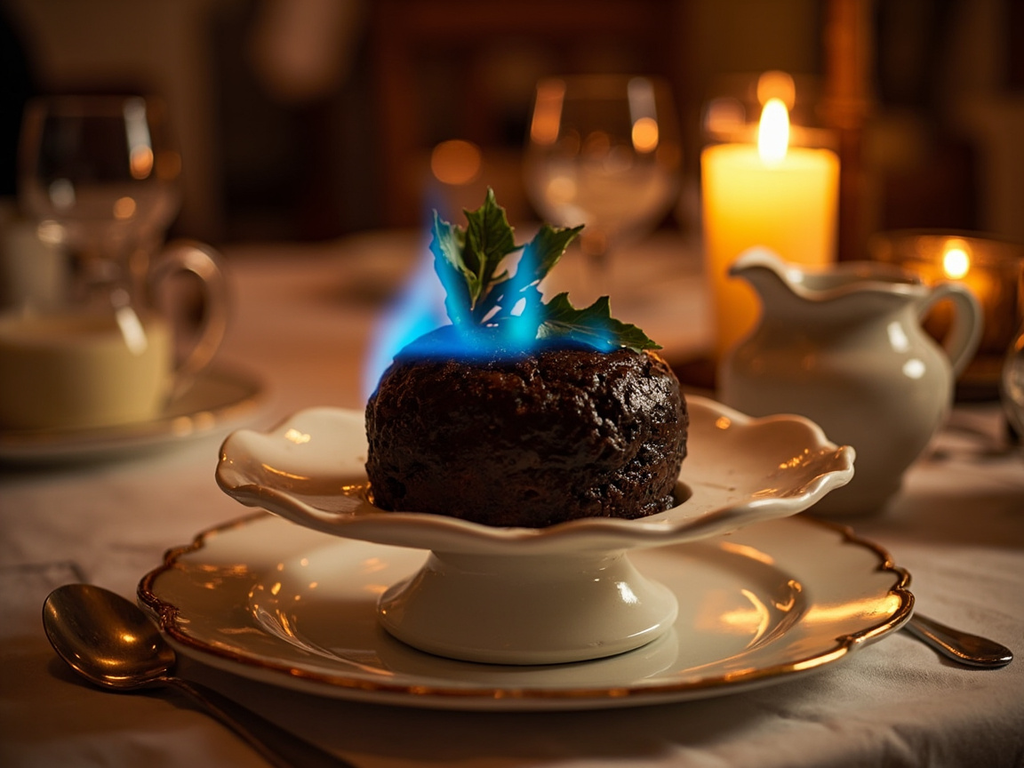
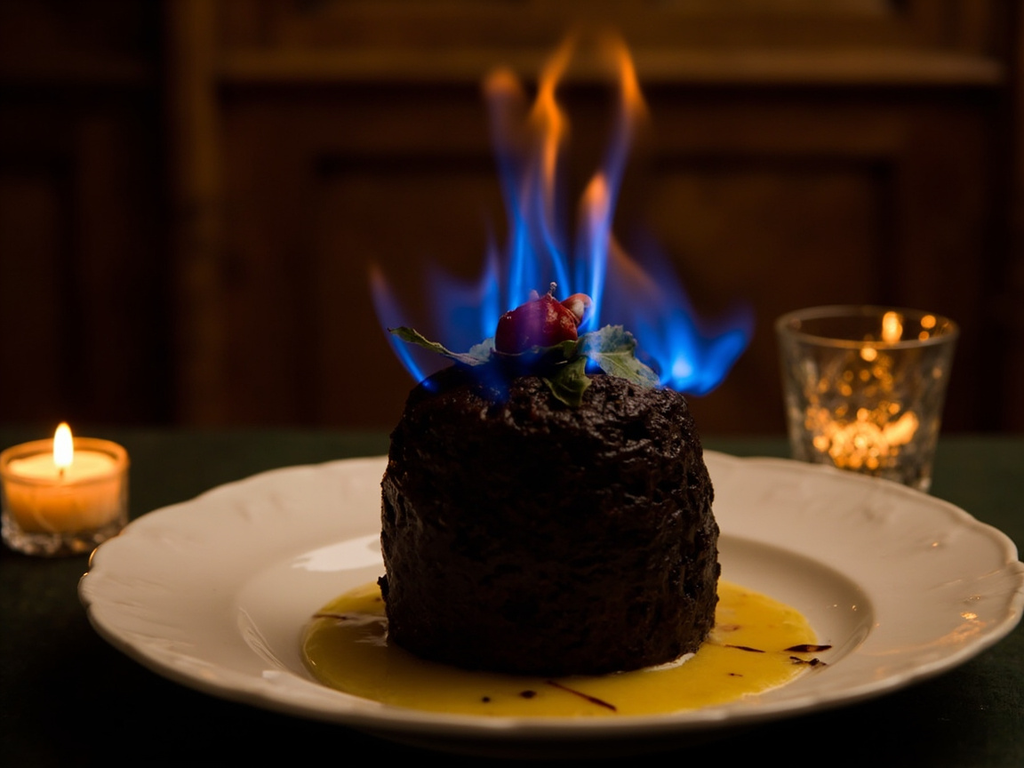
A dark, dense pudding packed with dried fruits and spices, steamed for hours, generously laced with cognac, then flambéed and served with butter sauce. The sweet, fragrant summit of the English calendar.
The Christmas pudding — well, that is the one equation that England solves every year without the least elegance or surprise, and it is precisely for that reason that we love it. It was prepared weeks in advance, each person stirring the batter and making a wish; I took part willingly, an amused unbeliever. When it was brought in flaming to the table, in the dimness of the hall, I confess even the most austere mathematician could see something beautiful in it, and beauty, as I have said often enough, is the first criterion.
- •Suet (beef kidney fat) — a generous portion (signature, tenderness)
- •Raisins and currants — in abundance (fruits)
- •Candied orange and lemon peel — a handful (flavor)
- •Breadcrumbs and flour — equal parts (structure)
- •Brown sugar — generously (sweetener)
- •Spices (nutmeg, cinnamon, clove) — a pinch each (spices)
- •Eggs — a few (binder)
- •Cognac — a good glass (flavor, preservation)
Steamed Christmas Plum Pudding
A dark, dense pudding packed with dried fruits and spices, steamed for hours, generously laced with cognac, then flambéed and served with butter sauce. The sweet, fragrant summit of the English calendar.
Why this dish? The plum pudding was the unchanging crown of the English Christmas meal that Hardy knew all his life, at Cranleigh as a child, and later at the colleges of Cambridge and Oxford. Dark, dense, flamed with cognac and brought in with great ceremony: the British celebration reduced to a single dish.
The Christmas pudding — well, that is the one equation that England solves every year without the least elegance or surprise, and it is precisely for that reason that we love it. It was prepared weeks in advance, each person stirring the batter and making a wish; I took part willingly, an amused unbeliever. When it was brought in flaming to the table, in the dimness of the hall, I confess even the most austere mathematician could see something beautiful in it, and beauty, as I have said often enough, is the first criterion.
Ingredients (period version)
- Suet (beef kidney fat) — a generous portion (signature, tenderness)
- Raisins and currants — in abundance (fruits)
- Candied orange and lemon peel — a handful (flavor)
- Breadcrumbs and flour — equal parts (structure)
- Brown sugar — generously (sweetener)
- Spices (nutmeg, cinnamon, clove) — a pinch each (spices)
- Eggs — a few (binder)
- Cognac — a good glass (flavor, preservation)
Ingredients
- Vegetable suet or frozen grated butter — 100 g (signature, tenderness)
- Raisins + currants — 300 g (fruits)
- Mixed candied peel — 75 g (flavor)
- Fresh breadcrumbs — 100 g (structure)
- Flour — 75 g (structure)
- Brown sugar — 100 g (sweetener)
- Nutmeg-cinnamon-allspice mix — 2 tsp (spices)
- Eggs — 2 (binder)
- Cognac — 60 ml (flavor + flambé)
Method
- Mix all dry ingredients, fruits, and spices in a large bowl.
- Stir in beaten eggs and cognac until a thick, heavy batter forms.
- Pack into a buttered pudding basin, cover with parchment paper and tie a cloth over it.
- Steam (in a covered bain-marie) for 4 to 6 hours, adding boiling water as needed.
- Allow to cool and store in a cool place for several weeks; re-steam for 2 hours on the day.
- Unmold, warm a little cognac, ignite it and pour over the pudding; serve with butter sauce.
How it was made : The plum pudding descends from medieval 'plum porridge'. In the 19th century it became the national Christmas dessert, popularized under Victoria. The tradition of 'Stir-up Sunday' (the last Sunday before Advent) called for each family member to stir the batter from east to west while making a wish, and to hide a silver coin inside.
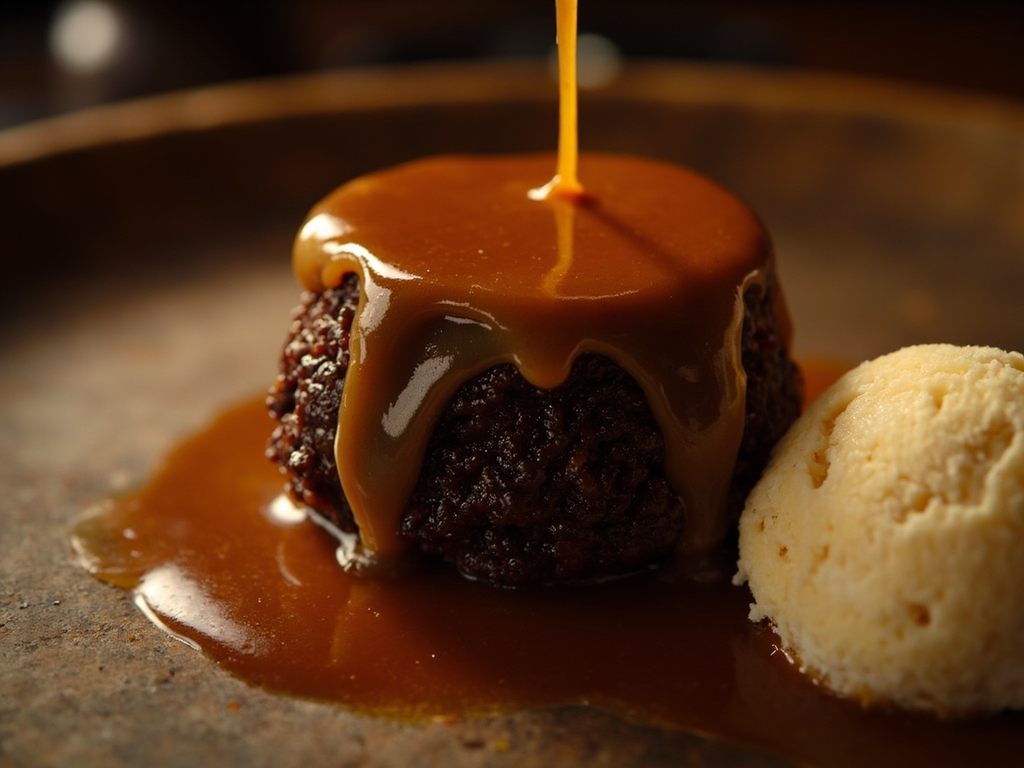
The contemporary twist : Serve with a quenelle of brown sugar ice cream that melts over the still-flaming hot pudding: the hot-cold contrast elevates the spices.
Sources : Isabella Beeton, Book of Household Management, 1861 · Charles Dickens, A Christmas Carol, 1843
G.H. Hardy · Charactorium