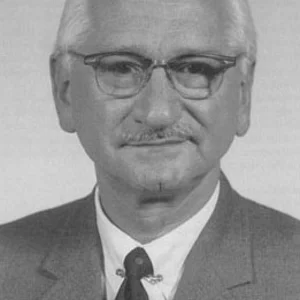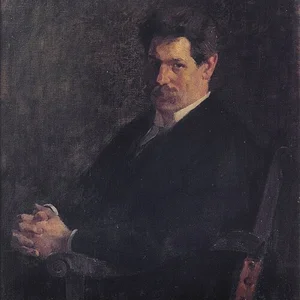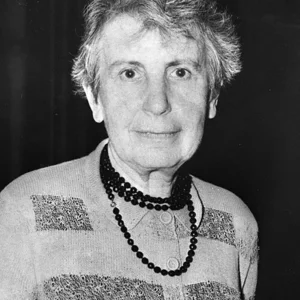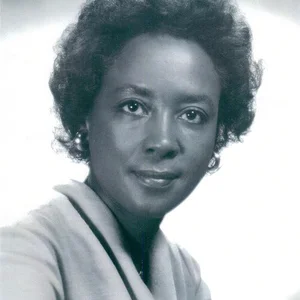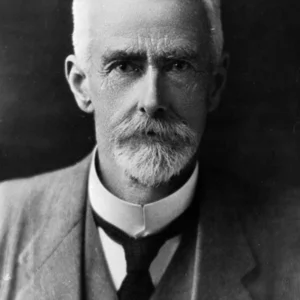

Elsdon Best (1856-1931) was a New Zealand ethnographer and historian, a pioneer in the study of the Māori people. He recorded the traditions, beliefs, and knowledge of the Māori in landmark reference works.
Frequently asked questions
Key Facts
- Born in 1856 in Tawa Flat, near Wellington (New Zealand)
- Worked with the Tūhoe Māori communities in the Urewera region from the 1890s onward
- Published 'Tuhoe: The Children of the Mist' and many works on Māori cosmology
- Collaborated with the Dominion Museum in Wellington in the early 20th century
- Died in 1931, leaving behind a major body of ethnographic work, though one marked by the biases of his era
Works & Achievements
Major monograph on the history and traditions of the Tūhoe people, regarded as his most accomplished work.
Sweeping synthesis of Māori culture; long a standard reference, despite present-day critical reservations.
Study of Māori beliefs, gods and stories, in which Best develops his thesis about the supreme god Io.
Documentation of Māori knowledge of the stars, the lunar calendar and navigation.
Detailed collection of Māori games, toys and entertainments.
Study of Māori fortified villages (pā), their architecture and their defensive role.
Posthumous work on Māori knowledge relating to the forest, hunting and plants.
Anecdotes
Before becoming an ethnographer, Elsdon Best worked in turn as a labourer, a member of the colonial army (the Armed Constabulary) and a road-construction overseer. It was while working on building a road in the remote Urewera region that he formed a lasting bond with the Tūhoe people, whose traditions he would go on to record over several decades.
Best had received no academic training as an anthropologist: he taught himself, spending thousands of hours listening to the Tūhoe elders (kaumātua) and writing down their accounts in notebooks. This “fieldwork” method, ahead of its time, makes him a pioneer of close-up ethnography.
He kept up an extensive correspondence with Stephenson Percy Smith and the Polynesian Society, to whom he tirelessly sent his notes. His output was so vast that the Dominion Museum in Wellington published his manuscripts as Bulletins for years, some of them appearing even after his death.
Best popularised the idea of a supreme Māori god named Io, presented as esoteric knowledge reserved for initiates. This thesis was very influential, but later scholars challenged it, suspecting it might be an interpretation coloured by the Christian ideas of his time: a good example of how an ethnographer can, without meaning to, distort what he observes.
Nicknamed “Te Peehi” by the Tūhoe, Best was regarded as a custodian of their traditions at a time when many feared that this knowledge would disappear. Paradoxically, it was a Pākehā (European) who became one of the chief written keepers of the memory of a Māori people.
Primary Sources
The work gathers the history, genealogy and traditions of the Tūhoe people, the fruit of many years spent among them in the Urewera.
Here Best presents a synthesis of the social, religious and material life of the Maori as he had gathered it from the elders.
Best records the names of the stars, the lunar calendar and the ways the Maori used the sky for navigation and agriculture.
A detailed description of Maori games, toys and amusements, from kites to string games (whai).
Key Places
Birthplace of Elsdon Best, in the Wellington region, then in the midst of colonization.
A mountainous, forested region, home of the Tūhoe people, where Best lived and gathered most of his ethnographic material.
Institution where Best served as an ethnographer and which published most of his bulletins and monographs.
New Zealand's capital, where Best spent the end of his life and died in 1931.
Typical Objects

Notebooks in which Best tirelessly recorded the stories, genealogies and songs of the Tūhoe elders. They form the raw material of his works.

A Māori jade (pounamu) pendant depicting a stylised ancestor. Best described these precious objects passed down from generation to generation.

A traditional kite described in *Games and Pastimes of the Maori*, sometimes used in rituals or divination.

A storehouse for provisions on stilts, often richly carved, which Best documented as a central element of Māori material life.

Figures made with a loop of string between the fingers, of which Best recorded many variants accompanied by stories.

A Māori wooden hand weapon, both spear and club, whose ritual and warlike use Best described.
School Curriculum
Vocabulary & Tags
Key Vocabulary
Tags
Daily Life
Morning
Settled in the Urewera, Best often began the day by joining the elders of a Tūhoe village to listen to their stories. He took notes as the conversation unfolded, sometimes for hours, recording genealogies, songs and beliefs.
Afternoon
The afternoon was devoted to writing up his notes cleanly and organizing his observations. When he was a works overseer, he alternated these records with supervising the road-building sites.
Evening
In the evening, by lamplight, Best wrote his correspondence with the Polynesian Society and Percy Smith, or gathered his materials for future articles and bulletins.
Food
In the remote regions, he shared a simple diet, close to that of the settlers and Māori: potatoes, kūmara (sweet potato), fish, game from the forest and bread. Tea accompanied most meals.
Clothing
Best wore the rugged clothing of the late-19th-century New Zealand settler: a wool shirt, a thick jacket, hard-wearing canvas trousers and boots suited to the muddy tracks of the Urewera.
Housing
For a long time he lodged in modest wooden dwellings, sometimes simple huts tied to the worksites, in the very heart of Tūhoe territory, before settling more comfortably in Wellington.
Historical Timeline
Period Vocabulary
Liens externes & ressources
Références
Œuvres
Tuhoe: The Children of the Mist
1925
The Maori (2 volumes)
1924
Maori Religion and Mythology
1924
The Astronomical Knowledge of the Maori
1922
Games and Pastimes of the Maori
1925
The Pa Maori
1927
Forest Lore of the Maori
1942