 flip
flipBaltic Cod with Butter and Mustard
Baltic Cod with Butter and Mustard
Why this dish? We know Kant served fish among his lunch dishes. Königsberg, on the Vistula Lagoon and open to the Baltic, lived by fishing: fresh cod was a daily, affordable fare, enlivened precisely by the mustard the philosopher so relished.
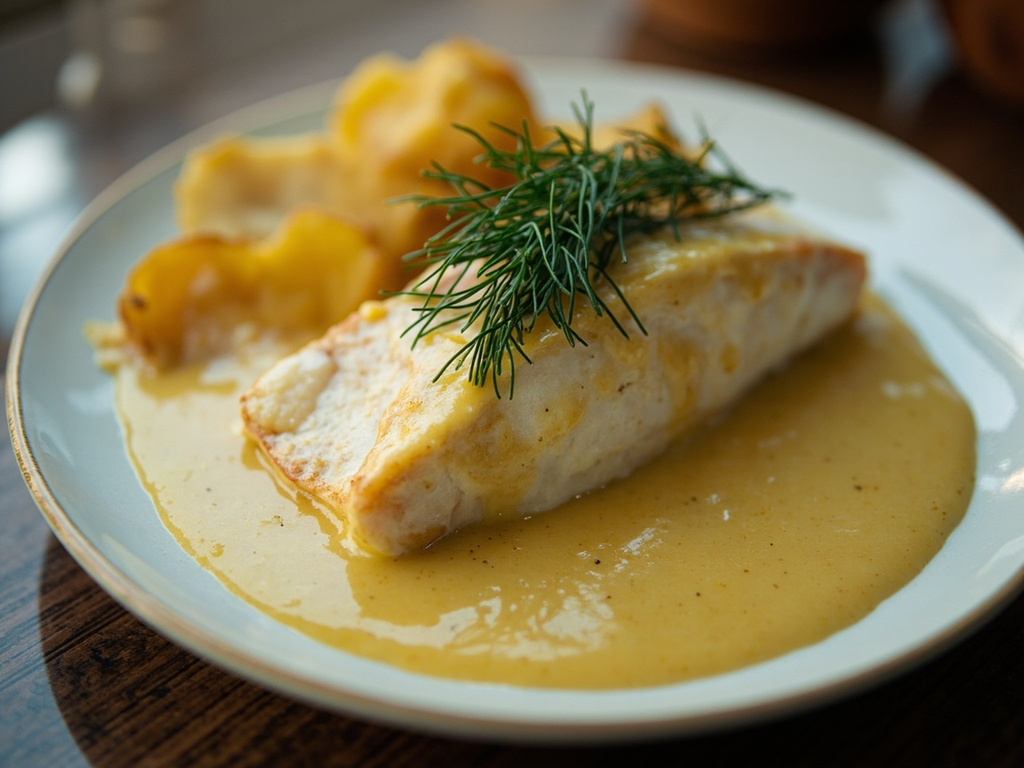
A cod fillet poached or pan-fried in butter, served with a blond table mustard sauce. Soft, melting, and briny, heightened by mustard's tang.
The Baltic gives us, in Königsberg, a fish of such clean flesh that it demands almost nothing: a little butter, salt, and above all my mustard, which I use like a principle — moderately but without exception. You see, I find a lesson in it: the simplest dish, treated with measure and at the appointed hour, is worth more than a disorderly feast. Eat slowly, and let conversation alone enhance its flavor.
- •Fresh Baltic cod — a nice piece per guest (centerpiece)
- •Butter — a generous knob (cooking, binding)
- •Table mustard — a spoonful (signature, pungency)
- •Flour — a little (sauce binder)
- •Milk or light broth — as needed (sauce)
- •Dill or parsley — a few sprigs (freshness)
Baltic Cod with Butter and Mustard
A cod fillet poached or pan-fried in butter, served with a blond table mustard sauce. Soft, melting, and briny, heightened by mustard's tang.
Why this dish? We know Kant served fish among his lunch dishes. Königsberg, on the Vistula Lagoon and open to the Baltic, lived by fishing: fresh cod was a daily, affordable fare, enlivened precisely by the mustard the philosopher so relished.
The Baltic gives us, in Königsberg, a fish of such clean flesh that it demands almost nothing: a little butter, salt, and above all my mustard, which I use like a principle — moderately but without exception. You see, I find a lesson in it: the simplest dish, treated with measure and at the appointed hour, is worth more than a disorderly feast. Eat slowly, and let conversation alone enhance its flavor.
Ingredients (period version)
- Fresh Baltic cod — a nice piece per guest (centerpiece)
- Butter — a generous knob (cooking, binding)
- Table mustard — a spoonful (signature, pungency)
- Flour — a little (sauce binder)
- Milk or light broth — as needed (sauce)
- Dill or parsley — a few sprigs (freshness)
Ingredients
- Cod fillets — 4 (150 g each) (fish)
- Butter — 50 g (cooking + roux)
- Flour — 1 tbsp (binder)
- Milk — 25 cl (sauce)
- Mustard — 1–2 tsp (signature)
- Fresh dill — a few sprigs (garnish)
- Salt, pepper — to taste (seasoning)
Method
- Salt cod fillets and let rest 10 minutes, then pat dry.
- Cook gently in foaming butter, 3–4 minutes per side, without browning; keep warm.
- In the same pan, add flour to butter, cook briefly, then gradually whisk in milk for a smooth sauce.
- Off heat, stir in mustard (do not boil, or it becomes bitter).
- Nap the fish with sauce, sprinkle with dill, and serve with potatoes or rye bread.
How it was made : Cod (and herring) were the Baltic protein staples. They were simply cooked in butter — abundant in this livestock region — with mustard sauce serving both as seasoning and gustatory preservation. Mustard, made from local mustard seeds and vinegar, was a common, cheap condiment on Prussian tables.
The contemporary twist : Brush a thin layer of whole-grain mustard on the cod fillet, then run under a hot grill for 2 minutes to create a golden, crispy crust.
Immanuel Kant · Charactorium