 flip
flipBasler Mehlsuppe (Basel Roasted Flour Soup)
Basler Mehlsuppe (Basel Roasted Flour Soup)
Why this dish? Euler was born in Basel in 1707 and spent his childhood and student years at the University there. This roasted flour soup, economical and nourishing, is THE quintessential Basel popular dish: it was served in every Reformed household in the city, including that of a pastor like his father Paul Euler.
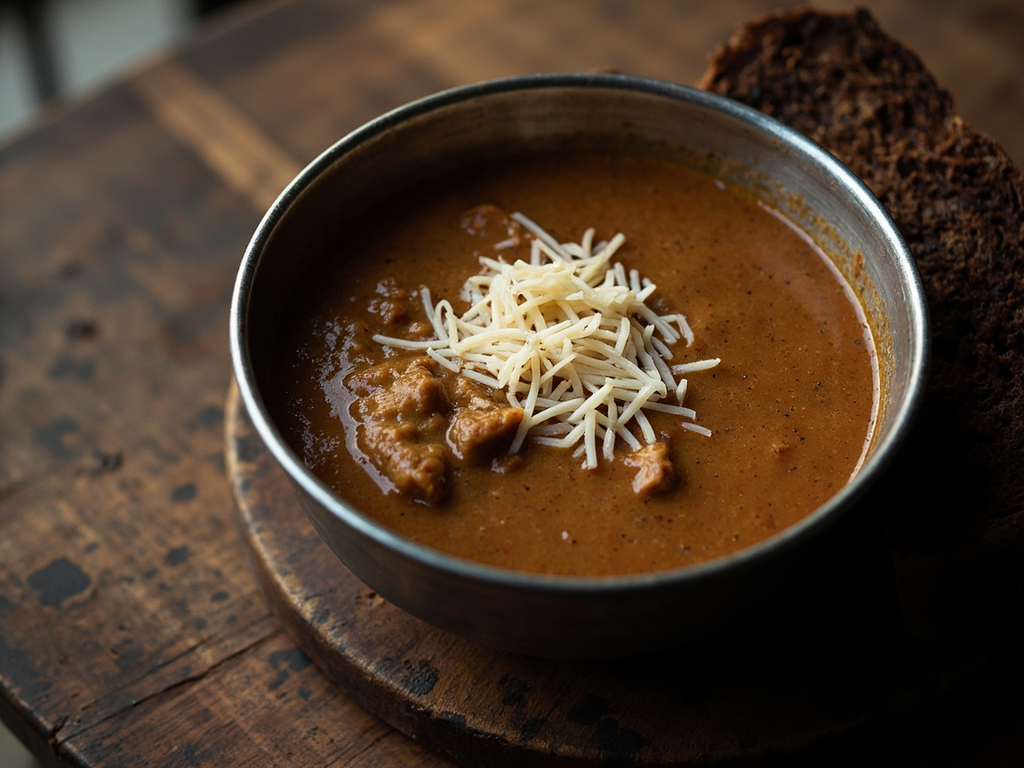
A brown, velvety soup born from a single magical gesture: flour browned dry in a pan, then moistened with broth. Comforting and cheap, it nourished children and old scholars alike.
You see, this is the soup of my Basel childhood, the one my mother would simmer while my father prepared his sermon in the parsonage. All the secret lies in one thing: you must stir the flour over the fire without pause, patiently, until it takes on the hue of a ripe hazelnut — a moment too long and all is lost, burnt! I have always thought that such patience, that care for the right degree, is not so far from that required by calculation. Then you moisten it with good broth, let it thicken, and thank the Lord for a meal so simple and so good.
- •Wheat flour — two good handfuls (roasted base, binder and toasty flavor)
- •Butter or lard — a knob (fat for binding)
- •Meat or bone broth — a large pot (cooking liquid)
- •Onion — one small (aromatic)
- •Salt — to taste (seasoning)
- •Grated local cheese (e.g., Sbrinz) — a handful (umami finish)
Basler Mehlsuppe (Basel Roasted Flour Soup)
A brown, velvety soup born from a single magical gesture: flour browned dry in a pan, then moistened with broth. Comforting and cheap, it nourished children and old scholars alike.
Why this dish? Euler was born in Basel in 1707 and spent his childhood and student years at the University there. This roasted flour soup, economical and nourishing, is THE quintessential Basel popular dish: it was served in every Reformed household in the city, including that of a pastor like his father Paul Euler.
You see, this is the soup of my Basel childhood, the one my mother would simmer while my father prepared his sermon in the parsonage. All the secret lies in one thing: you must stir the flour over the fire without pause, patiently, until it takes on the hue of a ripe hazelnut — a moment too long and all is lost, burnt! I have always thought that such patience, that care for the right degree, is not so far from that required by calculation. Then you moisten it with good broth, let it thicken, and thank the Lord for a meal so simple and so good.
Ingredients (period version)
- Wheat flour — two good handfuls (roasted base, binder and toasty flavor)
- Butter or lard — a knob (fat for binding)
- Meat or bone broth — a large pot (cooking liquid)
- Onion — one small (aromatic)
- Salt — to taste (seasoning)
- Grated local cheese (e.g., Sbrinz) — a handful (umami finish)
Ingredients
- Wheat flour — 80 g (roasted base and binder)
- Butter — 40 g (fat)
- Beef or chicken broth — 1 L (liquid)
- Onion — 1 small, minced (aromatic)
- Salt and a pinch of nutmeg — to taste (seasoning)
- Sbrinz or grated Gruyère — 30 g (umami finish)
Method
- In a dry pan without fat, pour the flour and stir over medium heat for 10 to 15 minutes, without stopping, until a beautiful hazelnut color (beware of burnt taste).
- Add the butter and minced onion, let melt gently.
- Gradually add the hot broth while whisking to avoid lumps.
- Simmer for 25 to 30 minutes over low heat until velvety; season with salt and a touch of nutmeg.
- Serve very hot, sprinkled with grated cheese that melts into the soup.
How it was made : In Basel, flour was roasted in large batches in advance for storage, then diluted as needed over the days. The soup remains the indispensable specialty of Fasnacht (Basel Carnival), where it is still served in the early morning.
The contemporary twist : A splash of dry white wine deglazed in the pan after the flour, and a few rye croutons browned in butter on top.
Leonhard Euler · Charactorium