Ancient Greece
Philosophers, strategists, poets and lawmakers of Ancient Greece — cradle of democracy, philosophy and theatre.
99 characters
99 characters
Aeëtes
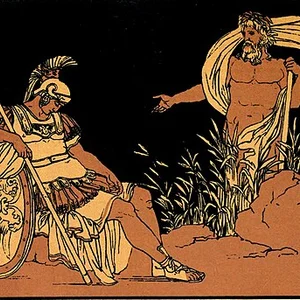
King of Colchis in Greek mythology, son of the god Helios and the Oceanid Perseis. Father of Medea, he is the guardian of the Golden Fleece and the main adversary of Jason during the quest of the Argonauts.
Agamemnon
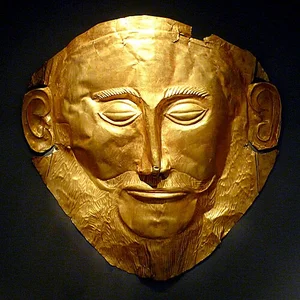
King of Mycenae and supreme commander of the Greek forces during the Trojan War. A central figure in Homer's Iliad and Aeschylus's Oresteia, his tragic fate — from the sacrifice of Iphigenia to his murder by Clytemnestra — makes him an archetype of hubris and fatality.
Agnodice
400 av. J.-C. — 360 av. J.-C.
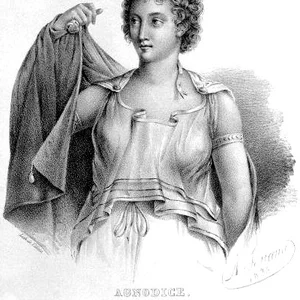
Agnodice is a legendary figure from ancient Greece, presented as the first female physician and gynecologist in Athens in the 4th century BCE. According to the account of the Latin author Hyginus, she disguised herself as a man in order to study medicine under Herophilus in Alexandria, and then to practice in Athens.
Alcmene
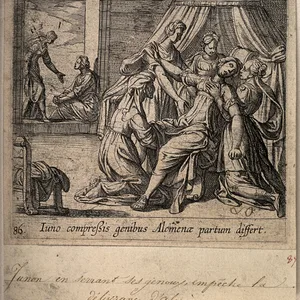
Greek princess, daughter of Electryon king of Mycenae and wife of Amphitryon. Zeus seduced her by taking on her husband's appearance, and she thus conceived Heracles, the most famous of all Greek heroes.
Alexander II of Macedon
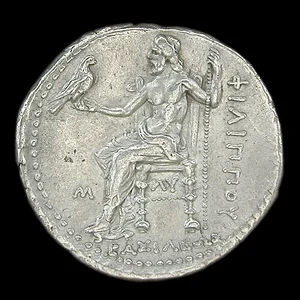
King of Macedon from 370 to 368 BC, son of Amyntas III and elder brother of Philip II. His brief reign was marked by internal unrest before his assassination by Ptolemy of Aloros.
Ariadne
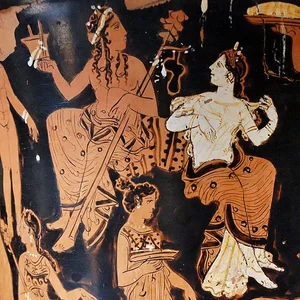
Cretan princess of Greek mythology, daughter of King Minos and Pasiphae. She helps the Athenian hero Theseus defeat the Minotaur by giving him a thread to navigate the labyrinth. Abandoned on the island of Naxos, she becomes the wife of the god Dionysus.
Aristophanes
444 av. J.-C. — 384 av. J.-C.
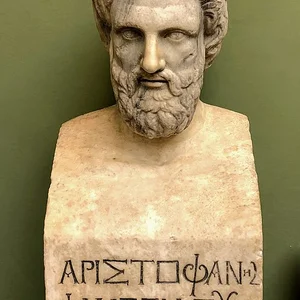
Aristophanes is the foremost representative of ancient Greek comedy, author of around forty plays, eleven of which have survived. His works blend political satire, social criticism, and poetic fantasy. He humorously staged the conflicts of his time, most notably the Peloponnesian War.
Arsinoe II
315 av. J.-C. — 269 av. J.-C.
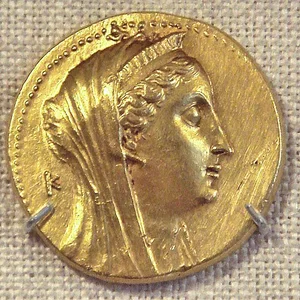
A Macedonian princess born around 316 BCE, daughter of Ptolemy I, she became queen of Ptolemaic Egypt. Co-regent alongside her brother and husband Ptolemy II, she wielded considerable political influence and was deified during her own lifetime.
Asclepius
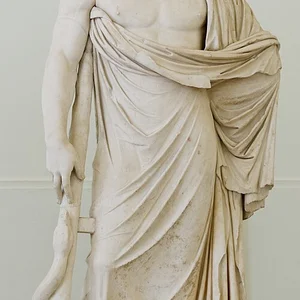
Greek god of medicine and healing, son of Apollo and Coronis. Raised by the centaur Chiron, he mastered the healing arts so completely that he could resurrect the dead — a transgression that led Zeus to strike him down with a thunderbolt.
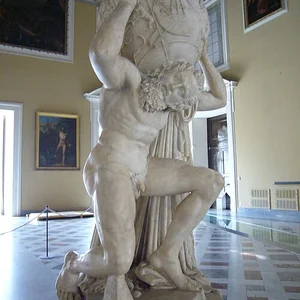
Atlas
Titan of Greek mythology, son of Iapetus and Clymene. Condemned by Zeus to hold up the sky on his shoulders after the defeat of the Titans in the Titanomachy. He is also the father of the Pleiades and the Hesperides.
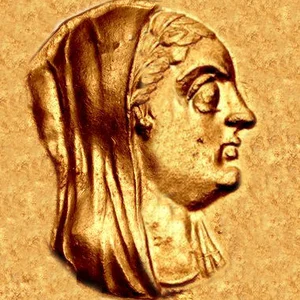
Berenice I
339 av. J.-C. — ?
Macedonian queen who became the wife of Ptolemy I, founder of the Lagid dynasty in Egypt. Mother of Ptolemy II Philadelphus, she was deified after her death and played a foundational role in establishing the dynastic legitimacy of the Ptolemies.
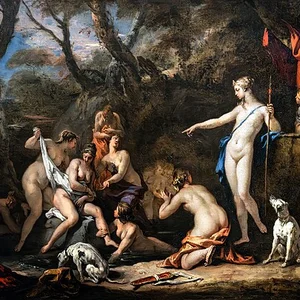
Callisto
Callisto is a nymph from Greek mythology and a companion of Artemis, goddess of the hunt. Seduced by Zeus, she was transformed into a bear by the jealous Hera, then placed in the sky as the constellation Ursa Major.
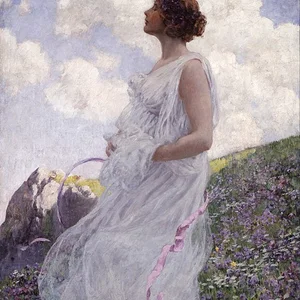
Calypso
An Oceanid nymph of Greek mythology, Calypso rules over the island of Ogygia. In Homer's Odyssey, she holds Odysseus captive through her love for seven years, offering him immortality in exchange for his company. Forced by Zeus to release him, she embodies the figure of impossible love set against the longing to return home.
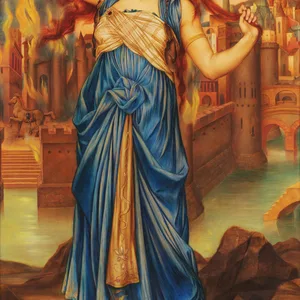
Cassandra
Trojan prophetess and daughter of King Priam, Cassandra was granted the gift of prophecy by Apollo, then cursed so that no one would ever believe her. A tragic figure of Greek mythology, she foretold the fall of Troy but could not prevent it.
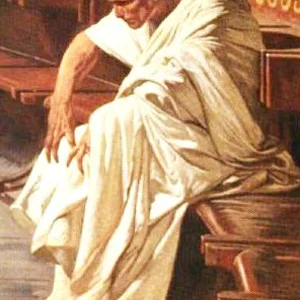
Catiline
107 av. J.-C. — 61 av. J.-C.
Lucius Sergius Catiline was a Roman patrician and politician, famous for plotting a conspiracy to seize power in 63 BC. Exposed by Cicero, he died fighting at the Battle of Pistoria in 62 BC.
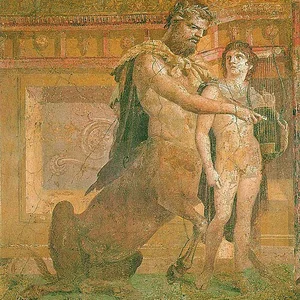
Chiron
Chiron is a centaur from Greek mythology, son of Cronus and the nymph Philyra. Renowned for his wisdom, he served as tutor to many Greek heroes, including Achilles, Jason, and Asclepius. He excelled in medicine, music, hunting, and philosophy.
Circe
Circe is an enchantress from Greek mythology, daughter of the sun god Helios, known for her magical powers. In Homer's Odyssey, she transforms Odysseus's companions into pigs before becoming the hero's ally.
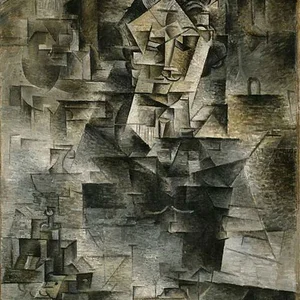
Clitô
Cléito is a figure from Greek mythology, daughter of Evenor and Leucippe, known through Plato's dialogue 'Critias'. A mortal woman living on the island that would become Atlantis, she was beloved by the god Poseidon, who surrounded her home with concentric ramparts and fathered with her the ten first kings of Atlantis.
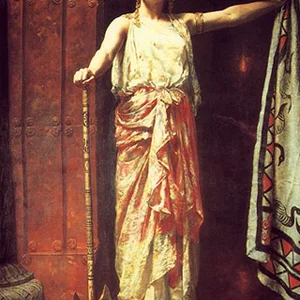
Clytemnestra
A major figure in Greek mythology, Clytemnestra is the wife of King Agamemnon of Mycenae. She murders him upon his return from the Trojan War to avenge the sacrifice of their daughter Iphigenia. She is the central character of Aeschylus's Oresteia (458 BCE).
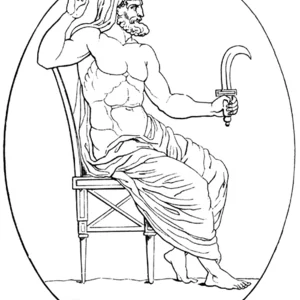
Cronos
Cronos is the youngest of the Titans, son of Uranus and Gaia. He overthrew his father, ruled over the Golden Age, then devoured his own children for fear of being dethroned. Zeus, saved by his mother Rhea, eventually defeated him.
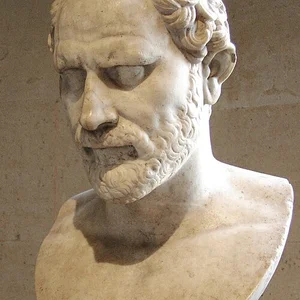
Demosthenes
383 av. J.-C. — 321 av. J.-C.
Demosthenes (384–322 BC) was the greatest orator of ancient Greece. An Athenian statesman, he vigorously opposed the expansion of Philip II of Macedon through his famous speeches, the Philippics.
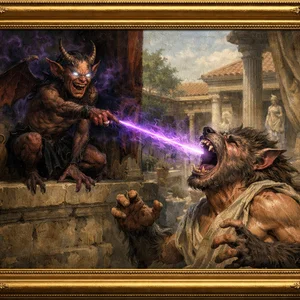
Empousa
A demonic creature of Greek mythology, servant of Hecate. Endowed with one leg of bronze and one leg of a donkey, she transforms herself to seduce lone travelers before devouring them.
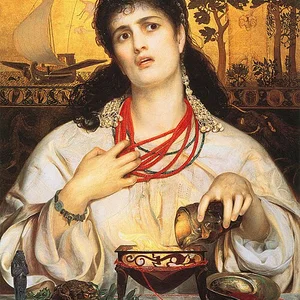
Medea
A tragic figure of Greek mythology, Medea is a sorceress from Colchis, daughter of King Aeëtes and granddaughter of Helios. Driven by love for Jason, she helps him seize the Golden Fleece, but when he betrays her, she exacts a terrible revenge by killing her own children.
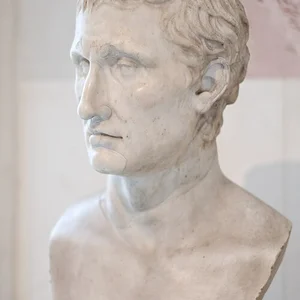
Menander
340 av. J.-C. — 290 av. J.-C.
Menander (342–290 BC) was the greatest representative of Greek New Comedy. A prolific Athenian playwright, he wrote more than a hundred plays depicting everyday life and the social customs of his time.
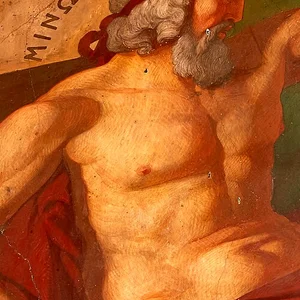
Minos
Legendary king of Crete, son of Zeus and Europa. He had the Labyrinth built to imprison the Minotaur, a monster born of the union between his wife Pasiphae and a divine bull. After his death, he became one of the judges of the Underworld.
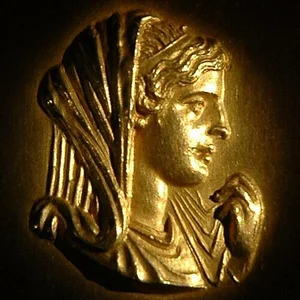
Olympias
374 av. J.-C. — 315 av. J.-C.
Princess of Epirus and Queen of Macedon, Olympias was the wife of Philip II and the mother of Alexander the Great. A formidable wielder of power, she played a major political role during the Wars of the Diadochi following her son's death.
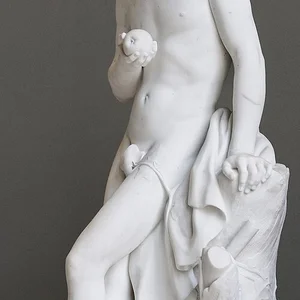
Paris
Trojan prince, son of Priam and Hecuba, Paris triggers the Trojan War by abducting Helen, wife of the Spartan king Menelaus. His judgment among the three goddesses determines the fate of Troy.

Pasiphae
Pasiphae is a figure from Greek mythology, daughter of Helios and wife of Minos, king of Crete. Struck by an unnatural passion for a bull sent by Poseidon, she gave birth to the Minotaur — half man, half bull — who was imprisoned in the Labyrinth built by Daedalus.
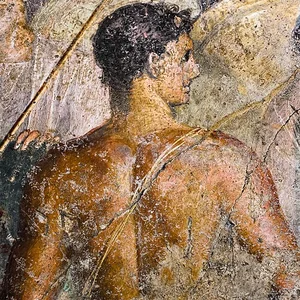
Patroclus
Greek hero of mythology and faithful companion of Achilles during the Trojan War. After donning Achilles' armor to restore the Greeks' courage, he is killed by Hector, triggering his friend's furious revenge.

Peleus
Hero of Greek mythology, king of Phthia in Thessaly. Son of Aeacus and grandson of Zeus, he is famous for his marriage to the Nereid Thetis and for being the father of Achilles.
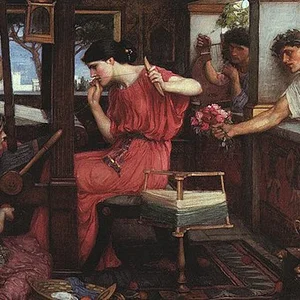
Penelope
A figure from Greek mythology, wife of Odysseus and mother of Telemachus. During her husband's twenty-year absence, she fends off her suitors with a famous trick: each night she unravels the shroud she weaves by day. She embodies faithfulness, patience, and female intelligence in the Homeric epic.
Penthesilea
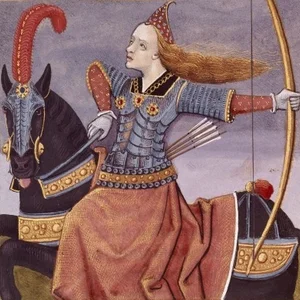
Queen of the Amazons in Greek mythology, daughter of Ares and Otrera. According to the epic tradition, she led her warrior women to the aid of Troy after Hector's death and faced Achilles in single combat, who killed her even as he fell in love with her.
Pisistratus
Youngest son of Nestor, king of Pylos, Pisistratus is a character in Homer's Odyssey. He welcomes Telemachus at Pylos and accompanies him to Sparta to meet Menelaus. A figure of friendship and hospitality, he embodies the aristocratic virtues of the Greek epic.
Polydectes
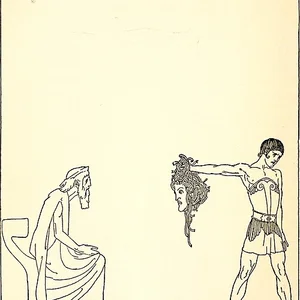
King of the island of Seriphos in Greek mythology, son of Magnes. Consumed by desire for Danaë, he sent her son Perseus to retrieve the head of the Gorgon Medusa in order to get rid of him. Upon his return, Perseus turned Polydectes to stone by showing him Medusa's head.
Priam
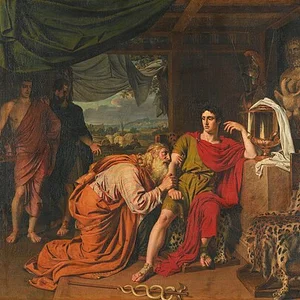
Priam is the last king of Troy in Greek mythology, father of fifty sons including Hector and Paris. His reign is defined by the Trojan War, triggered by the abduction of Helen. He dies during the fall of the city, killed by Neoptolemus.
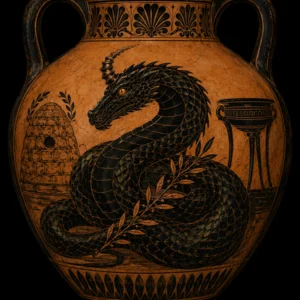
Python
A massive serpent-dragon of Greek mythology, guardian of the sanctuary of Delphi. Slain by the god Apollo, who seized the site and established the famous oracle there. Its name was given to the Pythia, the prophetic priestess of Apollo.
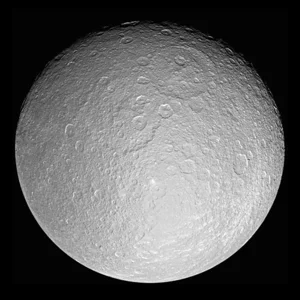
Rhea
Titaness of Greek mythology, daughter of Uranus and Gaia, wife of Cronus. Mother of the six great Olympian gods, she saved Zeus by substituting a swaddled stone for the infant to deceive Cronus. Identified with Cybele, she is venerated as the Great Mother of all the gods.
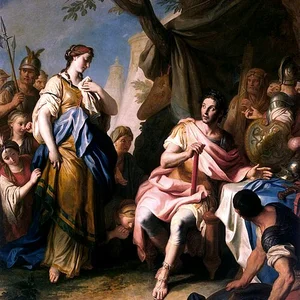
Roxana
346 av. J.-C. — 309 av. J.-C.
Roxana was a Bactrian princess, the first wife of Alexander the Great, whom he married in 327 BC following the conquest of Bactria. She was the mother of Alexander IV, the posthumous heir to the empire.
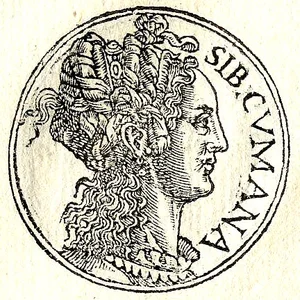
Sibyl of Cumae
A legendary prophetess of Antiquity, she presided over Apollo's oracle at Cumae, in Campania. According to tradition, she lived for a thousand years and sold the Sibylline Books to King Tarquin. Virgil makes her the guide of Aeneas in the Underworld in the Aeneid.
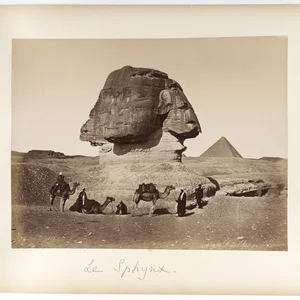
Sphinx
A monster from Greek mythology with the body of a lion and the head of a woman, the Sphinx guarded the gates of Thebes. It posed a deadly riddle to travelers and devoured those who failed to answer. Defeated by Oedipus, it threw itself off a cliff.
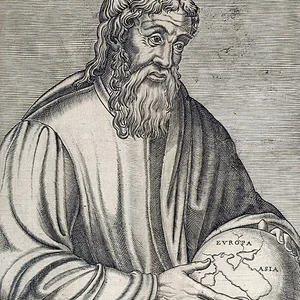
Strabo
62 av. J.-C. — 23
Greek geographer, historian, and philosopher born around 62 BC in Amaseia (modern-day Turkey). He is the author of the Geography in 17 books, a description of the known world of his time. An heir to the Stoic tradition, he traveled extensively throughout the Mediterranean and the East.

Telegonus
Son of Odysseus and the sorceress Circe, Telegonus is a figure from Greek mythology. He accidentally killed his father Odysseus without recognizing him, thus fulfilling a tragic prophecy.

Thetis
Thetis is a Nereid, a sea deity of Greek mythology, daughter of Nereus and mother of the hero Achilles. She plays a central role in Homer's Iliad, interceding with the gods on behalf of her son. An embodiment of divine maternal power, she stands at the heart of Greece's great epic narratives.
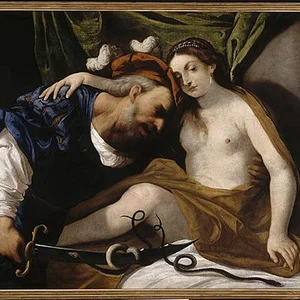
Tiresias
The blind seer of Greek mythology, Tiresias was the most celebrated prophet of Thebes, serving Apollo. Struck blind by the gods, he received in return the gift of prophecy and an exceptionally long life. He appears in many of the greatest works of antiquity, from Sophocles to Homer.
Achilles
Achilles is the greatest Greek warrior in mythology and the central hero of Homer's Iliad. Son of Thetis and Peleus, he is invulnerable except for his heel — his legendary weak point. He embodies the ideal of the Greek warrior hero, renowned for his strength, courage, and pride.
Aeneas
Hero of Greco-Roman mythology, son of Aphrodite and Anchises. Aeneas is the central figure of Virgil's Aeneid, a Latin epic recounting his journey from Troy to Italy, where he becomes the mythical ancestor of ancient Rome and the Julio-Claudian dynasty.
Aesop
619 av. J.-C. — 563 av. J.-C.
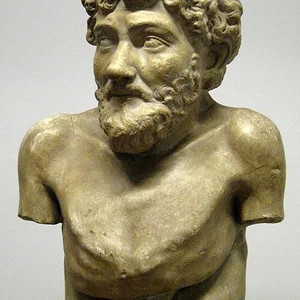
Aesop was an ancient Greek fabulist, author of fables featuring animals to convey moral lessons. His works, composed between the 7th and 6th centuries BC, have profoundly influenced Western literature and remain classics of children's literature.
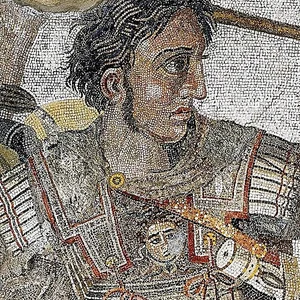
Alexander the Great
355 av. J.-C. — 322 av. J.-C.
King of Macedon and legendary conqueror, Alexander built one of the largest empires of the ancient world in less than thirteen years. Tutored by the philosopher Aristotle, he conquered the Achaemenid Persian Empire and extended his dominion as far as India, spreading Greek culture across Asia.
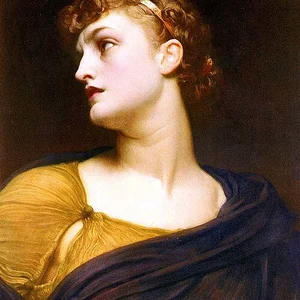
Antigone
Heroine of Greek mythology, daughter of Oedipus and Jocasta, princess of Thebes. Antigone embodies the conflict between divine law and human law by daring to defy the decree of King Creon in order to give her brother Polynices a proper burial, which leads to her condemnation to death.
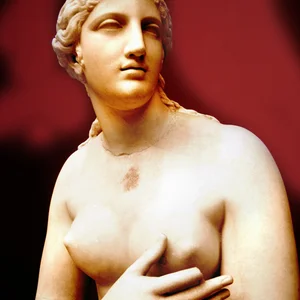
Aphrodite
Greek goddess of love, beauty, and fertility in ancient mythology. Venerated throughout Greece and the Roman Empire under the name Venus. A central figure in mythological narratives and ancient art.
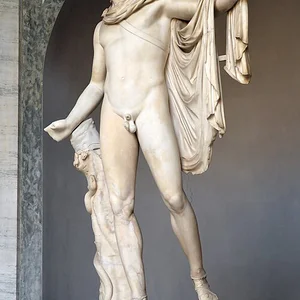
Apollo
Greek god of music, poetry, the sun, and prophecy, Apollo is one of the most important deities in Greek mythology. Son of Zeus and Leto, he embodies harmony, beauty, and knowledge. His cult spread throughout the ancient Greek world, most notably at Delphi, where his famous oracle was located.
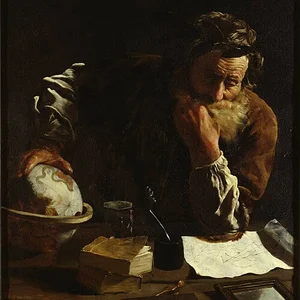
Archimedes
286 av. J.-C. — 211 av. J.-C.
Greek mathematician and physicist from Sicily (c. 287–212 BC), Archimedes is one of the greatest scholars of Antiquity. He revolutionized mathematics and physics by developing innovative methods for calculating areas and volumes, and by formulating the principles of levers and buoyancy.
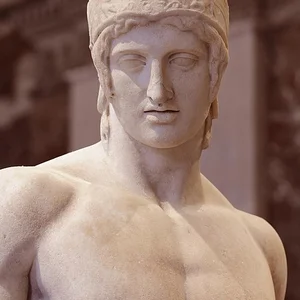
Ares
Ares is the god of war in ancient Greek mythology. Son of Zeus and Hera, he embodies violence, chaos, and the brutality of battle. He is one of the twelve major deities of Mount Olympus.
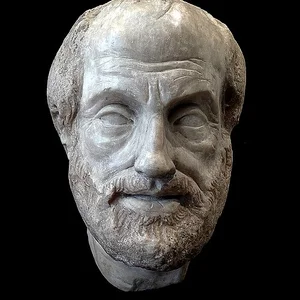
Aristotle
460 av. J.-C. — 401 av. J.-C.
Greek philosopher born in Stagira (384–322 BC), Aristotle founded his own school, the Lyceum, in Athens. He developed comprehensive systems of logic, metaphysics, ethics, and politics that profoundly influenced Western thought.
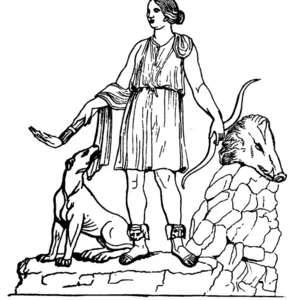
Artemis
Greek goddess of the hunt, the moon, and the wilderness, Artemis is one of the twelve major deities of Olympus. Twin sister of Apollo, she embodies independence and remains a virgin according to Greek mythology. She is the protector of young girls and wild animals.
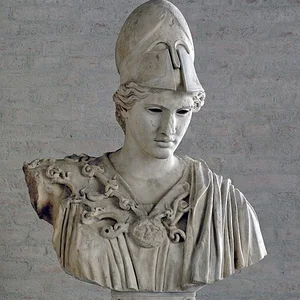
Athena
Athena is the Greek goddess of wisdom, military strategy, and the arts in ancient mythology. Patron of the city of Athens, she is depicted armed with an aegis and a spear, embodying intelligence and strategic thinking.
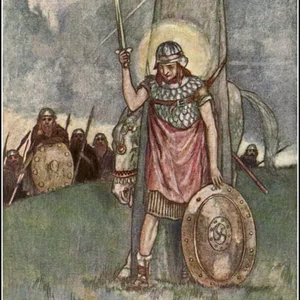
Cúchulainn
A mythological hero of the Irish tradition, Cúchulainn is the protagonist of the Ulster Cycle, a collection of Celtic legends. A legendary warrior figure, he embodies the ideal of the Celtic hero through his superhuman strength and code of honor.
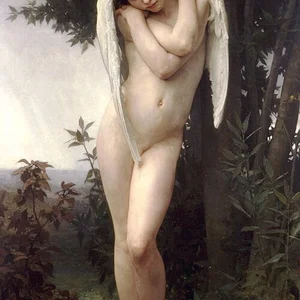
Cupid
God of love in Roman mythology, Cupid is the son of Venus and Mars (or Mercury, depending on the version). Armed with a bow and golden arrows, he strikes humans with romantic passion. His Greek equivalent is Eros.
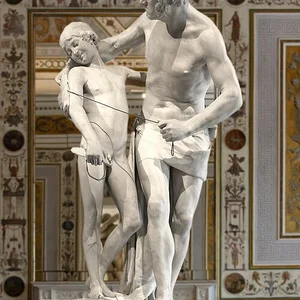
Daedalus and Icarus
Legendary figures from Greek mythology: Daedalus is a brilliantly skilled craftsman and inventor who builds the Labyrinth of Crete, while Icarus is his son. Their story illustrates the themes of ambition, disobedience, and the limits of human nature when faced with greater forces.
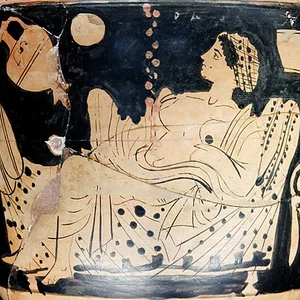
Danaë
Danaë is a princess of Argos, daughter of King Acrisius. Imprisoned by her father in a bronze chamber to prevent a prophecy, she is seduced by Zeus transformed into a shower of gold and gives birth to Perseus, the hero who will kill Medusa.
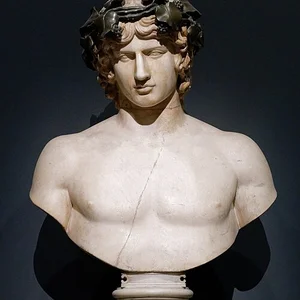
Dionysus
Greek god of wine, theater, fertility, and ecstasy, worshipped in ancient Greece. Son of Zeus and the mortal Semele, he embodies the duality between civilization and the wild, reason and intoxication. A central figure in mystery cults and ancient theatrical performances.
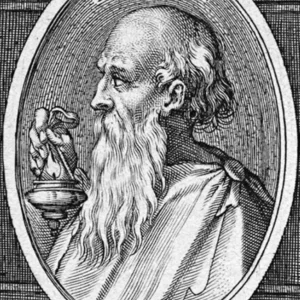
Epictetus
50 — 138
Greek Stoic philosopher of the 1st–2nd century CE, born a slave in Hierapolis in Phrygia. He founded a school of philosophy in Nicopolis in Epirus, where he taught that virtue lies in accepting what does not depend on us. His teachings, compiled by his disciple Arrian in the Enchiridion, became a major reference of late Stoicism.
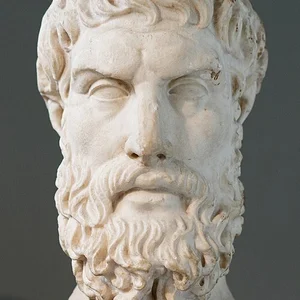
Epicurus
341 av. J.-C. — 269 av. J.-C.
Greek philosopher (341–270 BC) and founder of Epicureanism, a philosophical school based in Athens. He championed a conception of happiness grounded in the absence of pain (aponia) and fear (ataraxia), achieved through the measured satisfaction of natural and necessary desires.
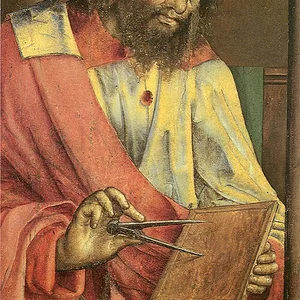
Euclid
333 av. J.-C. — 284 av. J.-C.
A Greek mathematician of Antiquity, Euclid lived in Alexandria in the 3rd century BC. He is the author of the Elements, the most influential mathematical work in history, which dominated the teaching of geometry for over 2,000 years.
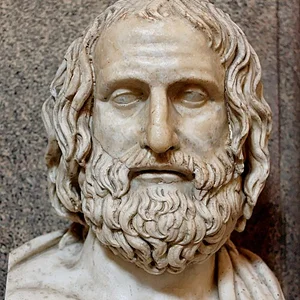
Euripides
480 av. J.-C. — 406 av. J.-C.
Euripides (480–406 BC) is one of the three great tragic playwrights of ancient Athens, alongside Aeschylus and Sophocles. Author of more than 90 plays, he stands out for his innovative approach to tragedy, portraying more human and psychologically complex characters, especially women.
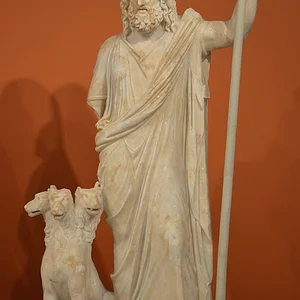
Hades
Hades is the god of the underworld and the dead in Greek mythology. Brother of Zeus and Poseidon, he rules over the realm of souls and the mineral riches of the earth. He is often portrayed as a just and unyielding god, though mortals feared him greatly.
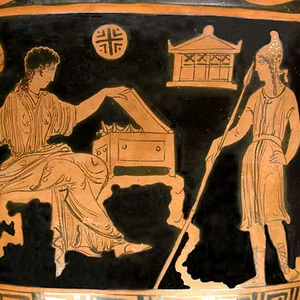
Helen of Troy
A central figure in Greek mythology, Helen is the wife of King Menelaus of Sparta. Her abduction by the Trojan prince Paris triggers the Trojan War, one of the greatest conflicts in ancient mythology. She symbolizes both ideal beauty and the destructive consequences of passion.
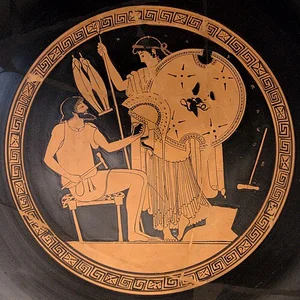
Hephaestus
Greek god of fire, the forge, and metalworking, Hephaestus is the patron of craftsmen and blacksmiths. Son of Zeus and Hera according to Greek mythology, he is depicted as a lame god who works in his underground workshop creating wondrous objects.
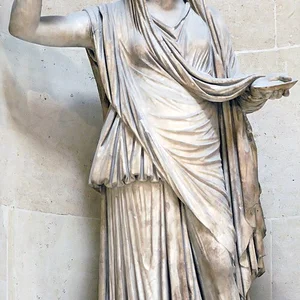
Hera
Hera is the queen of the gods and goddess of marriage in ancient Greek mythology. Wife of Zeus, she is venerated as the protector of marriage and family. Her legends reflect the values and conflicts of the Greek pantheon.
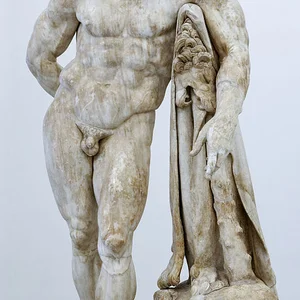
Hercules
Heracles is a hero of Greek mythology, son of the god Zeus and the mortal Alcmene. Famous for completing the twelve labors imposed by the goddess Hera, he embodies strength, courage, and perseverance. His story, passed down by Greek poets, has influenced Western literature and art for millennia.
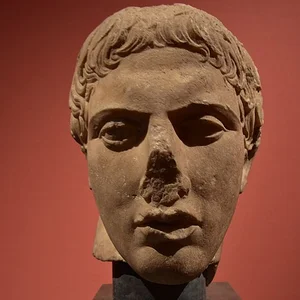
Hermes
Hermes is a major deity in Greek mythology, son of Zeus and Maia. He is venerated as the messenger of the gods, protector of commerce, travelers, and thieves, and identified with Mercury in Roman mythology.
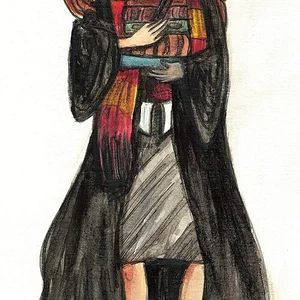
Hermione
Hermione Granger is a fictional character created by J.K. Rowling, the heroine of the "Harry Potter" series published from 1997 onward. Born to Muggle parents in 1979, she embodies the brilliant, studious, and loyal witch whose intelligence and courage play a decisive role in the fight against Voldemort.
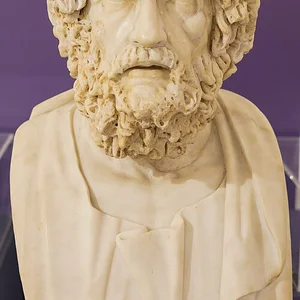
Homer
900 av. J.-C. — 800 av. J.-C.
Homer is an ancient Greek epic poet, traditionally dated to the 9th–8th century BC, recognized as the author of two major epics: the Iliad and the Odyssey. These two founding works of Western literature recount the Trojan War and the return of Odysseus, shaping ancient Greek culture and influencing world literature.

Hypatia of Alexandria
vers 355/370 — 415
Greek mathematician, astronomer, and philosopher of the 4th–5th centuries, she taught in Alexandria and advanced the sciences of antiquity. An iconic figure of female scholarship, she was murdered in 415 during religious unrest.
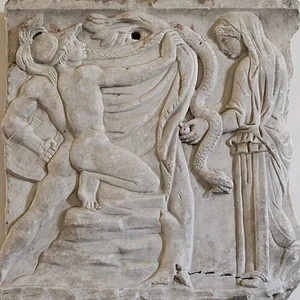
Jason
Jason is a hero of Greek mythology, son of Aeson and leader of the Argonauts. He undertakes a legendary quest to seize the Golden Fleece, a symbol of royal power. This adventure is one of the most celebrated in all of Greek mythology.
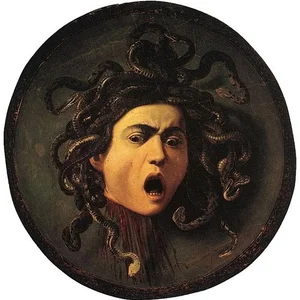
Medusa
In Greek mythology, Medusa is one of the three Gorgons — fearsome female monsters with snakes for hair whose gaze turns anyone who looks at them to stone. She is slain by the hero Perseus, who uses his shield as a mirror to face her without being petrified.
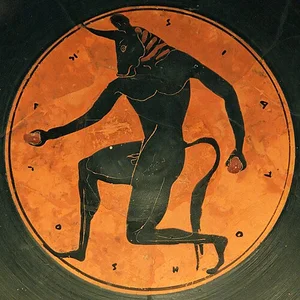
Minotaur
A monstrous creature of Greek mythology, half-man and half-bull, born from the unnatural union of Pasiphae and a bull sent by Poseidon. Imprisoned in the Labyrinth of Crete by King Minos, he was ultimately slain by the hero Theseus.
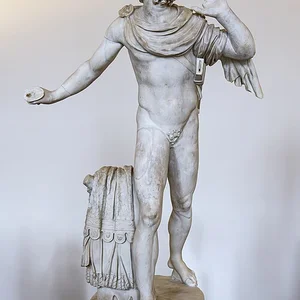
Odysseus
Legendary king of Ithaca, hero of Greek mythology celebrated for his intelligence and cunning. He is the central character of Homer's Odyssey, an epic poem recounting his ten years of wandering to return home after the Trojan War.
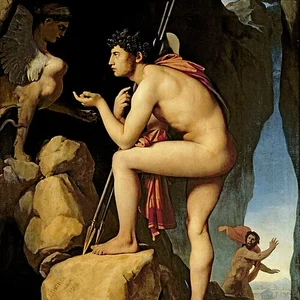
Oedipus
Legendary king of Thebes in Greek mythology, Oedipus is the hero of a classic tragedy exploring inevitable fate and destiny. Having unknowingly killed his father Laius and married his mother Jocasta, he embodies the archetype of a character caught in forces beyond his control.
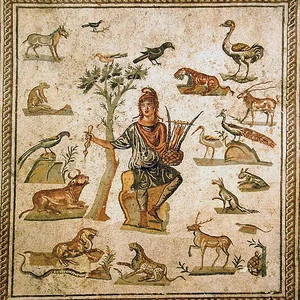
Orpheus
Legendary musician and poet of Greek mythology, son of Apollo and the Muse Calliope. He is famous for his magical lyre whose music enchanted gods, mortals, and nature alike. His love for Eurydice and his descent into the Underworld make up one of the greatest myths of Antiquity.
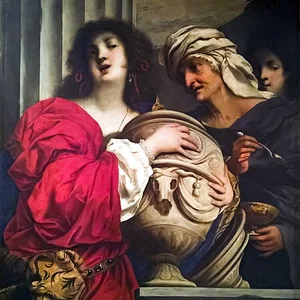
Pandora
Pandora is the first female figure in Greek mythology, created by the gods to punish humanity. She receives a jar (or box) containing all the evils of the world, which she opens out of curiosity, releasing suffering among humankind. Her myth illustrates the consequences of disobedience and the human condition.
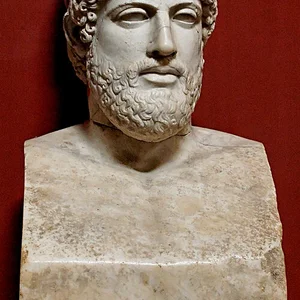
Pericles
493 av. J.-C. — 428 av. J.-C.
Pericles (495–429 BC) was an Athenian statesman who presided over the golden age of Athenian democracy in the 5th century BC. A dominant political leader for more than thirty years, he transformed Athens into the cultural and artistic center of ancient Greece, most notably by overseeing the construction of the Parthenon.
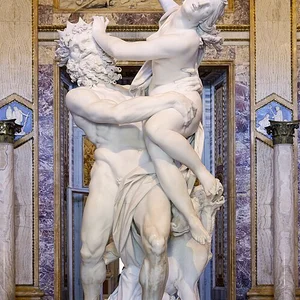
Persephone
Persephone is a goddess of Greek mythology, daughter of Demeter and Zeus. Abducted by Hades, the god of the Underworld, she becomes queen of the dead and rules alongside her husband. Her myth explains the changing of the seasons: her annual return to her mother brings about spring and summer.
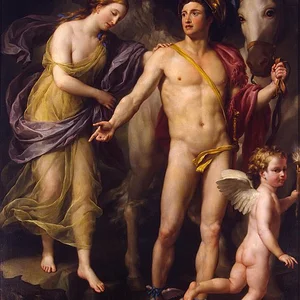
Perseus
Perseus is a hero of Greek mythology, son of Zeus and Danaë. He is famous for slaying the Gorgon Medusa and rescuing the princess Andromeda from a sea monster. His exploits make him one of the most important heroes in Greek mythology.

Philostratus of Athens
300 — ?
Greek writer and sophist of the 2nd–3rd century AD, Philostratus of Athens is celebrated for his Life of Apollonius of Tyana and his Lives of the Sophists. He moved in the literary circle of Empress Julia Domna in Rome.
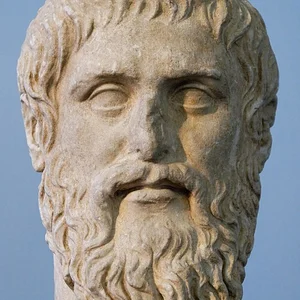
Plato
428 av. J.-C. — 348 av. J.-C.
Ancient Greek philosopher (428–348 BC), founder of the Academy in Athens. A student of Socrates, he developed the Theory of Forms, arguing that the visible world is merely a shadow of an intelligible reality. His influence on Western thought is foundational.
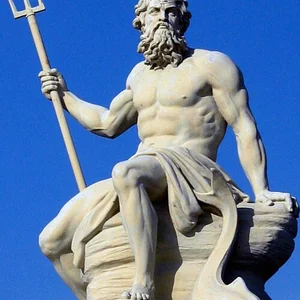
Poseidon
Greek god of the sea, oceans, and earthquakes, worshipped in ancient Greek mythology. Brother of Zeus and Hades, Poseidon rules over the seas and is often depicted wielding a trident. A central figure of the Olympian pantheon, he embodies the power of marine and seismic forces.
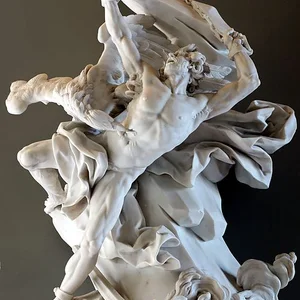
Prometheus
A Titan of Greek mythology, Prometheus is the symbol of human progress and rebellion against divine authority. He stole fire from the heavens to give it to humankind, transforming their condition and granting them access to civilization. Punished by Zeus for this act of defiance, he embodied the values of humanity and self-sacrifice.
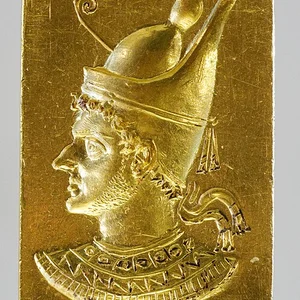
Ptolemy
250 — 350
A Greek astronomer and mathematician of the 2nd century CE, Ptolemy developed the geocentric model that dominated Western astronomy for over a thousand years. His major work, the Almagest, is a foundational treatise of ancient astronomy compiling observations and mathematical theories.
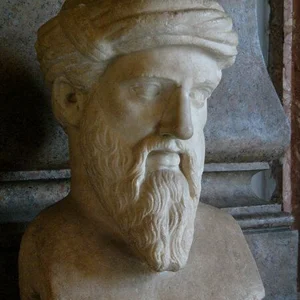
Pythagoras
582 av. J.-C. — 490 av. J.-C.
Greek philosopher and mathematician (c. 580–495 BC) from the island of Samos. Founder of a philosophical community in southern Italy, he is famous for his work in geometry, particularly the theorem bearing his name that relates the sides of a right triangle.
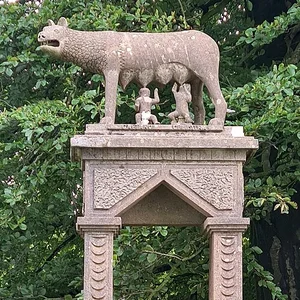
Romulus and Remus
Twin brothers of Roman mythology, legendarily raised by a she-wolf after being abandoned at birth. Romulus is presented as the founder and first king of Rome in 753 BC, while Remus is said to have perished during the founding of the city.
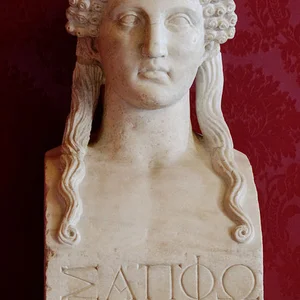
Sappho
650 av. J.-C. — 569 av. J.-C.
Greek lyric poet of the 7th century BCE, from the island of Lesbos. Recognized as one of the greatest poets of ancient Greece, she composed intimate lyric poems expressing personal emotions, particularly about love and friendship. Her work, largely lost, has profoundly influenced Western literature.
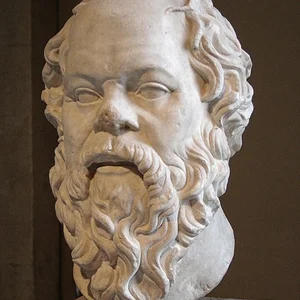
Socrates
469 av. J.-C. — 398 av. J.-C.
Athenian philosopher (469–399 BC) and founder of Western philosophy. He left no writings, yet profoundly influenced his contemporaries through his method of questioning known as maieutics. Condemned to death by the city of Athens, he stands as the embodiment of a philosopher's commitment to truth.
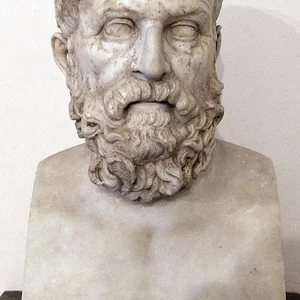
Solon
629 av. J.-C. — 559 av. J.-C.
Solon (629–559 BC) was an Athenian statesman and lawmaker who profoundly reformed the city of Athens in the early 6th century BC. His laws laid the foundations of Athenian democracy by limiting the power of the aristocracy and granting rights to citizens.
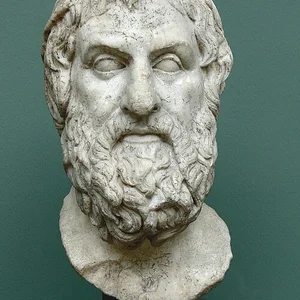
Sophocles
495 av. J.-C. — 405 av. J.-C.
Sophocles (495–405 BC) was a major Athenian playwright of ancient Greece. Author of tragedies such as Antigone and Oedipus Rex, he profoundly shaped the development of Western theatre by exploring moral dilemmas and human fate.
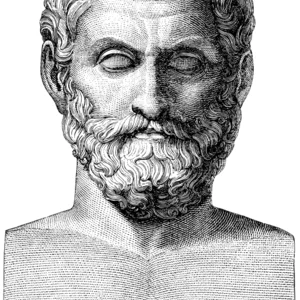
Thales
624 av. J.-C. — 545 av. J.-C.
A Greek philosopher and scholar of the 6th century BCE, Thales of Miletus is considered the founder of Greek geometry. He is famous for his geometric theorems — particularly the theorem bearing his name on the proportionality of line segments — and for his pioneering work in mathematics and astronomy.
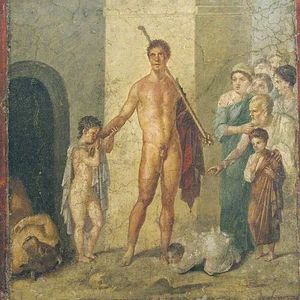
Theseus
Legendary hero of Greek mythology and king of Athens. Theseus is best known for slaying the Minotaur, a half-man half-bull monster imprisoned in the Labyrinth of Crete. He embodies the civilizing hero and unifier of Attica.
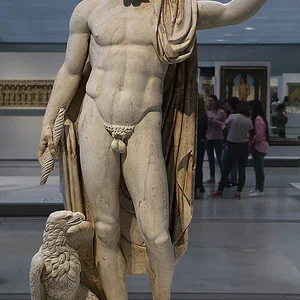
Zeus
Zeus is the king of the Olympian gods in ancient Greek mythology. God of the sky, lightning, and thunder, he embodies divine authority and celestial justice. A central figure in Greek religion, he was worshipped throughout the ancient Greek world.
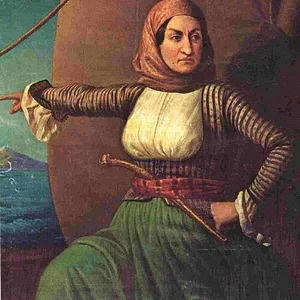
Laskarina Bouboulina
1771 — 1825
Laskarína Bouboulína was a Greek heroine of the War of Independence against the Ottoman Empire. Arming and financing her own war fleet, she took an active part in naval combat from 1821, most notably during the blockade of Nafplio. She is the only woman to have received the honorary title of admiral in the Russian Imperial Navy.