 flip
flipGrilled Splanchna from Sacrifices — Offal on a Spit
Grilled Splanchna from Sacrifices — Offal on a Spit
Why this dish? Before the battle at the seventh gate, a Greek king sacrifices to the gods. The splanchna — liver, heart, kidneys — are roasted on the altar, tasted by those who participate in the rite, while the smoke and fat-wrapped bones rise to the Olympians. For Eteocles, who consults omens before facing Polynices, this is the dish of augury.
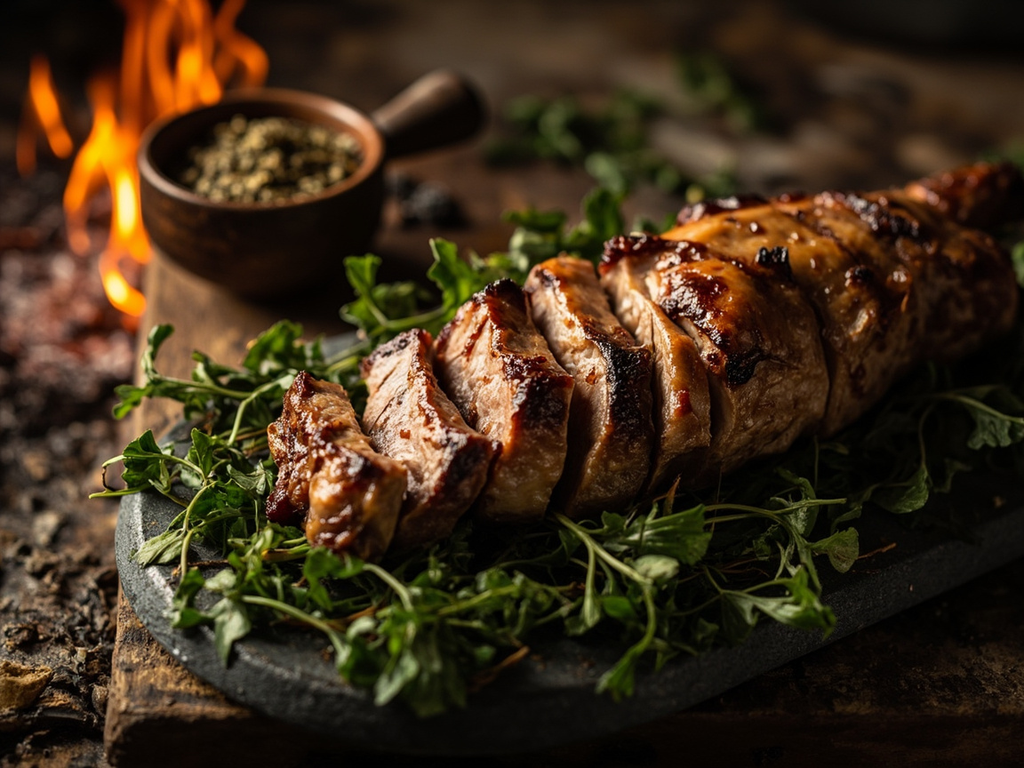
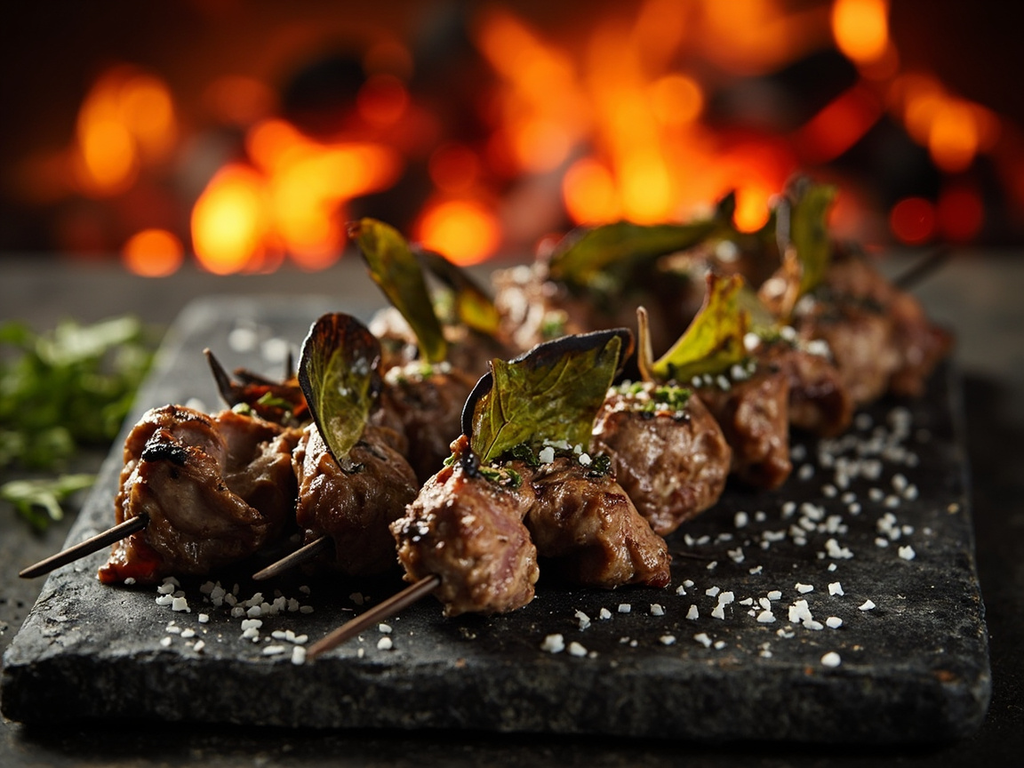
Offal skewered and grilled over the flame, salted and drizzled with olive oil: the meat shared during sacrifices, eaten hot from the altar.
Before I climb the ramparts, I offer the gods what is theirs: the smoke of the thighs and the gleaming fat. But the entrails, you see, the splanchna — those are for us, the living, to taste — we pass them on a spit over the embers of the altar, salt them, pour oil, and read the omen before eating. I sought my fate and my brother's in them. Eat standing by the fire, like a man about to fight.
- •Liver and heart (sheep or goat) — according to the beast (splanchna, heart of the rite)
- •Kidneys — a few (grilled offal)
- •Olive oil — for drizzling (fat and sheen)
- •Sea salt — generous (seasoning)
- •Thyme or wild oregano — a handful (scent of the hills)
Grilled Splanchna from Sacrifices — Offal on a Spit
Offal skewered and grilled over the flame, salted and drizzled with olive oil: the meat shared during sacrifices, eaten hot from the altar.
Why this dish? Before the battle at the seventh gate, a Greek king sacrifices to the gods. The splanchna — liver, heart, kidneys — are roasted on the altar, tasted by those who participate in the rite, while the smoke and fat-wrapped bones rise to the Olympians. For Eteocles, who consults omens before facing Polynices, this is the dish of augury.
Before I climb the ramparts, I offer the gods what is theirs: the smoke of the thighs and the gleaming fat. But the entrails, you see, the splanchna — those are for us, the living, to taste — we pass them on a spit over the embers of the altar, salt them, pour oil, and read the omen before eating. I sought my fate and my brother's in them. Eat standing by the fire, like a man about to fight.
Ingredients (period version)
- Liver and heart (sheep or goat) — according to the beast (splanchna, heart of the rite)
- Kidneys — a few (grilled offal)
- Olive oil — for drizzling (fat and sheen)
- Sea salt — generous (seasoning)
- Thyme or wild oregano — a handful (scent of the hills)
Ingredients
- Lamb liver — 300 g (main offal)
- Lamb heart (or kidneys) — 200 g (secondary offal)
- Olive oil — 3 tbsp (marinade and cooking)
- Salt — to taste (seasoning)
- Dried oregano — 1 tsp (flavor)
- Bay leaves — 2-3 (flavor (separators on skewer))
Method
- Cut the offal into large, even cubes, rinse and pat dry.
- Thread onto skewers (soaked wooden or metal), alternating with bay leaves.
- Brush with olive oil and sprinkle with oregano.
- Grill over hot embers or a very hot griddle for 2-3 minutes per side: the outside should sear, the inside remain pink.
- Salt only after removing from the fire and serve immediately, very hot.
How it was made : In a Greek sacrifice (thysia), the bones and fat were burned for the gods, while the splanchna (viscera) were roasted and shared among the participants. The rest of the meat was boiled or roasted for the banquet. Salting after cooking prevented the offal from toughening.
The contemporary twist : Serve as appetizer skewers with flaky sea salt and lemon zest — an ancient Greek "yakitori."
Sources : Homer, Iliad, Book I (description of sacrifice and cooking of splanchna) · Jean-Louis Durand, Sacrifice et labour en Grèce ancienne (1986)
Eteocles · Charactorium