 flip
flipRoggebrood, the rye bread that travels
Roggebrood, the rye bread that travels
Why this dish? A dense bread that keeps for weeks: this is the bread you take with you. In Westerbork and then in the trains, it was this kind of bread that deportees slipped into their bags — Etty was among those who, from the train to the East, threw out a postcard. A rye bread, heavy and nourishing, for the road.
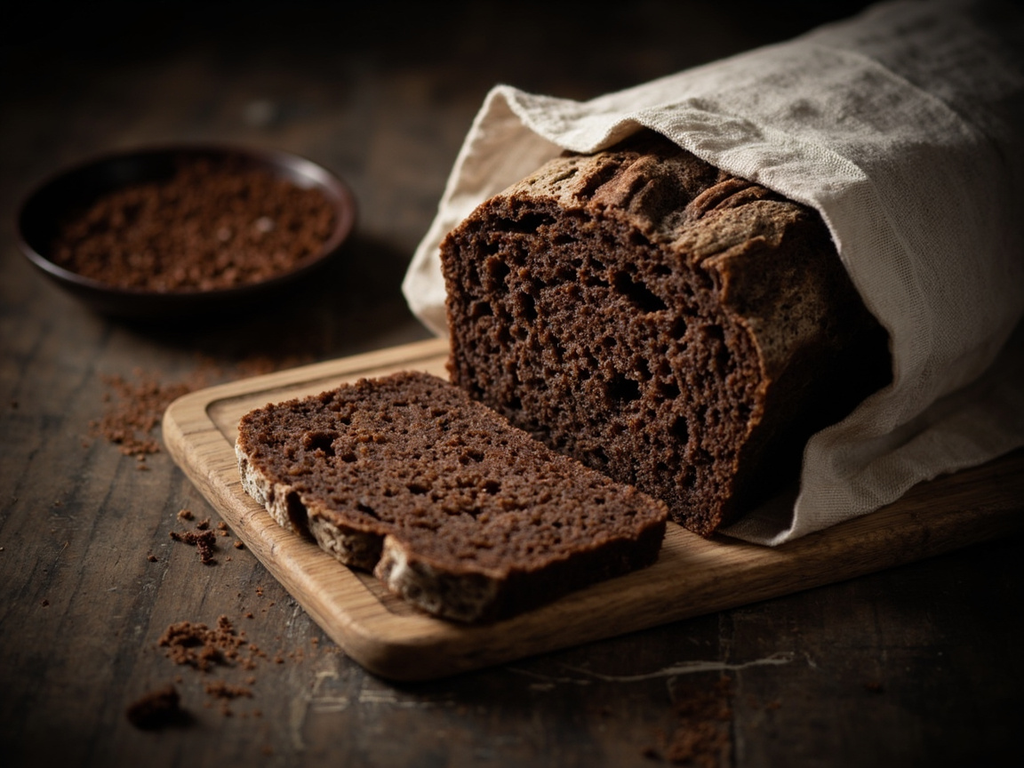
A compact, almost black rye bread with a tight crumb and a slightly sour taste. Baked long and slow, it keeps for a very long time without going stale — hence its place in luggage and travel rations.
Rye bread is the bread that lasts. We bake it long, very gently, until it becomes dark and dense, and then it keeps for days and days without hardening. That's the one we cut into thin slices for the journey, wrap in a cloth at the bottom of the bag. A slice, a bit of cheese if we have it, and we keep going. Where I am going, we will need this sturdy bread — and a little courage that cannot be packed in the bag.
- •Whole rye flour — the base (structure)
- •Rye sourdough starter — a piece saved from the previous batch (fermentation, acidity)
- •Water — as needed (hydration)
- •Salt — a generous pinch (seasoning, preservation)
Roggebrood, the rye bread that travels
A compact, almost black rye bread with a tight crumb and a slightly sour taste. Baked long and slow, it keeps for a very long time without going stale — hence its place in luggage and travel rations.
Why this dish? A dense bread that keeps for weeks: this is the bread you take with you. In Westerbork and then in the trains, it was this kind of bread that deportees slipped into their bags — Etty was among those who, from the train to the East, threw out a postcard. A rye bread, heavy and nourishing, for the road.
Rye bread is the bread that lasts. We bake it long, very gently, until it becomes dark and dense, and then it keeps for days and days without hardening. That's the one we cut into thin slices for the journey, wrap in a cloth at the bottom of the bag. A slice, a bit of cheese if we have it, and we keep going. Where I am going, we will need this sturdy bread — and a little courage that cannot be packed in the bag.
Ingredients (period version)
- Whole rye flour — the base (structure)
- Rye sourdough starter — a piece saved from the previous batch (fermentation, acidity)
- Water — as needed (hydration)
- Salt — a generous pinch (seasoning, preservation)
Ingredients
- Whole rye flour — 500 g (structure)
- Active rye sourdough starter — 150 g (fermentation, acidity)
- Warm water — 350 ml (hydration)
- Salt — 10 g (seasoning, preservation)
- Molasses or syrup (optional) — 1 tbsp (color, roundness)
Method
- Mix the starter, warm water, and molasses. Add the rye flour and salt. Work into a very dense, sticky dough (rye does not form an elastic gluten network: this is normal).
- Press the dough into a well-greased loaf pan. Smooth the surface with a wet hand.
- Cover and let ferment at room temperature for 4 to 6 hours, until cracks appear on the surface.
- Bake at 180°C (350°F) for 1 hour, then reduce to 150°C (300°F) and continue for 1 to 1.5 hours: the long, gentle baking gives it density and keeping quality.
- Let cool completely, then wrap in a cloth. Wait 24 hours before slicing very thinly.
- The bread keeps for several days to a week when wrapped.
How it was made : Roggebrood (rye bread) is traditional in the north and east of the Netherlands, baked for hours in a declining oven. Its density and natural acidity make it non-perishable — it was par excellence the bread of reserve and travel, before modern leavened breads.
The contemporary twist : Thin slices with aged Gouda cheese and a touch of mustard: "roggebrood met kaas" remains a Dutch lunch classic.
Etty Hillesum · Charactorium