 flip
flipCriollo Beef and Cumin Empanadas
Criollo Beef and Cumin Empanadas
Why this dish? Daughter of a modest background from Los Toldos and then Junín, Eva grew up with these stuffed pastries that were slipped into a pocket for work or the train journey to Buenos Aires. Food of the descamisados par excellence, they were eaten standing up, without tablecloth or cutlery—like the people she claimed to embody.
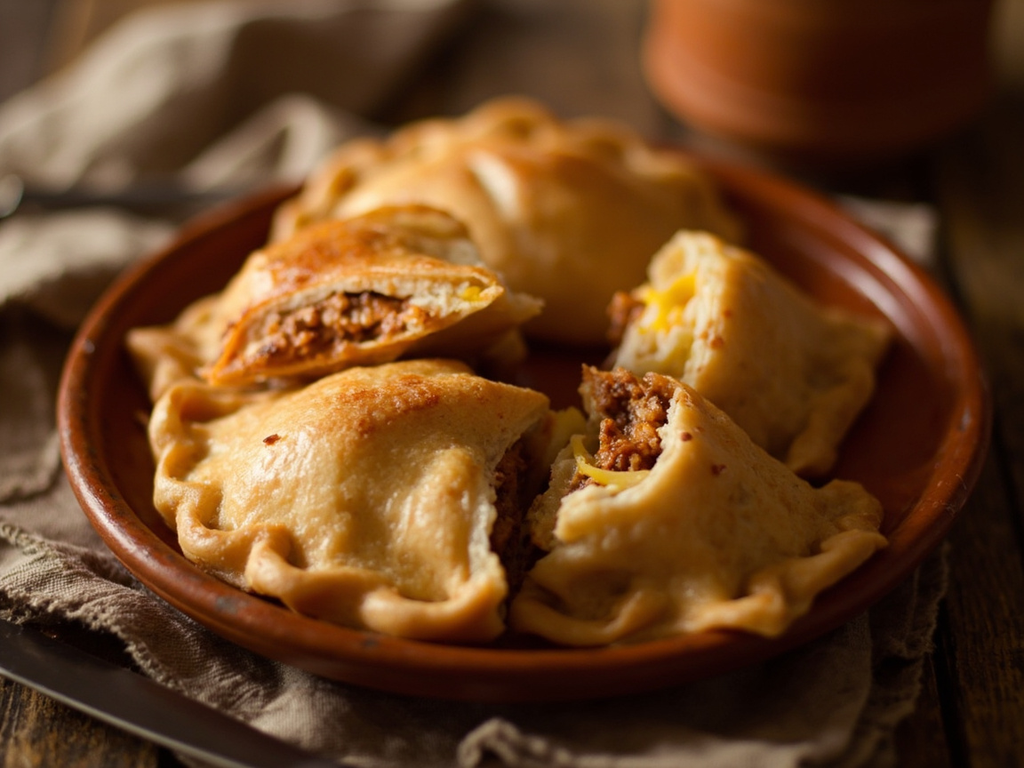
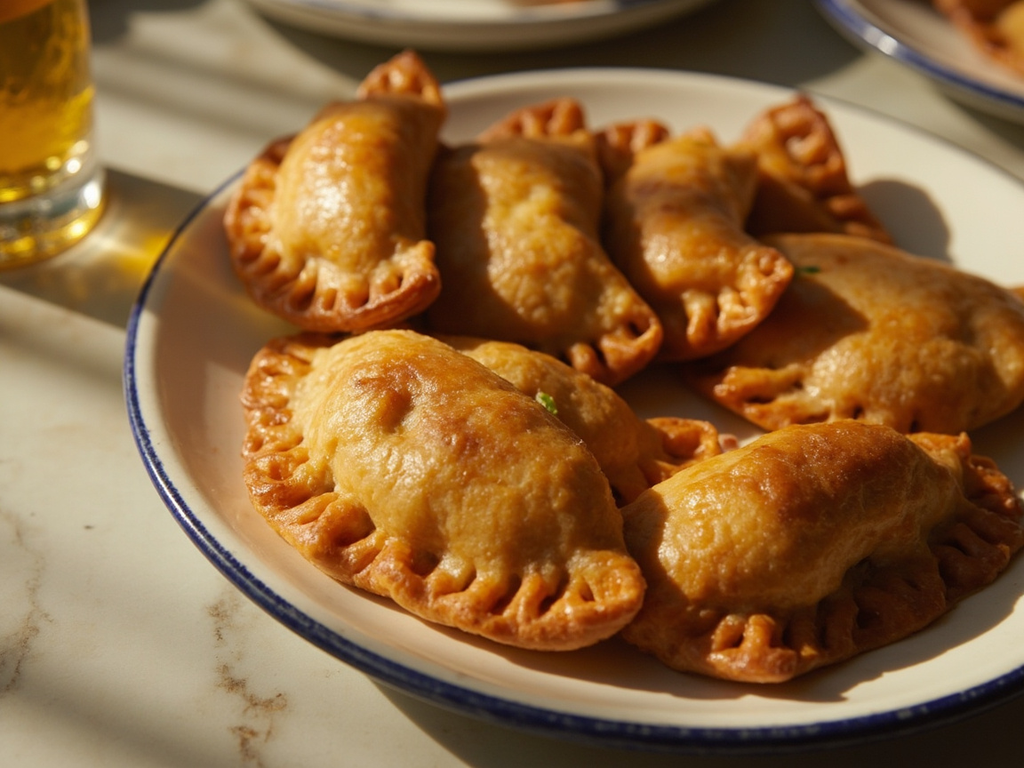
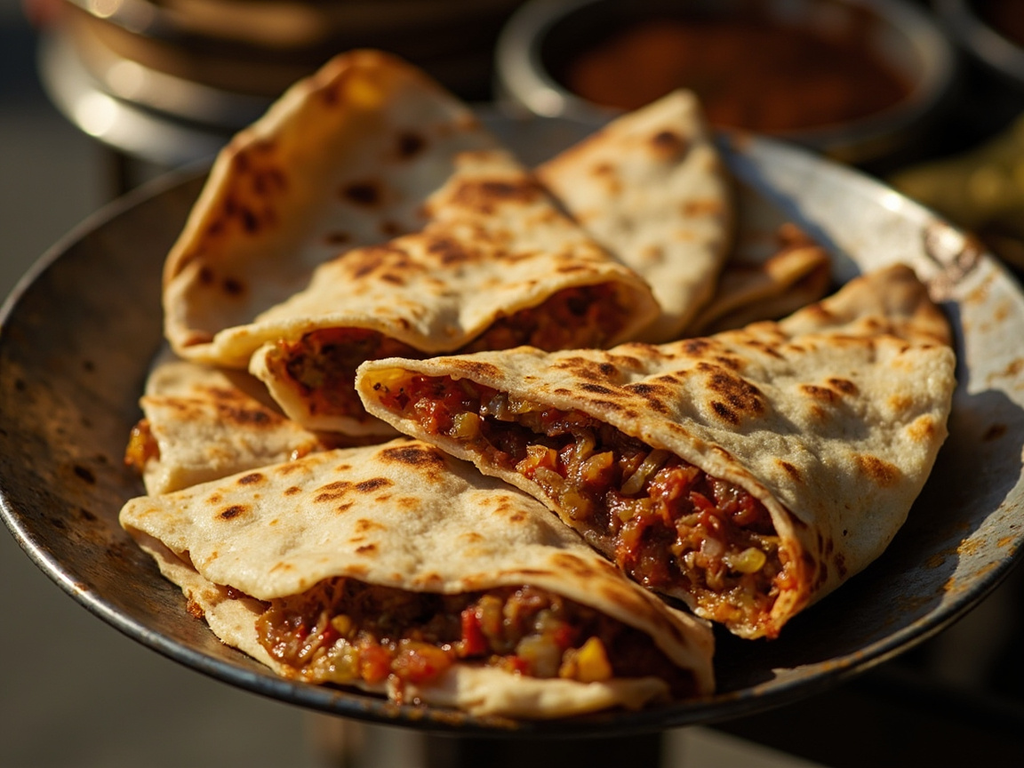
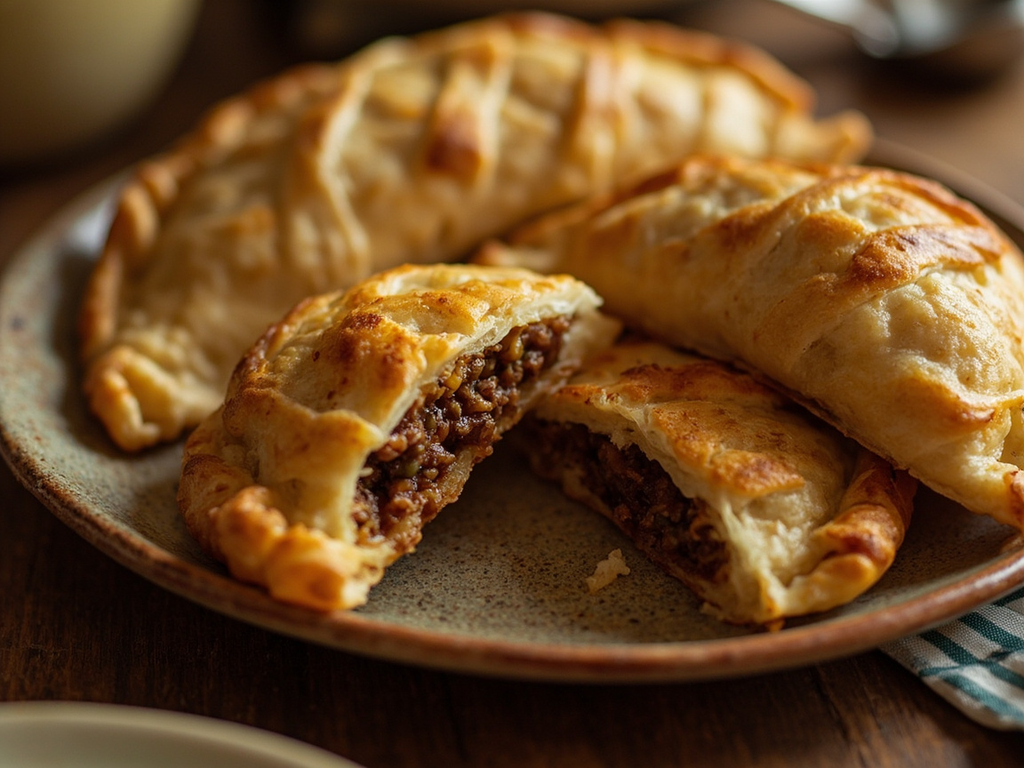
Small pastry turnovers filled with a hash of beef, melted onion, hard-boiled egg and olives, seasoned with cumin and sweet pimentón, folded into a repulgue (braided edge) and baked.
My dear ones, come closer. The empanada is the bread of the humble, and I come from the humble—never forget that. At home we chopped the meat with a knife, never a machine, and we packed the filling tight so no worker would go hungry halfway to the factory. The secret, here it is, I give it to you: a little cumin, a hint of pimentón, and the edge pinched thirteen times so it won't open in the oven. You eat them by hand, like brothers—that's the people at the table.
- •Wheat flour dough with lard — one family batch (envelope)
- •Beef chopped with a knife — a good portion (main filling)
- •Onions — abundant (melting base)
- •Cumin and sweet pimentón — a generous pinch (aromatic signature)
- •Hard-boiled eggs and green olives — a few (traditional garnish)
Criollo Beef and Cumin Empanadas
Small pastry turnovers filled with a hash of beef, melted onion, hard-boiled egg and olives, seasoned with cumin and sweet pimentón, folded into a repulgue (braided edge) and baked.
Why this dish? Daughter of a modest background from Los Toldos and then Junín, Eva grew up with these stuffed pastries that were slipped into a pocket for work or the train journey to Buenos Aires. Food of the descamisados par excellence, they were eaten standing up, without tablecloth or cutlery—like the people she claimed to embody.
My dear ones, come closer. The empanada is the bread of the humble, and I come from the humble—never forget that. At home we chopped the meat with a knife, never a machine, and we packed the filling tight so no worker would go hungry halfway to the factory. The secret, here it is, I give it to you: a little cumin, a hint of pimentón, and the edge pinched thirteen times so it won't open in the oven. You eat them by hand, like brothers—that's the people at the table.
Ingredients (period version)
- Wheat flour dough with lard — one family batch (envelope)
- Beef chopped with a knife — a good portion (main filling)
- Onions — abundant (melting base)
- Cumin and sweet pimentón — a generous pinch (aromatic signature)
- Hard-boiled eggs and green olives — a few (traditional garnish)
Ingredients
- Empanada dough discs (or shortcrust pastry) — 12 discs (envelope)
- Ground beef — 400 g (filling)
- Onions — 2 large (base)
- Ground cumin — 1 tsp (signature spice)
- Sweet pimentón — 1 tsp (color and sweetness)
- Hard-boiled eggs — 2 (garnish)
- Pitted green olives — 12 (garnish)
- Egg yolk for glazing — 1 (finish)
Method
- Gently melt the sliced onions, add the beef and sear, then season with cumin, pimentón, salt and pepper. Let cool and refrigerate (the filling must be cold).
- Fill each disc with a spoonful of filling, a piece of hard-boiled egg and an olive.
- Fold into a half-moon, seal the moistened edge, then form the repulgue by folding the dough in small pleats.
- Brush with egg yolk and bake for 18–20 minutes at 200 °C until golden brown.
How it was made : In Argentina before the refrigerator, the filling was cooked the day before and then enclosed in the dough, which extended its preservation by a day—hence the success of the empanada as travel and construction site food. Each province had its own repulgue, a true visual signature of the cook.
The contemporary twist : Serve as an appetizer with a squeeze of lemon juice and a criolla sauce (tomato, onion, bell pepper) for a tangy twist.
Sources : Doña Petrona C. de Gandulfo, El libro de Doña Petrona (1934)
Eva Perón · Charactorium