 flip
flipThe Street Empanadas of Buenos Aires
The Street Empanadas of Buenos Aires
Why this dish? In the Buenos Aires that Borges walked — cafés, bookstores, streets of Palermo — the empanada is the universal snack eaten standing or taken away; popular food of the city he celebrated in his neighborhood poems.
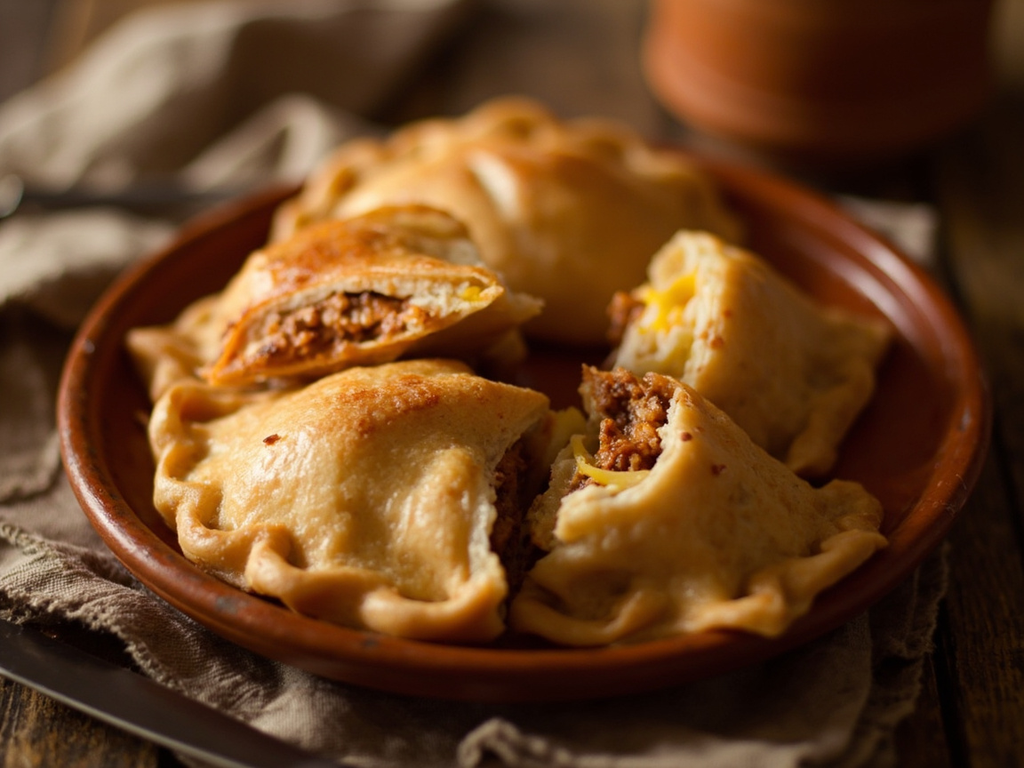
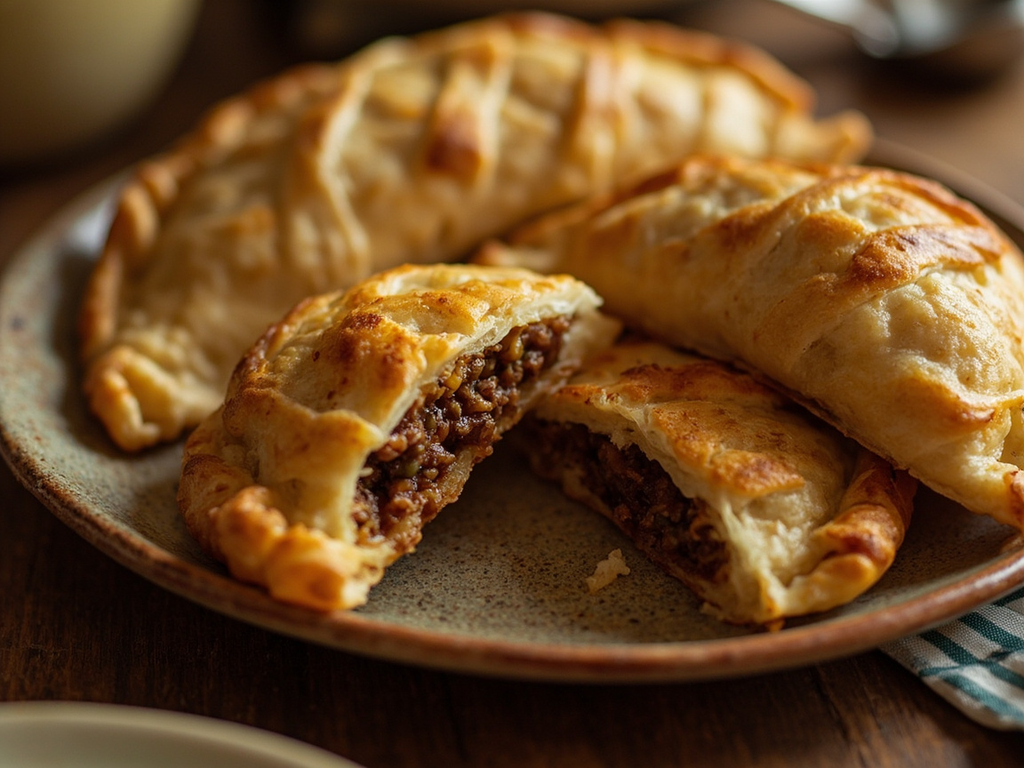
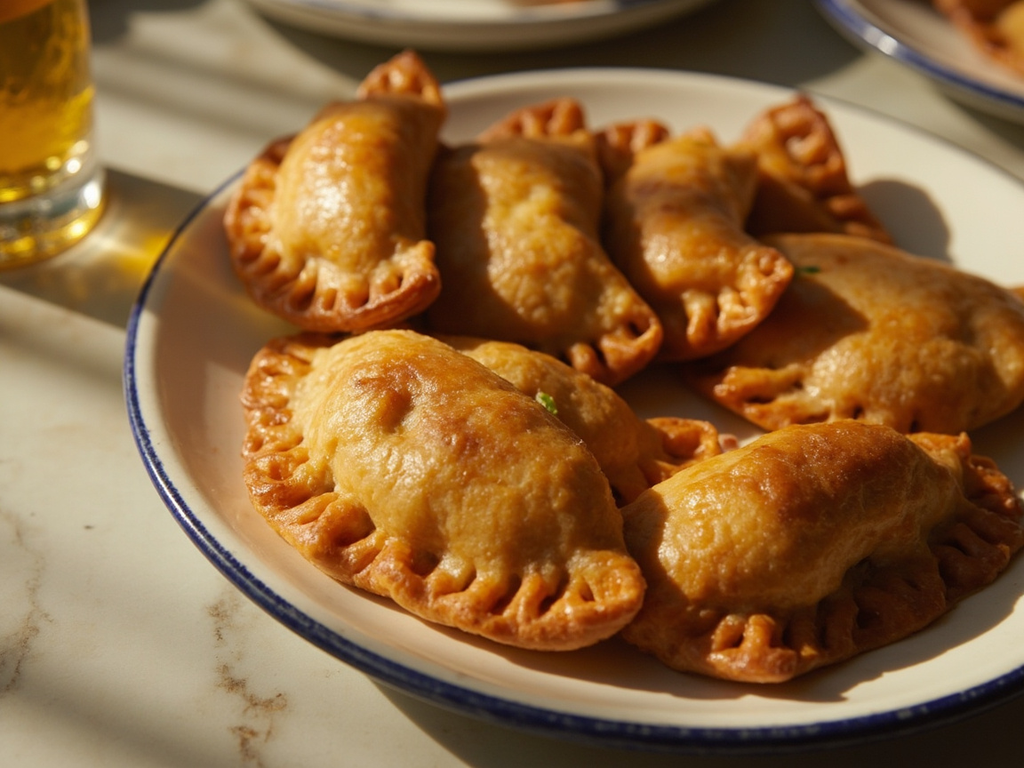
Small pastry pies filled with knife-chopped beef, onion, cumin, and hard-boiled egg, baked. Held in the hand, eaten while walking or between two pages.
Buenos Aires is also eaten by hand, along its straight streets and its cafés where one remakes the world. The empanada is recognized by its repulgue, that pinched crimp on the edge which, they say, indicates the filling it hides — each cook has her own code. The good one is made with knife-cut meat, never machine-minced, seasoned with cumin and pimentón, with a piece of hard-boiled egg and a few olives. You hold it in a handkerchief, bite from one corner, and continue on your way: it is the cuisine of strollers, and I was a great stroller.
- •Wheat flour dough, fat and salted water — enough to cut discs (wrapper)
- •Knife-cut beef — in proportion (filling)
- •Onion — in good quantity (filling base)
- •Cumin, pimentón (paprika), hard-boiled egg, olives — to taste (seasoning and garnish)
The Street Empanadas of Buenos Aires
Small pastry pies filled with knife-chopped beef, onion, cumin, and hard-boiled egg, baked. Held in the hand, eaten while walking or between two pages.
Why this dish? In the Buenos Aires that Borges walked — cafés, bookstores, streets of Palermo — the empanada is the universal snack eaten standing or taken away; popular food of the city he celebrated in his neighborhood poems.
Buenos Aires is also eaten by hand, along its straight streets and its cafés where one remakes the world. The empanada is recognized by its repulgue, that pinched crimp on the edge which, they say, indicates the filling it hides — each cook has her own code. The good one is made with knife-cut meat, never machine-minced, seasoned with cumin and pimentón, with a piece of hard-boiled egg and a few olives. You hold it in a handkerchief, bite from one corner, and continue on your way: it is the cuisine of strollers, and I was a great stroller.
Ingredients (period version)
- Wheat flour dough, fat and salted water — enough to cut discs (wrapper)
- Knife-cut beef — in proportion (filling)
- Onion — in good quantity (filling base)
- Cumin, pimentón (paprika), hard-boiled egg, olives — to taste (seasoning and garnish)
Ingredients
- Empanada discs (or homemade shortcrust pastry) — 12 discs (wrapper)
- Ground or knife-cut beef — 400 g (filling)
- Onions — 2 large, sliced (filling base)
- Cumin, sweet paprika, a pinch of chili flakes — 1 tsp each (spices)
- Hard-boiled eggs + pitted green olives — 2 eggs + 12 olives (garnish)
- 1 beaten egg (egg wash) — 1 (oven glaze)
Method
- Sauté the sliced onions over low heat until soft, add the meat, cumin, paprika, chili, and salt; cook briefly and let cool.
- Fill each disc with a spoonful of filling, a piece of hard-boiled egg, and an olive.
- Moisten the edges, fold into a half-moon and seal with a repulgue (pinched crimp) or with a fork.
- Brush with beaten egg and bake at 200 °C for 18–22 min until golden.
- Serve warm, to eat by hand.
How it was made : The empanada, inherited from Spain and spread throughout Latin America, has countless regional variants in Argentina (salta, tucumana…). In the past, the meat was cut with a knife for a juicier filling; the repulgue, unique to each household, served to distinguish the fillings. Traditionally cooked in a wood-fired oven, later in a gas oven.
The contemporary twist : Present an assortment where each repulgue codes a different filling and include a small card 'to decode', Borgesian puzzle style.
Jorge Luis Borges · Charactorium