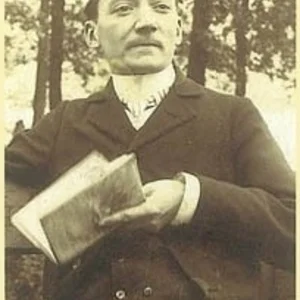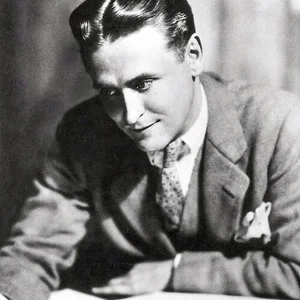

American writer (1896-1940), a major figure of 20th-century literature. A chronicler of the Roaring Twenties, he embodies and critiques the American Dream in novels such as The Great Gatsby.
F. Scott Fitzgerald(1896 — 1940)
F. Scott Fitzgerald
États-Unis
6 min read
Frequently asked questions
Famous Quotes
« So we beat on, boats against the current, borne back ceaselessly into the past.»
Key Facts
- Born in 1896 in Saint Paul, Minnesota, in the United States
- Published his first novel, This Side of Paradise, in 1920, which made him famous
- Published The Great Gatsby in 1925, his most famous work
- A figure of the “Lost Generation” of American writers who lived as expatriates in Paris during the 1920s
- Died of a heart attack in 1940 in Hollywood, at the age of 44
Works & Achievements
First novel, an immediate success that made Fitzgerald the voice of the post-war generation of youth.
A novel about a young couple destroyed by idleness and money, mirroring his own life with Zelda.
A masterpiece about the American Dream and its illusions, now a worldwide literary classic.
A novel about the downfall of a psychiatrist and his wife, drawn from Zelda's illness and their years in Europe.
A series of autobiographical essays in which Fitzgerald examines his own personal collapse with clear-eyed honesty.
An unfinished novel about life behind the scenes in Hollywood, published posthumously.
A collection of short stories that gave a whole era its name, the “Jazz Age.”
Anecdotes
Fitzgerald's full name was Francis Scott Key Fitzgerald: his parents named him in honor of a distant cousin, Francis Scott Key, who wrote the lyrics of the American national anthem, “The Star-Spangled Banner.”
At 24, Fitzgerald published his first novel, *This Side of Paradise* (1920), which became an immediate success. The following week, he married Zelda Sayre, who had initially refused his proposal because he was not yet rich enough.
Fitzgerald and Zelda embodied the flashy extravagance of the Roaring Twenties: it is said that they jumped fully clothed into the fountains of New York and rode down the staircases of the Plaza Hotel. Yet their lavish lifestyle often left them in debt.
*The Great Gatsby* (1925), now regarded as a masterpiece, was a commercial failure during the author's lifetime: when he died in 1940, unsold copies were still sitting in the publisher's warehouses. His posthumous fame came mainly after the Second World War.
To earn a living, Fitzgerald wrote dozens of short stories for magazines such as the Saturday Evening Post, sometimes paid several thousand dollars apiece. In the 1930s, broke and alcoholic, he went to Hollywood to work as a screenwriter for the studios.
Primary Sources
Gatsby believed in the green light, the orgastic future that year by year recedes before us. It eluded us then, but that's no matter—tomorrow we will run faster, stretch out our arms farther…
Of course all life is a process of breaking down.
Everything I have achieved in life came from shaping my character through work and effort, and not from merely having a good time.
A new generation had grown up, dedicated more than the last to the worship of success; having found all Gods dead, all wars fought, all faiths in man shaken.
Key Places
Fitzgerald's birthplace, in the American Midwest. He returns there several times and writes part of his early works in the city.
Prestigious university where Fitzgerald studies from 1913 without earning his degree. It inspires the setting of his first novel.
Wealthy region of the East Coast that serves as the model for the mansions of “West Egg” and “East Egg” in “The Great Gatsby.”
French Riviera where the Fitzgeralds settle in the 1920s among the community of American expatriates; Scott writes “Gatsby” there.
Capital where Fitzgerald mingles with the “Lost Generation” of expatriate American writers and meets Ernest Hemingway.
Film capital where Fitzgerald works as a screenwriter at the end of his life and where he dies in 1940.
Typical Objects

The daily working tool of the writer and screenwriter, on which Fitzgerald typed short stories and novels. A symbol of the professional author's craft of the era.

A small flat flask used to conceal alcohol during Prohibition. An iconic object of the gilded youth of the Roaring Twenties.

A short, fringe-adorned garment worn by the “flappers,” those emancipated young women of the 1920s whom Fitzgerald popularized in his stories.

A mixed drink emblematic of the high-society parties described in “Gatsby.” Gin and champagne flowed freely at the gatherings he depicts.

A luxury car symbolizing wealth and speed in the Roaring Twenties; it plays a tragic role in the plot of “The Great Gatsby.”

A personal register in which Fitzgerald recorded, year by year, the events of his life, his income, and his ideas for writing. A precious testimony to his work.
School Curriculum
Vocabulary & Tags
Key Vocabulary
Tags
Daily Life
Morning
Often having gone to bed late after an evening out, Fitzgerald would rise in the morning and begin by rereading what he had written the day before. During his productive periods, he devoted these hours to writing short stories destined for magazines.
Afternoon
The afternoon was reserved for the actual work of writing, which he carried out in pencil before having his texts typed up. He revised tirelessly, sometimes rewriting the same page several times over.
Evening
Evenings were given over to social life: dinners, parties, theaters, and clubs with Zelda and their friends. These alcohol-soaked festivities fed his stories but gradually undermined his health.
Food
Fitzgerald ate little and irregularly, often neglecting meals. Alcohol — gin, wine, and cocktails — held an overwhelming place in his daily life, especially in his final years.
Clothing
Elegant and mindful of his appearance, he wore the light-colored suits, shirts, and ties of the well-to-do bourgeoisie of the 1920s. This polished look embodied the refinement of the gilded youth he portrayed.
Housing
The couple moved house constantly: apartments in New York, rented villas on the French Riviera, luxury hotels, and houses in Hollywood. Living beyond his means, Fitzgerald never owned a stable home.
Historical Timeline
Period Vocabulary
Liens externes & ressources
Références
Œuvres
L'Envers du paradis (This Side of Paradise)
1920
Les Heureux et les Damnés (The Beautiful and Damned)
1922
Gatsby le Magnifique (The Great Gatsby)
1925
Tendre est la nuit (Tender Is the Night)
1934
La Fêlure (The Crack-Up)
1936
Le Dernier Nabab (The Last Tycoon)
1941
Les Contes de l'âge du jazz (Tales of the Jazz Age)
1922