 flip
flipGlutinous Rice with Honey and Jujubes for Offering
Glutinous Rice with Honey and Jujubes for Offering
Why this dish? On Buddhist festival days, the faithful placed sweet foods before the altars to honor the Buddha and feed the community. Faxian, who described with wonder the great processions and offerings of Sri Lanka and India, later shared these gifts with the other monks.
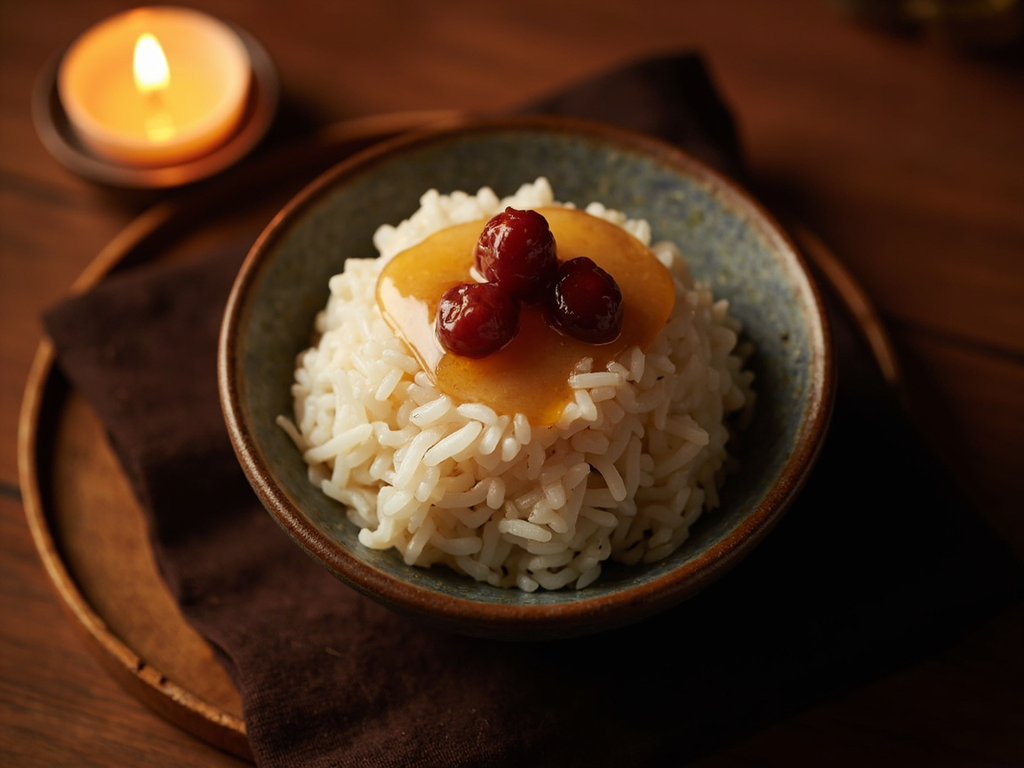
Steamed glutinous rice, sweetened with honey and studded with soft jujubes (Chinese dates). A festive dish, sweet and fragrant, prepared for offering then shared—the only sweetness the monks allowed themselves, and only on holy days.
Inspired by the offerings I saw blooming before the stūpas, beyond the seas. On great festivals, the laypeople bring their most precious rice, the sticky rice, and sweeten it with wild bees' honey. Red jujubes are tucked in, a sign of happiness. The bowl is placed before the image of the Awakened One, then shared—for every offering, when shared, becomes a blessing. Taste it: it is the sweetness of feast days.
- •Glutinous rice — one bowl (festive base)
- •Wild honey — as desired (sweetness)
- •Dried jujubes (Chinese dates) — a handful (auspicious fruit)
- •Water — for steaming (cooking)
Glutinous Rice with Honey and Jujubes for Offering
Steamed glutinous rice, sweetened with honey and studded with soft jujubes (Chinese dates). A festive dish, sweet and fragrant, prepared for offering then shared—the only sweetness the monks allowed themselves, and only on holy days.
Why this dish? On Buddhist festival days, the faithful placed sweet foods before the altars to honor the Buddha and feed the community. Faxian, who described with wonder the great processions and offerings of Sri Lanka and India, later shared these gifts with the other monks.
Inspired by the offerings I saw blooming before the stūpas, beyond the seas. On great festivals, the laypeople bring their most precious rice, the sticky rice, and sweeten it with wild bees' honey. Red jujubes are tucked in, a sign of happiness. The bowl is placed before the image of the Awakened One, then shared—for every offering, when shared, becomes a blessing. Taste it: it is the sweetness of feast days.
Ingredients (period version)
- Glutinous rice — one bowl (festive base)
- Wild honey — as desired (sweetness)
- Dried jujubes (Chinese dates) — a handful (auspicious fruit)
- Water — for steaming (cooking)
Ingredients
- Glutinous rice — 200 g (base)
- Dried jujubes (Chinese dates) — 8–10, pitted (sweet garnish)
- Honey — 2–3 tbsp (sweetener)
- Water — for soaking and steaming (cooking)
- A few sesame seeds — optional (decoration)
Method
- Soak the glutinous rice in cold water for at least 4 hours (ideally overnight), then drain.
- Rehydrate the jujubes in a little warm water if necessary.
- Steam the rice for 25–30 minutes, on a cloth, until tender and translucent.
- Off the heat, gently fold the honey into the hot rice.
- Mound into a dome in a bowl, arrange the jujubes on top, sprinkle with sesame seeds.
- First present as an offering, then share.
How it was made : Glutinous rice sweetened with honey and jujubes belongs to the long Chinese tradition of festive dishes (its spirit lives on in bābǎofàn, 'eight treasure rice'). Before refined cane sugar became abundant, honey and dried fruits were the sources of sweetness; red jujubes symbolized happiness and prosperity. Placing such foods before Buddhist altars was an act of merit, followed by sharing with the community.
The contemporary twist : Mold it in a small bowl then unmold into a dome, like a pudding, and drizzle with warm honey at serving—a sweet 'offering' to end a meal.
Faxian · Charactorium