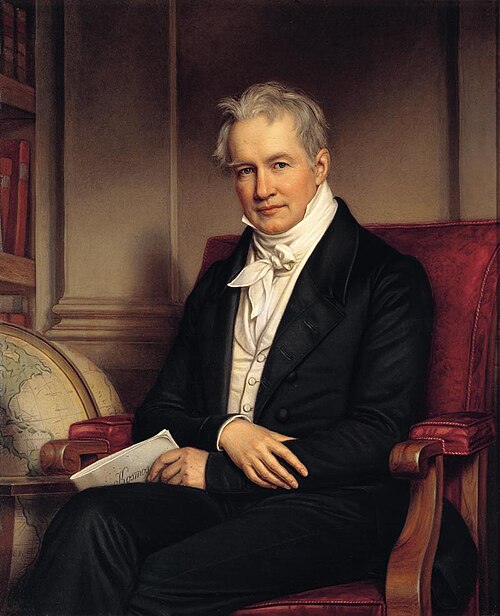
Felix Klein(1849 — 1925)
Felix Klein
royaume de Prusse, république de Weimar, Empire allemand
8 min read
German mathematician (1849–1925), Felix Klein is celebrated for his Erlangen Programme, which unifies geometries through group theory. He contributed to topology, analysis, and mathematics education.
Frequently asked questions
Key Facts
- 1849: born in Düsseldorf
- 1872: publishes the Erlangen Programme, unifying geometries through group theory
- 1882: describes the topological surface known as the Klein bottle
- 1886–1913: professor at the University of Göttingen, which he raises to the status of world capital of mathematics
- 1925: dies in Göttingen
Works & Achievements
A foundational text in which Klein proposes to define and classify all geometries as the study of the invariants of a group of transformations. This vision revolutionized geometry and influenced all of twentieth-century mathematics.
A masterwork linking the symmetry of the regular icosahedron, group theory, and the resolution of algebraic equations. Klein reveals deep connections between geometry, algebra, and analysis.
Klein describes for the first time this non-orientable, boundaryless surface — an iconic object of modern topology — that strikingly illustrates the limits of our everyday spatial intuition.
A major pedagogical work in two volumes aimed at secondary school teachers, in which Klein shows how high school mathematics connects with higher mathematics. Translated into several languages, it profoundly influenced teacher training across Europe and the United States.
Klein initiated and coordinated this colossal encyclopedic project, written in Franco-German collaboration, which aimed to catalogue all of the mathematics of his era. A monument of international scientific cooperation.
A major historical work published posthumously, in which Klein traces the evolution of nineteenth-century mathematics from the perspective of a privileged witness and central figure of that extraordinary period.
Anecdotes
In 1872, at just 23 years old, Felix Klein was appointed professor at the University of Erlangen. For his inaugural lecture, he presented a revolutionary text proposing to unify all known geometries through group theory. This text, remembered in history as the 'Erlangen Programme', is today considered one of the most important manifestos in modern mathematics.
Around 1882, Klein found himself in an intense intellectual rivalry with French mathematician Henri Poincaré over automorphic functions. The two men exchanged letters at a furious pace, each seeking to outrun the other in their discoveries. This exhausting competition triggered a severe nervous breakdown in Klein that forced him to slow his research; he would never again reach the same level of creative productivity, but he then turned successfully to teaching and the organization of mathematics.
Felix Klein is the originator of the famous 'Klein bottle', a strange geometric surface he described in 1882: it has neither inside nor outside, and cannot exist without self-intersecting in our three-dimensional space. Legend has it that the name results from a translation error, with the German 'Kleinsche Fläche' (Klein surface) being misread as 'Kleinsche Flasche' (Klein bottle) — a mistake that was then picked up in English and made famous.
From the 1890s onward, Klein made Göttingen one of the world capitals of mathematics by attracting the best European and American researchers, including David Hilbert. He also persuaded industrialists and the Prussian state to fund chairs and scientific equipment, thereby inventing a modern form of patronage for university research. His efforts profoundly transformed the German university.
Klein was a passionate reformer of mathematics education. He campaigned throughout his life for differential and integral calculus to be introduced in German secondary schools (Gymnasien), believing that students should understand mathematics intuitively before approaching it in an abstract way. His lecture series 'Elementary Mathematics from an Advanced Standpoint', delivered at Göttingen, influenced generations of teachers well beyond Germany.
Primary Sources
The approach consists in considering a space and a group of transformations of that space, and developing the theory of invariants with respect to that group.
Klein develops a geometric vision of Riemann's function theory, connecting Riemann surfaces, topology, and complex analysis in an original synthesis.
Equations of the fifth degree find their natural solution in the symmetry of the regular icosahedron, revealing a deep connection between group theory and the geometry of polyhedra.
The teacher must master advanced mathematics in order to present elementary mathematics in an enlightened way, showing how simple concepts fit into a much broader edifice.
I am currently working with the greatest energy on the problem of functions that remain invariant under an infinite group of linear substitutions.
Key Places
Birthplace of Felix Klein, born on April 25, 1849. Düsseldorf was at the time a rapidly expanding industrial and cultural city in Rhenish Prussia.
It was here that Klein, appointed professor at age 23 in 1872, delivered his inaugural address outlining the Erlangen Programme, one of the most significant contributions in the history of mathematics.
Klein taught here from 1880 to 1886 and attracted many foreign students, particularly from the United States, helping to spread the influence of German mathematics internationally.
Klein settled here in 1886 and over thirty years transformed it into the world capital of mathematics, drawing Hilbert, Minkowski, and dozens of leading researchers from around the globe.
Klein began his higher education here and wrote his doctoral thesis under Julius Plücker, a mathematician and physicist whose geometric approach had a lasting influence on Klein's thinking.