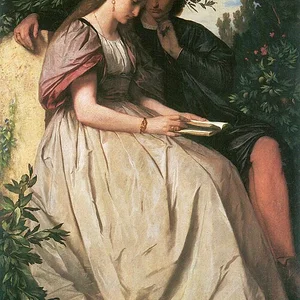

Fiammetta is the muse and idealized literary figure of the Florentine poet Boccaccio. Traditionally identified with Maria d'Aquino, the natural daughter of King Robert of Naples, she first inspires and then narrates the “Elegy of Lady Fiammetta” (c. 1343), a pioneering account of romantic passion expressed in the first person by a woman.
Fiammetta
Fiammetta
Italie
6 min read
Frequently asked questions
Key Facts
- c. 1336: according to literary tradition, Boccaccio meets Fiammetta (identified with Maria d'Aquino) on a Holy Saturday in a church in Naples.
- c. 1336-1341: she appears as muse and dedicatee in Boccaccio's Neapolitan works (Filocolo, Filostrato, Teseida).
- c. 1343-1344: Boccaccio composes the “Elegy of Lady Fiammetta,” a long monologue in which she recounts her passion and her abandonment.
- c. 1349-1353: Fiammetta is one of the seven young women of the brigata who tell the tales of the Decameron.
- Her historicity remains debated: scholars do not agree on whether Maria d'Aquino truly existed, or whether she is a poetic invention.
Works & Achievements
Poem in ottava rima about Troilus and Criseida, one of the first works in which Boccaccio sings of his love for his muse.
A long prose romance about Florio and Biancifiore that Fiammetta is said to have commissioned; in it he also recounts their meeting.
Epic poem in ottava rima dedicated to Fiammetta, one of the first epics in Italian literature.
Allegorical poem in tercets in which Fiammetta appears to the poet during a vision.
A prose narrative in which Fiammetta herself recounts her passion and abandonment; regarded as one of the first European psychological novels.
Boccaccio's masterpiece; Fiammetta is one of the ten narrators and queen of the fifth day.
Anecdotes
"Fiammetta" means "little flame" in Italian: it is a senhal, a coded lover's name that the Florentine poet Boccaccio gives to his muse to celebrate the fire of passion. In the manner of Dante's Beatrice or Petrarch's Laura, she becomes the ideal inspiration around which an entire body of work is organized.
Boccaccio claims to have seen Fiammetta for the first time on Holy Saturday, 30 March 1336, in the church of San Lorenzo in Naples: love at first sight. Many scholars today believe that this scene deliberately imitates Petrarch's meeting with Laura, which was likewise set in a church on a holy day.
In the “Elegy of Lady Fiammetta” (around 1343), it is a woman who, for the first time, tells of her own passion in the first person and laments having been abandoned by her lover Panfilo. The reversal is bold: usually, in courtly poetry, it is the man who sighs after the absent lady.
Tradition identifies Fiammetta with Maria d'Aquino, an illegitimate daughter of King Robert of Naples. But no archival document proves her existence, and historians most often regard her as an idealized figure, largely invented by Boccaccio.
Fiammetta reappears in the Decameron as one of the ten young people who flee plague-stricken Florence to tell one another stories. Having become “queen” of the fifth day, she sets a bright theme — loves that end happily after many misfortunes — like an inverted echo of her own sorrows.
Primary Sources
To ladies who are in love, rather than to anyone else, it pleases me to recount my misfortunes, so that, if they can, they may feel pity for them.
O my little book, go forth, dressed poorly as befits my station, and seek out the ladies of whom I have spoken; keep away from the joyful and seek the sorrowful.
A gentle lady asked me to compose, in our vernacular tongue, a little book that would tell the love story of Florio and Biancifiore.
It pleases me that tomorrow we tell of the happy fortunes that befell lovers after harsh or unhappy misadventures.
Key Places
The place where, according to Boccaccio, he first saw Fiammetta on Holy Saturday in 1336.
Residence of the kings of Anjou and the setting for the refined court life in which the noble Fiammetta moves.
An ancient seaside resort near Naples; its baths and villas provide the backdrop for the love affair of the *Elegy*.
Birthplace of Panfilo, where he returns without keeping his promise to come back; later the setting of the *Decameron*.
Typical Objects

The Elegy circulated only as hand-copied manuscripts; each copy, adorned with illuminations, was a precious object.

The fiction holds that Fiammetta writes her own account herself; the sharpened quill and black ink are the tools of this confession.
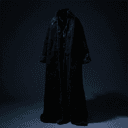
At the end of the Elegy, Fiammetta asks her “little book” to dress poorly, in mourning attire, an image of her grief.
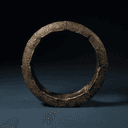
In the Decameron, Fiammetta receives the crown of queen of the fifth day and, like the brigata, wears garlands.
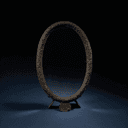
An everyday object of the noble lady; in the Elegy, Fiammetta gazes upon her beauty, which sorrow causes to waste away.

Panfilo's broken promises are conveyed through missives, and the correspondence paces Fiammetta's anguished waiting.
School Curriculum
Vocabulary & Tags
Key Vocabulary
Daily Life
Morning
A noble lady of the court of Naples, Fiammetta rises in a chamber with painted walls; her attendants help her dress her hair and put on veils and jewels. The morning often begins with Mass in a nearby church — indeed, it is at the service that Boccaccio sets their first meeting.
Afternoon
The afternoon passes in strolls through the gardens, in reading romances and in needlework, amid conversation and music. In summer, the court withdraws to the baths and villas of Baiae, on the gulf, where idleness and pleasure encourage amorous intrigues.
Evening
In the evening, banquets, dances, and songs enliven the palace by candlelight, to the sound of the lute. But in the Elegy, once Panfilo has gone, Fiammetta spends her nights awake, consumed by waiting and jealousy.
Food
At the table of a wealthy Neapolitan household, white bread, wine, fish from the gulf, game, and fruit are served — figs, grapes, citrus. Costly spices such as saffron, cinnamon, and pepper signal rank, as do sweets made with honey and sugar.
Clothing
Fiammetta wears long gowns (cotta and surcoat) of silk and brocade, precious fabrics brought in through the great port of Naples, set off by belts and jewels. In mourning for her love, she dons dark garments, an image taken up by the ending of the Elegy.
Housing
She lives in a palace or in apartments of the royal castle — the Castel Nuovo, near the port — its halls adorned with frescoes and hangings, with loggias opening onto the Bay of Naples. In summer, a villa at Baiae offers cool air and a view of the sea.
Historical Timeline
Period Vocabulary
Liens externes & ressources
Références
Œuvres
Il Filostrato
vers 1335
Il Filocolo
vers 1336-1338
Teseida
vers 1340
Amorosa Visione
vers 1342-1343
Élégie de Madame Fiammetta (Elegia di Madonna Fiammetta)
vers 1343-1344
Le Décaméron
vers 1349-1353