Empress consort of Japan (976–1001), wife of Emperor Ichijō and daughter of regent Fujiwara no Michitaka. She was the patron of Sei Shōnagon, whose celebrated *The Pillow Book* bears witness to the brilliant life at her court. Her rivalry with Fujiwara no Shōshi, patroness of Murasaki Shikibu, illustrates the literary ferment of the Heian period.
Empress Teishi
Fujiwara no Teishi (藤原定子)
9 min read
Frequently asked questions
Key Facts
- Born in 976, daughter of Fujiwara no Michitaka, chancellor and regent of Japan
- Chief consort (chūgū) of Emperor Ichijō from 990
- Her lady-in-waiting Sei Shōnagon composes The Pillow Book (Makura no Sōshi) within her court
- Her rival Fujiwara no Shōshi, patroness of Murasaki Shikibu (The Tale of Genji), vies with her for imperial favor
- Dies in 1001 at the age of 24 during the birth of her third daughter
Works & Achievements
A landmark work of Japanese literature written by Teishi's lady-in-waiting under her direct patronage. This collection of observations, impressions, and poetic lists offers the most vivid account of life at the Empress's court and immortalizes her literary salon.
Teishi created and presided over one of the most brilliant literary circles in Japanese history, gathering poets and writers such as Sei Shōnagon, Izumi Shikibu, and other learned ladies. This salon rivaled that of Fujiwara no Shōshi and inspired an exceptional outpouring of poetry.
Teishi herself composed waka poems that were included in imperial anthologies, attesting to her own mastery of the era's dominant poetic form. Her poems often express the melancholy of her circumstances and mono no aware, the bittersweet sensitivity to transient things.
The Empress organized and took part in poetry contests (uta awase) in which courtiers composed poems in response to a set theme. These literary competitions were at the heart of court life and stood as one of the principal cultural activities of Emperor Ichijō's reign.
Anecdotes
Around 994, Empress Teishi noticed a bundle of paper brought to the palace and asked Sei Shōnagon what she intended to do with it. Sei Shōnagon replied that she would make it into a 'pillow,' thereby giving rise to the title of the famous The Pillow Book. This spontaneous act of patronage would produce one of the masterpieces of world literature.
In 995, the sudden death of her father Fujiwara no Michitaka hastened the downfall of Teishi's family. Her uncle Michinaga seized power and had her brother Korechika sent into exile. Teishi, who was pregnant, took refuge outside the palace and, in an act of despair, had her head shaved to take Buddhist vows — an irreversible act that caused consternation for Emperor Ichijō, who nonetheless called her back to his side.
In 999, Michinaga introduced his own daughter, Fujiwara no Shōshi, into the imperial palace to rival Teishi. Japan then found itself in the extraordinary situation of two competing courts, each fostering its own women writers: Sei Shōnagon at Teishi's court, and Murasaki Shikibu at Shōshi's. This rivalry sparked a literary flourishing unparalleled in world history.
In The Pillow Book, Sei Shōnagon describes an episode in which Empress Teishi, at play with her ladies-in-waiting, shows them a cat bearing an imperial noble title. The scene captures the light and refined spirit that prevailed at her court, where games, poetry, and the beauty of everyday details were elevated to the level of art.
Teishi died on January 13, 1001, at just twenty-four years old, following a difficult childbirth in which she delivered her third child, Princess Bishi. Emperor Ichijō, deeply saddened, posthumously conferred on her the title of Chūgū, a sign of genuine affection that ran counter to Michinaga's political ambitions.
Primary Sources
"There are things that make the heart beat faster: a sparrow feeding its young… finding a touching scene in an old novel…" Sei Shōnagon describes with remarkable precision daily life at Empress Teishi's court — her conversations, pastimes, and emotions.
The chronicle recounts how Empress Teishi, following the death of her father Michitaka, was forced to leave the imperial palace and lived in hardship, before being summoned back by the Emperor. It describes her Buddhist tonsure and the grief that fell over the court.
This historical narrative describes the rise to power of Fujiwara no Michinaga and the gradual marginalization of Michitaka's lineage, of which Teishi was the primary victim. It highlights the rivalry between the two branches of the Fujiwara family.
The anthology preserves several waka poems composed by ladies of Teishi's court, bearing witness to the exceptional literary culture of her circle. The poems reflect the themes of *mono no aware* — the melancholy of transient beauty.
Key Places
Empress Teishi's primary residence from 990, at the heart of the imperial palace of the capital. It was in her apartments (Kōkyū) that the brilliant literary salon gathering Sei Shōnagon and the other learned ladies of her court took place.
The secondary residence where Teishi withdrew following her father's death and her forced departure from the palace in 996. She lived there in more modest conditions before being recalled by Emperor Ichijō.
The royal institution responsible for astrology and purification rituals that governed court life. Teishi and her family regularly consulted these diviners to interpret omens and set auspicious dates, as was done when Teishi entered the palace.
Teishi's birthplace and childhood home, where she received the aristocratic education that shaped her into a cultured empress and patron of the arts. The family residence was the setting for her early years before she entered the palace in 990.
Typical Objects

A light screen draped with fine silk, used by court ladies to conceal themselves from male gazes according to Heian etiquette. Teishi and her ladies often communicated with the Emperor from behind these curtains, exchanging poems and tender notes slipped into the folds of the fabric.

A black stone on which an ink stick was ground with water to produce calligraphy ink. At Teishi's court, mastery of the brush and the beauty of kana writing were essential qualities, valued as highly as physical beauty.

Traditional Japanese handmade paper crafted from plant fibres, the medium for all literary creation at court. It was precisely a bundle of this fine paper, given to Sei Shōnagon, that — according to tradition — gave rise to The Pillow Book.
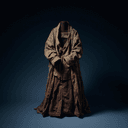
An aristocratic female garment consisting of multiple layered silk robes whose colours had to harmonise according to the season and occasion. Empress Teishi, as Chūgū, wore the most elaborate versions, a mark of her rank and refinement.

An indispensable accessory for Heian court ladies, used to cover the face, convey emotions, or slip poems to another. The fans at Teishi's court were adorned with paintings and calligraphed verses, and Sei Shōnagon describes several of them in her Pillow Book.
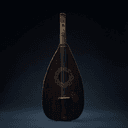
A plucked string instrument laid flat on the floor, the mastery of which was a mark of distinction at the imperial court. Musical accomplishment was part of a lady's education and contributed to the prestige of Teishi's court.
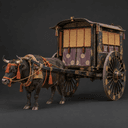
An aristocratic vehicle drawn by an ox, allowing court ladies to travel while remaining hidden behind curtains. These carriages symbolized the social rank of their occupant and played an important role in the processions and ceremonies in which Teishi took part.
School Curriculum
Vocabulary & Tags
Key Vocabulary
Tags
Daily Life
Morning
Teishi's day began late, in keeping with the nocturnal habits of the Heian court, where courtiers often kept vigil until dawn. Upon rising, her ladies-in-waiting helped her don the successive layers of the jūnihitoe, a long and meticulous process in which the harmony of colors reflected the season. Buddhist prayers were recited and the day's omens consulted before any activity could begin.
Afternoon
The afternoon was devoted to literary and musical pursuits: composing waka poems in response to seasonal themes, playing the koto, enjoying illustrated card games (uta-garuta) or go. Teishi received her ladies in her chambers, separated by kichō screens, organizing discussions on poetry or readings of monogatari (fictional tales). Visits from Emperor Ichijō followed a strict etiquette.
Evening
Evening was the privileged time for poetic exchange: calligraphed poems on perfumed paper were sent with seasonal flower branches attached. Impromptu concerts and storytelling filled the long nights of the court. The light of oil lamps created an atmosphere conducive to the melancholy and writing that Sei Shōnagon describes with such precision in her Notes.
Food
Heian court cuisine was austere and refined: steamed white rice, light soups, pickled vegetables, dried fish, and seasonal fruits presented on lacquerware. Little meat was consumed for Buddhist reasons. Meals were served twice a day, and their aesthetic presentation mattered as much as their taste.
Clothing
Teishi wore the jūnihitoe (literally 'twelve layers'), a ceremonial garment composed of multiple layered silk kimonos whose colors, visible at the wrists and collar, had to form harmonious gradients called kasane no irome. For the Empress, the finest silks and most elaborate embroideries signaled her rank. Each season imposed its own color combinations: white and red for spring, purple and green for autumn.
Housing
Teishi resided in the Kōkyū, the apartments reserved for imperial ladies within the Grand Palace (Dairi) of Heian-kyō. Her rooms were separated by movable screens and silk curtains (kichō), creating semi-private spaces. The interior gardens, carefully maintained, changed flowers with the seasons and inspired poets and painters alike. After her fall from favor in 996, she lived in more modest residences outside the palace.
Historical Timeline
Period Vocabulary
Liens externes & ressources
Références
Œuvres
Makura no Sōshi (枕草子) — Notes de chevet, de Sei Shōnagon
vers 994-1001
Salon littéraire de la cour de Teishi
990-1001
Poèmes waka de Teishi — anthologies impériales
990-1001
Correspondance poétique (uta awase — joutes poétiques)
990-1001