 flip
flipFougasse with olive oil
Fougasse with olive oil
Why this dish? « Le Pain » is, with « L'Huître », one of the flagship objects of Le Parti pris des choses: Ponge sees in the crust mountain ranges, the Alps, and in the crumb a soft earth. Fougasse, the everyday Provençal flatbread, embodies this taste for the simple, material thing of his native Midi.
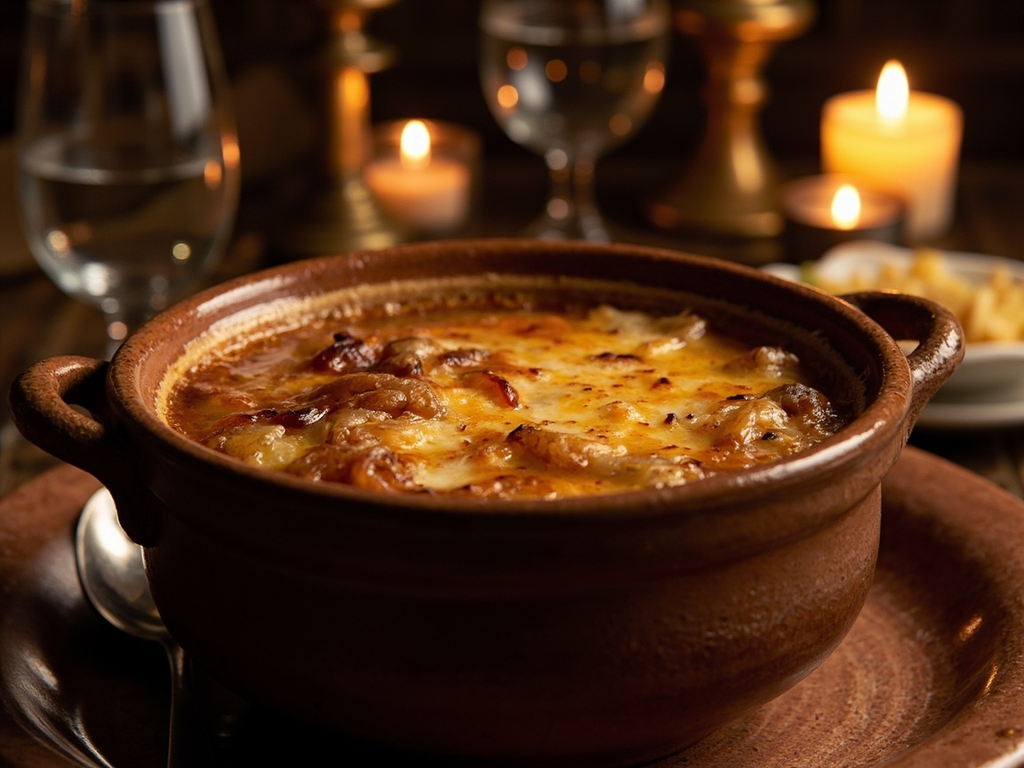
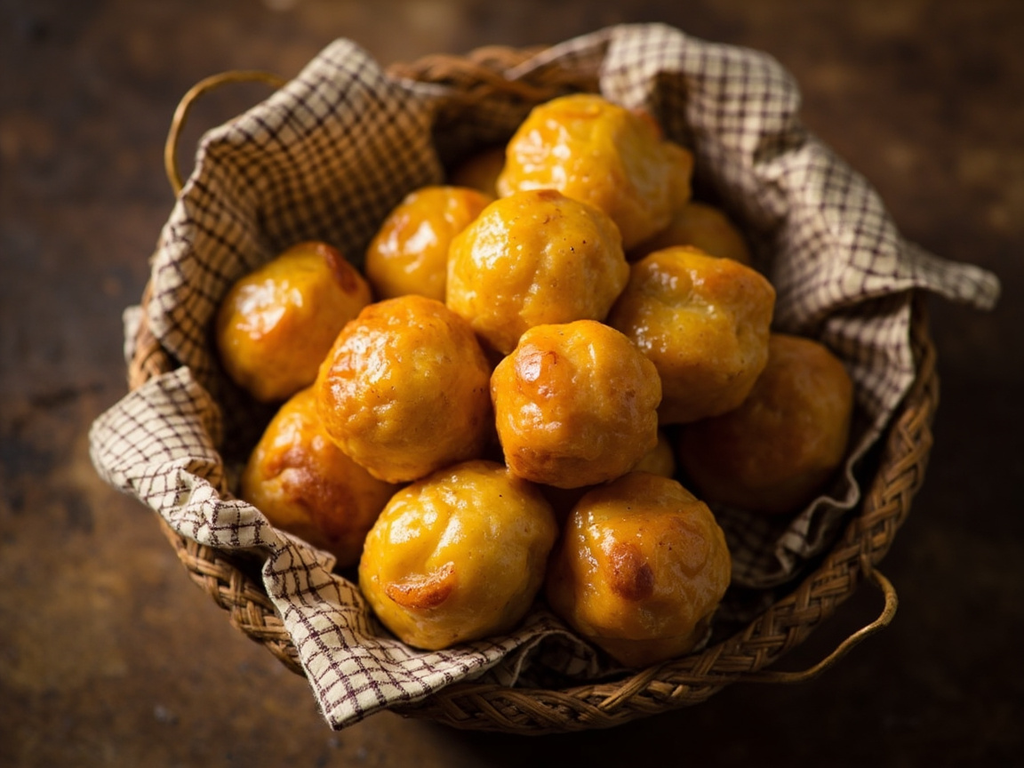
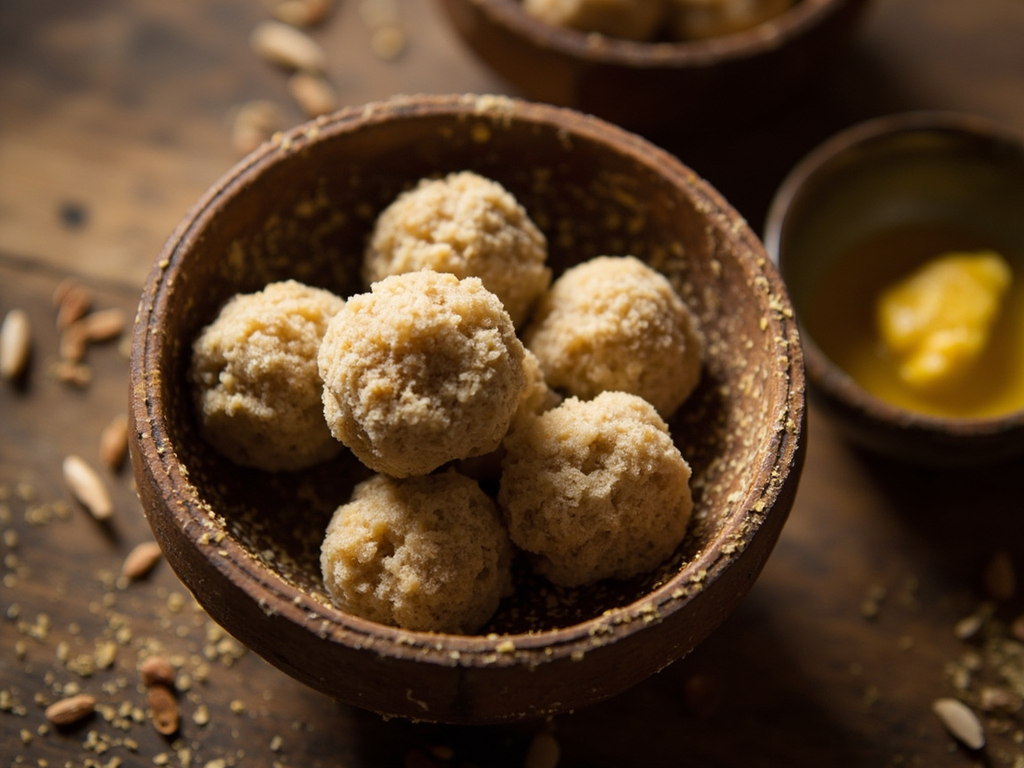
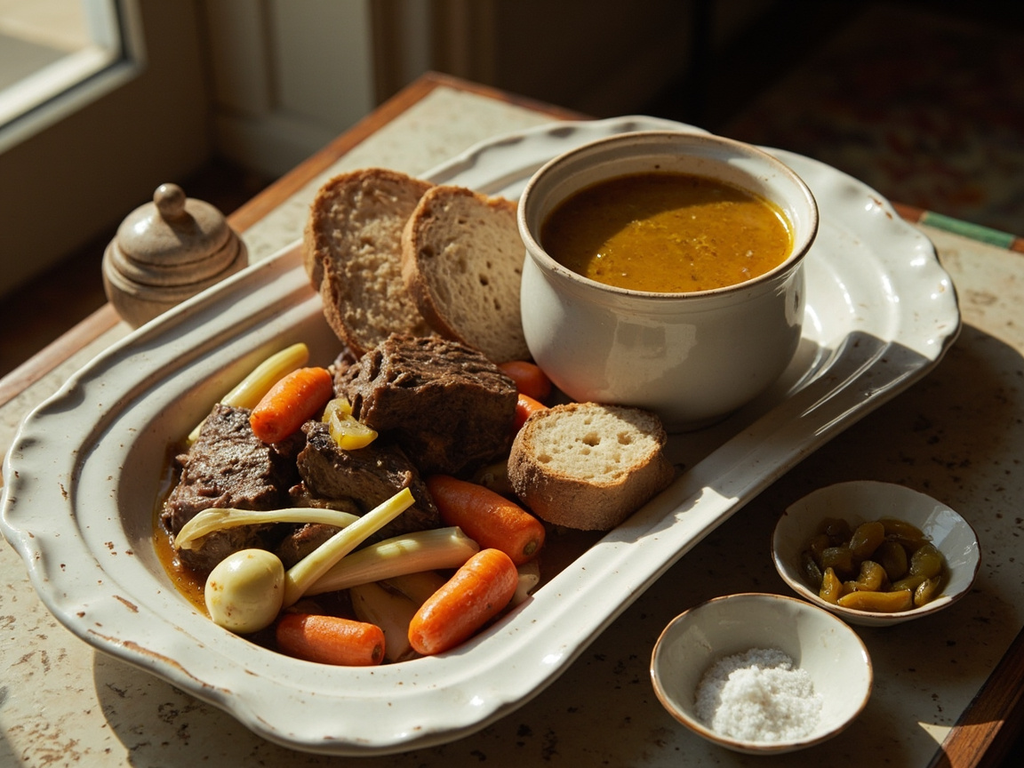
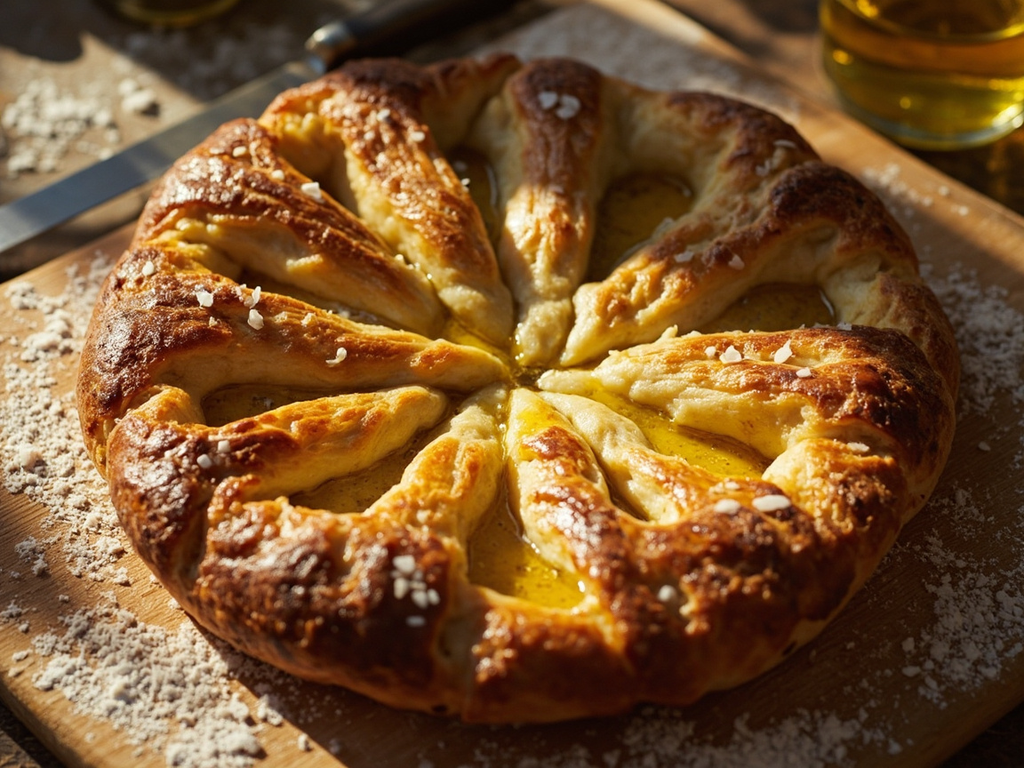
A golden, crispy Provençal flatbread, slashed like an ear of wheat, perfumed with olive oil and sprinkled with fleur de sel. The panoramic crust dear to Ponge, to be broken by hand.
Consider the surface of a loaf: to the eye, it is a whole massif, a panoramic mountain range. The Alps, the Taurus, the Andes — all of that in a crust! Under the finger that breaks it, the crumb reveals a soft subsoil, a warm earth with alveoli like sponges. In Montpellier they flatten it, slash it with cuts, drizzle it with oil: fougasse. Eat it warm, and do not respect the thing too much — bread is only made to be broken.
- •Wheat flour — a lot (base)
- •Sourdough or yeast — a little (leavening)
- •Olive oil — generously (fat, signature)
- •Warm water — as needed (hydration)
- •Salt — a pinch (seasoning)
Fougasse with olive oil
A golden, crispy Provençal flatbread, slashed like an ear of wheat, perfumed with olive oil and sprinkled with fleur de sel. The panoramic crust dear to Ponge, to be broken by hand.
Why this dish? « Le Pain » is, with « L'Huître », one of the flagship objects of Le Parti pris des choses: Ponge sees in the crust mountain ranges, the Alps, and in the crumb a soft earth. Fougasse, the everyday Provençal flatbread, embodies this taste for the simple, material thing of his native Midi.
Consider the surface of a loaf: to the eye, it is a whole massif, a panoramic mountain range. The Alps, the Taurus, the Andes — all of that in a crust! Under the finger that breaks it, the crumb reveals a soft subsoil, a warm earth with alveoli like sponges. In Montpellier they flatten it, slash it with cuts, drizzle it with oil: fougasse. Eat it warm, and do not respect the thing too much — bread is only made to be broken.
Ingredients (period version)
- Wheat flour — a lot (base)
- Sourdough or yeast — a little (leavening)
- Olive oil — generously (fat, signature)
- Warm water — as needed (hydration)
- Salt — a pinch (seasoning)
Ingredients
- Bread flour T65 — 500 g (base)
- Dry baker's yeast — 1 packet (7 g) (leavening)
- Warm water — 300 ml (hydration)
- Olive oil from Provence — 5 tbsp (+ for brushing) (fat, signature)
- Fine salt — 10 g (dough)
- Fleur de sel — to finish (crust)
Method
- Dissolve the yeast in warm water; wait until it foams.
- Mix flour and salt, add the yeasted water and 3 tbsp oil; knead for 10 minutes until a supple dough forms.
- Let rise for 1 h 30 under a cloth, until doubled in volume.
- Roll the dough into a flat oval on a baking sheet; make wide slashes with a knife and open them with your fingers.
- Brush with oil, sprinkle with fleur de sel, let relax for 20 minutes.
- Bake for 18–20 min at 220°C until nicely golden; drizzle with a little oil when out of the oven.
How it was made : Fougasse is one of the oldest breads of Provence, traditionally baked at the start of the batch to check the oven's heat. An everyday bread, it was made plain, with cracklings, or with herbs; with olive oil and salt, it is the most rustic and ancient version.
The contemporary twist : Tuck a few sprigs of rosemary and a strip of dried orange zest into the dough — Provence and citrus, two of Ponge's things reunited.
Sources : Francis Ponge, « Le Pain », dans Le Parti pris des choses, Gallimard, 1942 · J.-B. Reboul, La Cuisinière provençale, 1897
Francis Ponge · Charactorium