 flip
flipOrange wine
Orange wine
Why this dish? « L'Orange » is among the things sung by Ponge, who dwells on its bounce, its fragrant zest, and its sweet 'oppression'. Orange wine is the emblematic homemade apéritif of Provence where he lived (Le Bar-sur-Loup, Alpes-Maritimes): a patient thing, put in a demijohn and forgotten for a few weeks.
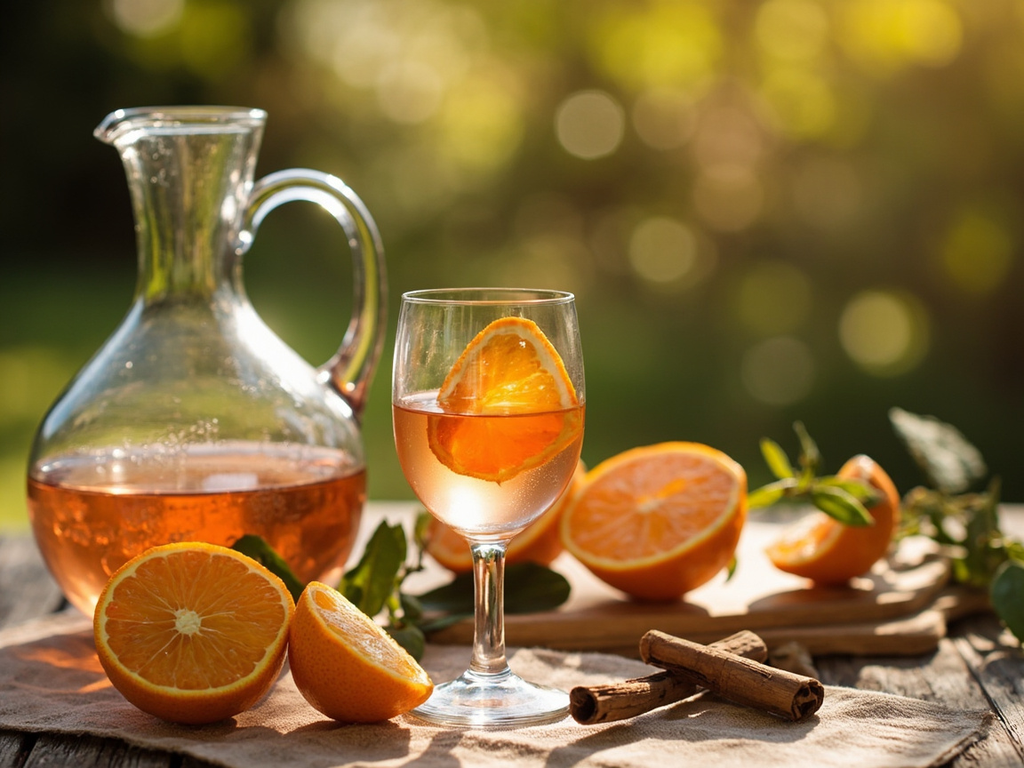
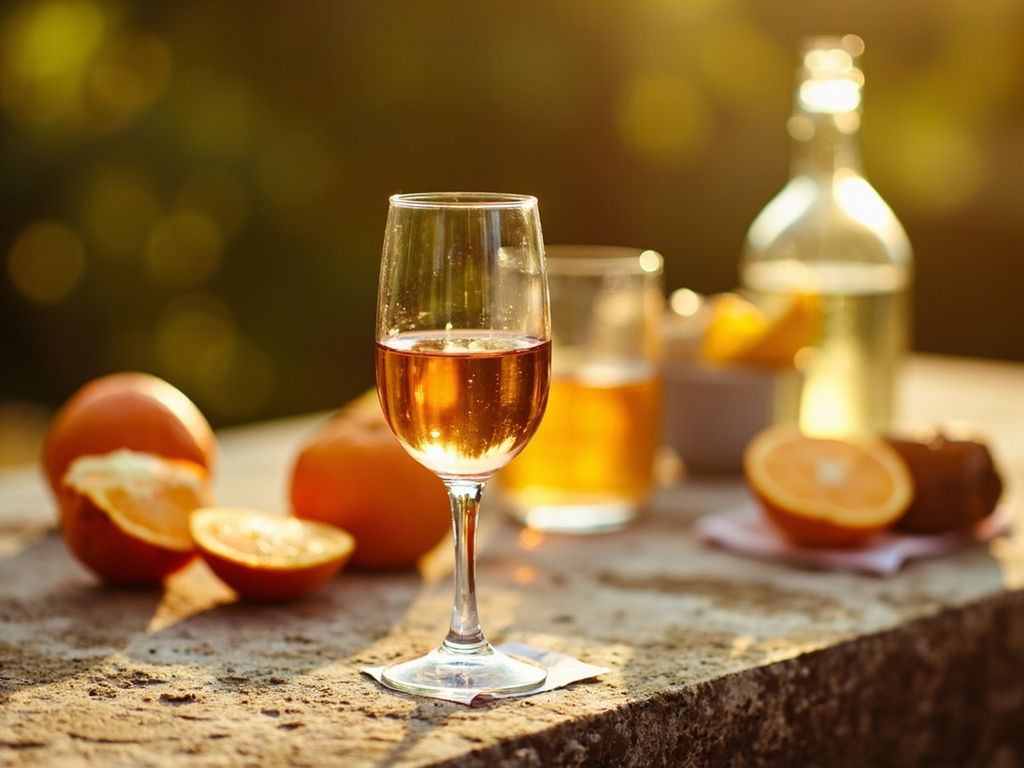
An amber, bittersweet homemade apéritif made by macerating rosé wine with oranges (including a bitter one), sugar, a little eau-de-vie, and a fragrant pod, then filtered after a few weeks. Served very cold in the shade of olive trees.
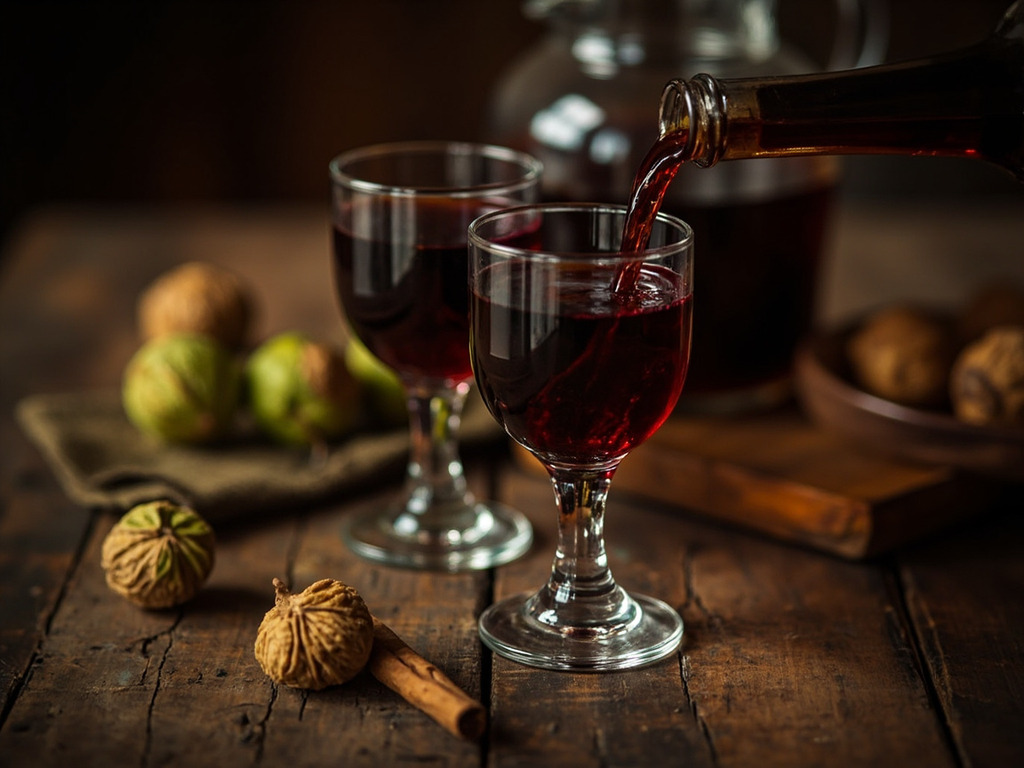
Take the orange: under pressure, it bounces back, refuses to yield, then releases its juice and perfume in a kind of oppression — it is the same when you throw it into wine. You slash the skins, drown them in rosé with sugar, a drop of alcohol, a little bitter peel, and you seal the demijohn. Then you wait — patience is the best ingredient of things. Forty days later, you filter this bitter gold, and drink a finger of it, well chilled, watching Le Bar-sur-Loup descend toward the sea.
- •Local rosé wine — several liters (base)
- •Oranges (including one bitter) — a few (flavor, bitterness)
- •Sugar — generously (sweetness)
- •Eau-de-vie — a glass (stabilization)
- •Vanilla pod or cinnamon stick — one (spice)
Orange wine
An amber, bittersweet homemade apéritif made by macerating rosé wine with oranges (including a bitter one), sugar, a little eau-de-vie, and a fragrant pod, then filtered after a few weeks. Served very cold in the shade of olive trees.
Why this dish? « L'Orange » is among the things sung by Ponge, who dwells on its bounce, its fragrant zest, and its sweet 'oppression'. Orange wine is the emblematic homemade apéritif of Provence where he lived (Le Bar-sur-Loup, Alpes-Maritimes): a patient thing, put in a demijohn and forgotten for a few weeks.
Take the orange: under pressure, it bounces back, refuses to yield, then releases its juice and perfume in a kind of oppression — it is the same when you throw it into wine. You slash the skins, drown them in rosé with sugar, a drop of alcohol, a little bitter peel, and you seal the demijohn. Then you wait — patience is the best ingredient of things. Forty days later, you filter this bitter gold, and drink a finger of it, well chilled, watching Le Bar-sur-Loup descend toward the sea.
Ingredients (period version)
- Local rosé wine — several liters (base)
- Oranges (including one bitter) — a few (flavor, bitterness)
- Sugar — generously (sweetness)
- Eau-de-vie — a glass (stabilization)
- Vanilla pod or cinnamon stick — one (spice)
Ingredients
- Provence rosé wine — 3 liters (base)
- Untreated oranges — 5 (flavor)
- Bitter orange (Seville orange) — 1 (bitterness)
- Untreated lemon — 1 (freshness)
- Cane sugar — 500 g (sweetness)
- Eau-de-vie or neutral vodka — 300 ml (stabilization)
- Vanilla pod — 1, split (spice)
Method
- Scrub and cut the citrus into quarters (without peeling).
- In a large demijohn, combine wine, citrus, sugar, eau-de-vie, and split vanilla.
- Seal and let macerate for 40 days away from light, stirring occasionally.
- Filter carefully through cheesecloth, bottle.
- Store cool and serve very cold, in small amounts, as an apéritif.
How it was made : Orange wine is a traditional Provençal domestic apéritif, made in winter when bitter oranges from the bitter orange tree (grown on the Côte d'Azur, especially around Grasse and Le Bar-sur-Loup) arrive. Each household had its own ratio of sugar and eau-de-vie; it improved in the cellar.
The contemporary twist : Serve over ice with a flambéed orange zest and an olive leaf — a 'poem of things' in the glass.
Sources : Francis Ponge, « L'Orange », dans Le Parti pris des choses, Gallimard, 1942 · René Jouveau, La Cuisine provençale de tradition populaire, 1963
Francis Ponge · Charactorium