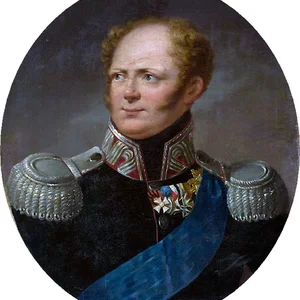

Franz Joseph I (1830–1916) was Emperor of Austria and King of Hungary for 68 years, one of the longest reigns in European history. He embodied the Habsburg monarchy as it faced nationalist upheavals and the crises that led up to the First World War.
Franz Joseph I
Franz Joseph I
9 min read
Frequently asked questions
Key Facts
- Born on 18 August 1830, he ascended to the throne in December 1848 at age 18, during the European revolutions
- He signed the Compromise of 1867, creating the dual monarchy of Austria-Hungary
- His wife, Empress Elisabeth (Sisi), was assassinated in Geneva in 1898
- His nephew Franz Ferdinand was assassinated in Sarajevo on 28 June 1914, triggering the First World War
- He died on 21 November 1916 after a 68-year reign, one of the longest in modern history
Works & Achievements
Founding agreement creating the Austro-Hungarian dual monarchy, granting Hungary broad autonomy while maintaining dynastic unity under Franz Joseph. This original political framework allowed the empire to survive nationalist tensions for another fifty years.
By imperial decree in 1857, Franz Joseph ordered the demolition of Vienna's old fortifications to create a grand monumental boulevard lined with neoclassical buildings. The State Opera, Parliament, Stock Exchange, and University of Vienna are among the masterpieces born from this major urban planning project.
A set of constitutional laws guaranteeing fundamental civil rights to Austrian citizens, including freedom of conscience, freedom of expression, and equality before the law. These texts modernized the legal framework of the Austrian half of the dual monarchy.
Under Franz Joseph's reign, the empire's rail network grew from a few hundred to more than 40,000 kilometers of track, connecting Vienna to Prague, Budapest, Trieste, and Sarajevo. This infrastructure accelerated economic development and the integration of the empire's various nations.
Franz Joseph sponsored and inaugurated the Vienna World's Fair, which attracted more than seven million visitors from around the world. The event aimed to showcase the Austro-Hungarian Empire's industrial and cultural power on the international stage.
Anecdotes
On February 18, 1853, a Hungarian tailor named János Libényi attempted to assassinate Franz Joseph by stabbing him in the neck as he walked along the ramparts of Vienna. The young emperor, then 22 years old, owed his life to the thick golden embroidery on his military uniform collar, which absorbed the blow. In gratitude, the Viennese public funded the construction of the Votivkirche (Votive Church), which still stands today.
Franz Joseph was renowned for a monastic austerity quite unusual for a sovereign. He slept on a simple iron military camp bed, rose every morning at four o'clock to begin processing his administrative files, and ate sparingly. His advisers reported that he could spend twelve to sixteen hours a day signing official documents, viewing this personal discipline as a sacred duty to his empire.
Franz Joseph's personal life was marked by a series of tragedies of exceptional magnitude. His brother Maximilian was executed by firing squad in Mexico in 1867 following the collapse of the reign imposed on him by Napoleon III. His only son, Crown Prince Rudolf, was found dead at Mayerling in 1889 under circumstances never fully explained. Finally, his beloved wife Elisabeth, known as ‘Sissi’, was assassinated in Geneva in 1898 by an Italian anarchist. The emperor, then 68 years old, is said to have declared: “I am spared nothing.”
In July 1914, at the age of 84, Franz Joseph signed the declaration of war against Serbia, thereby triggering the First World War. According to those close to him, he was convinced the conflict would remain confined to the Balkans. He died in November 1916, in the midst of the world war he had helped to ignite, having seen neither the end of the war nor the collapse of the Habsburg monarchy that followed two years later.
Primary Sources
With a moved soul, I address my peoples, who have always surrounded My throne with their love and loyalty. I must ask of them new sacrifices. [...] I have tried everything to preserve for my peoples the blessings of peace.
We, Franz Joseph I, by the Grace of God Emperor of Austria, [...] declare our assumption of all the rights and duties of the Crown, with the firm resolve to uphold the constitution and ensure the prosperity of all our peoples.
The affairs common to both parts of the monarchy are: foreign affairs, together with the diplomatic and consular business connected therewith; military and naval affairs; and the finances relating to these common affairs.
My angel, I have barely slept this night, for I was thinking of you and our happiness without cease. You are everything to me, and without you I would be but a poor man burdened with endless duties.
Key Places
The main residence of the Habsburgs and the birthplace and deathplace of Franz Joseph. It was in this baroque palace of 1,441 rooms that he worked and died on November 21, 1916.
The official residence of the emperors at the heart of Vienna, seat of government and grand state ceremonies. It was here that Franz Joseph received ambassadors and signed most of the official acts of his reign.
A spa town in the Salzkammergut where Franz Joseph spent every summer at his imperial villa, hunting and resting from affairs of state. It was here that he signed the declaration of war against Serbia in August 1914.
Site of the decisive battle of July 3, 1866, in which Austrian forces were crushed by Bismarck's Prussian army. This defeat ended Austrian dominance over the German states and permanently transformed the balance of power in Central Europe.
The city where Archduke Franz Ferdinand, heir to the throne of Austria-Hungary, was assassinated on June 28, 1914, by Serbian nationalist Gavrilo Princip. This event, which took place in territory annexed by Austria in 1908, triggered the crisis that led to World War I.
Typical Objects

Franz Joseph slept on a simple regulation camp bed of the Austrian army, refusing all luxury in his private quarters. This choice symbolized his total identification with his role as commander-in-chief and his austere conception of sovereign duty.

The emperor wore his white military uniform with brandenbourgs and gold epaulettes almost exclusively, even for official audiences. This attire was both a symbol of his supreme authority over the army and a mark of his personal daily discipline.

Franz Joseph devoted the bulk of his days to signing state documents, appointments, decrees, and diplomatic correspondence. It was estimated that he could process between 80 and 100 official papers per day, regarding this bureaucratic work as the very essence of his imperial mission.

A portrait of Sisi held a permanent place in the emperor's private apartments, bearing witness to his deep attachment to his often-absent wife. Franz Joseph wrote to her almost daily when she was travelling, which accounted for the greater part of their life together.

The emperor was in the habit of smoking his pipe during his rare moments of relaxation, particularly during his summer stays in Bad Ischl. This carved meerschaum pipe was one of his few personal pleasures, in striking contrast to the rigour of his ordinary way of life.

The gilded Habsburg coach, preserved at the Wagenburg in Schönbrunn, was used for major official ceremonies such as state processions and dynastic celebrations. In the eyes of the people, it represented the permanence and magnificence of a centuries-old monarchy.
School Curriculum
Vocabulary & Tags
Key Vocabulary
Daily Life
Morning
Franz Joseph invariably rose at four in the morning, without a servant, washed in cold water, and dressed himself alone in his military uniform. By five o'clock he was at his desk handling official correspondence, decrees, and diplomatic files — a practice he maintained until the final months of his life.
Afternoon
Afternoons were devoted to official audiences, cabinet meetings, and military reviews. Franz Joseph received ambassadors, dignitaries, and petitioners according to strict protocol, then returned to his files before dinner, often alone or in very small company.
Evening
The emperor's evenings were short and sober: a simple dinner served at a fixed hour, sometimes accompanied by chamber music he enjoyed, followed by bed around nine o'clock. In his old age, he would sometimes fall asleep over his papers before retiring to his military camp bed.
Food
Franz Joseph ate with remarkable frugality for a sovereign: his favorite dish was *Tafelspitz*, Viennese boiled beef served with vegetables and horseradish. He drank little alcohol, preferring water or light beer, and allowed himself almost no culinary indulgences despite the sophistication of the imperial cuisine available to him.
Clothing
The emperor wore almost exclusively his white field marshal's uniform with gold braid and epaulettes, symbolizing his role as supreme commander of the armies. For the very rare civilian occasions, he put on a plain black tailcoat; sartorial luxury was entirely foreign to him, and he disapproved of extravagance in his court.
Housing
Franz Joseph lived in a wing of Schönbrunn that he had stripped of its Baroque ornaments, preferring functional apartments with plain walls. His study and bedroom were spartan: a camp bed, a worktable cluttered with files, a few family portraits — a deliberate modesty in stark contrast to the official splendor of the palace's great state rooms.
Historical Timeline
Period Vocabulary
Liens externes & ressources
Références
Œuvres
Compromis austro-hongrois (Ausgleich)
1867
Constitution dite 'de Décembre' (Lois fondamentales de l'État)
1867
Réseau ferroviaire de l'empire austro-hongrois
1848-1900
Exposition universelle de Vienne
1873