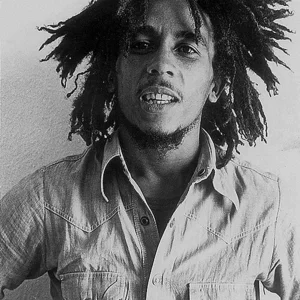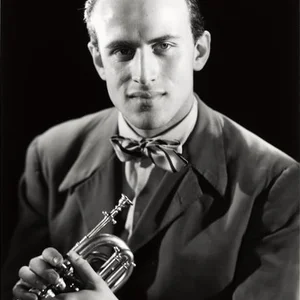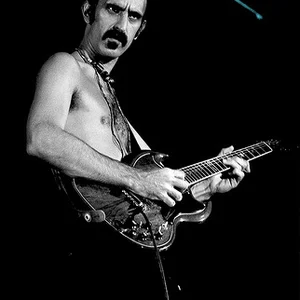

An American avant-garde composer and guitarist, Frank Zappa is one of the most original figures in rock and experimental music of the 20th century. Founder of the band The Mothers of Invention, he blended rock, jazz, contemporary classical music, and satirical humor.
Frank Zappa(1940 — 1993)
Frank Zappa
États-Unis
8 min read
Frequently asked questions
Famous Quotes
« Without deviation from the norm, progress is not possible.»
« So many books, so little time.»
« Art is making something out of nothing and selling it.»
Key Facts
- Born on December 21, 1940, in Baltimore, Maryland
- Founded the Mothers of Invention in 1964
- Testified before the U.S. Congress in 1985 against music censorship (PMRC)
- Produced more than 60 studio albums throughout his career
- Died on December 4, 1993, in Los Angeles from prostate cancer
Works & Achievements
The first double album in rock history, blending social satire, doo-wop, and avant-garde music. It marked a radical aesthetic break in American popular music of the 1960s.
An album parodying the Beatles' Sgt. Pepper's cover and criticizing hippie ideology. A landmark work of American musical satire, it was partially censored upon release due to its controversial artwork.
An instrumental jazz-rock solo album considered one of the milestones of progressive rock and jazz-rock fusion. It profoundly influenced musicians such as Robert Fripp and Miles Davis.
A dystopian rock opera telling the story of a young musician in a totalitarian society where music has been banned. A visionary work on censorship and cultural alienation in the age of consumer society.
An album composed entirely on a Synclavier synthesizer, which won the Grammy Award for Best Rock Instrumental Album in 1988. Paradoxically, the album was labeled 'Parental Advisory' despite being entirely instrumental.
The last album released during Zappa's lifetime, bringing together his chamber orchestra compositions performed by the Ensemble Modern of Frankfurt. It represents the culmination of his lifelong dialogue between rock and contemporary classical music.
Anecdotes
In 1985, Frank Zappa testified before the U.S. Congress to oppose the PMRC (Parents Music Resource Center) proposal to censor song lyrics. Facing the senators, he eloquently defended freedom of expression and compared record labeling to a form of cultural fascism. His testimony remains one of the most celebrated defenses of artistic freedom in American history.
Passionate about contemporary music from an early age, Zappa wrote a letter to composer Edgard Varèse when he was just 14 years old. Varèse wrote back personally, and this correspondence left a deep impression on the young musician, who drew inspiration from contemporary and musique concrète throughout his life in his most experimental compositions.
Zappa was an obsessive archivist: he meticulously catalogued every recorded concert, every studio session, every administrative document. At his death, he left behind a library of several thousand unreleased recordings, some of which are still being released today by the Zappa Family Trust. This commitment to documentation is extraordinary in the history of rock music.
In 1990, Václav Havel, president of Czechoslovakia newly freed from communism, unofficially named Frank Zappa 'cultural and trade ambassador.' Zappa's music, listened to in secret under the Soviet regime, had become a symbol of freedom for an entire generation of Eastern Europeans. The United States pressured Havel to cancel the appointment.
Zappa composed works for symphony orchestra that were premiered by prestigious ensembles such as the Ensemble Modern in Frankfurt. In 1992, gravely weakened by cancer, he attended rehearsals of his orchestral pieces in Germany — these were among his last public musical moments before his death in December 1993.
Primary Sources
These are my remarks before the Senate Commerce Committee. I'm Frank Zappa and I'm here as a parent, as a taxpayer, and as a musician. I'm involved in this controversy because I think that what's being proposed threatens the civil liberties of all Americans.
My mother used to say to me: 'In this world, Frankie, you must be oh so smart, or oh so pleasant.' For years I was smart. I recommend pleasant.
Without deviation from the norm, progress is not possible. The most important thing in art is The Frame. For painting: literally; for other arts: figuratively — because, without this humble appliance, you can't know where The Art stops and The Real World begins.
The language police claim they want to protect children, but what they really want is to impose their values on a pluralistic society. Rock music is not the problem; the problem is the abuse of political power.
Key Places
The city where Zappa settled permanently and founded his personal studio, the Utility Muffin Research Kitchen. It was here that he recorded the majority of his work and where he died in 1993.
The site of his historic testimony before the U.S. Senate in 1985 against musical censorship by the PMRC. This speech made Zappa a national figure in the defense of civil liberties.
In December 1971, during a concert at the Montreux Casino, a fire destroyed the venue and much of Zappa's equipment. The incident inspired Deep Purple's famous song Smoke on the Water.
The city where Václav Havel welcomed Zappa in 1990 as a cultural hero of freedom. Zappa's music had circulated underground during the communist regime and embodied cultural resistance.
Frank Zappa's birthplace, born on December 21, 1940. Although he left the East Coast at a young age, his roots in this industrial and multicultural city shaped his satirical view of America.
Typical Objects

Zappa played several electric guitars, including the Gibson SG, for solos of extreme technical virtuosity. His unconventional style — blending dissonance and humor — redefined the expressive possibilities of the instrument.

A pioneer of studio craft, Zappa spent hundreds of hours in the recording room layering and manipulating audio tracks. He was one of the first musicians to treat the studio itself as a compositional instrument.
A committed smoker, Zappa is rarely photographed without a cigarette. The accessory became inseparable from his public image, though it also symbolizes human fragility — he ultimately died of the cancer it helped cause.

Zappa conducted major symphony orchestras to perform his contemporary compositions. The sight of a rock musician wielding a conductor's baton embodied his determination to tear down the barriers between popular and classical music.

Zappa systematically collected and archived his recordings on magnetic tape, building a unique sound archive running to several thousand hours. This documentary obsession allowed him to release dozens of posthumous albums.

Self-taught yet a rigorous composer, Zappa wrote complex orchestral scores by hand. His manuscripts reflect a deep musical literacy acquired entirely on his own, spanning chamber music to musique concrète.
School Curriculum
Vocabulary & Tags
Key Vocabulary
Tags
Daily Life
Morning
Zappa slept little and generally rose mid-morning, having worked through much of the night. He often started his day with a strong coffee and a cigarette, skimming the American press that fueled the satirical themes in his lyrics.
Afternoon
Afternoons were devoted to composition: he would spend hours at the piano or guitar in his home studio — the Utility Muffin Research Kitchen — testing arrangements or writing out orchestral scores. He also received musicians for rehearsals or recording sessions.
Evening
Evenings and nights were the heart of his activity: recording in the studio until dawn, listening to and editing his sound archives, or performing on stage during his lengthy world tours. Zappa was known to run studio sessions until four or five in the morning.
Food
Zappa's diet was far from balanced, typical of the rock-and-roll lifestyle of the 1960s and 70s: coffee in large quantities, cigarettes constantly, and food often grabbed quickly between sessions. His wife Gail handled most of the domestic and family life at their Laurel Canyon home.
Clothing
Zappa sported an immediately recognizable look: jeans, open shirts or psychedelic-patterned jackets, long hair, and a carefully groomed handlebar mustache. Off stage, he might dress more casually, but always kept a distinctive, non-conformist edge.
Housing
Zappa spent much of his adult life in a villa in Laurel Canyon, a bohemian Los Angeles neighborhood popular with musicians. The house contained his personal recording studio, an extensive music library, and the archives of his entire body of work. He raised his four children there with his wife Gail.
Historical Timeline
Period Vocabulary
Visual Style
Le style visuel de Zappa mêle l'esthétique psychédélique underground des années 1960-70, le collage surréaliste et la caricature satirique, avec des portraits forts dominés par sa célèbre moustache et ses yeux expressifs.
Sound Ambience
L'univers sonore de Zappa est un chaos organisé : studio nocturne, machines à bandes, collisions entre jazz d'avant-garde et rock électrique, voix satiriques et partitions d'orchestre griffonnées à la main.