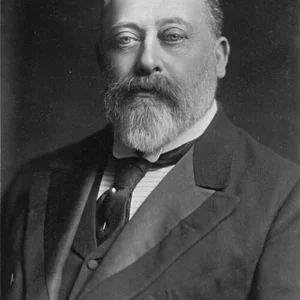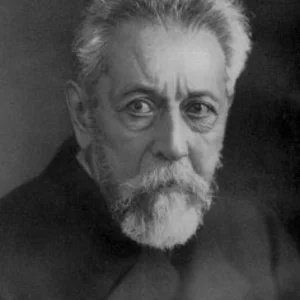

Friedrich Carl Andreas (1846-1930) was a German orientalist and linguist, a specialist in Iranian languages and the ancient texts of Persia. A professor at Göttingen, he was a major figure in oriental philology, married to the writer Lou Andreas-Salomé.
Friedrich Carl Andreas(1846 — 1930)
Friedrich Carl Andreas
Allemagne
6 min read
Frequently asked questions
Key Facts
- Born in 1846 in Batavia (present-day Jakarta), in the Dutch East Indies
- A recognized specialist in ancient Iranian languages (Avestan, Middle Persian, Pahlavi)
- Appointed professor of oriental philology at the University of Göttingen in 1903
- Husband of the writer and psychoanalyst Lou Andreas-Salomé from 1887 onward
- Died in 1930 in Göttingen, leaving behind numerous works on Manichaean and Iranian texts
Works & Achievements
First-hand documentation of Persian inscriptions and manuscripts brought back from his stay in the East, the basis of his later research.
Decisive studies on the reading of Zoroastrian texts, in which Andreas proposed new interpretations of the Pahlavi script.
A major contribution to the reading of the Iranian fragments of Manichaeism, a field of study that revealed a lost religion and lost languages.
A posthumous edition of his work by his student Henning, a monument of 20th-century Iranian philology.
By training students such as Henning, Andreas created a lineage of specialists who would leave a lasting mark on Iranian studies.
Anecdotes
Friedrich Carl Andreas was born in 1846 in Batavia (present-day Jakarta), in the Dutch East Indies, to a father of Armenian-Malay descent and a German-Baltic mother. This childhood spanning several worlds nurtured his passion for the distant languages of the East from a very early age.
In 1874, the young Andreas took part in a German scientific expedition sent to Persia to observe the transit of Venus across the Sun. He stayed there for several years, learning the local languages in the field and copying ancient inscriptions, turning an astronomical mission into a philologist's adventure.
In 1887, Andreas married the writer and psychoanalyst Lou Salomé, who from then on took the name Lou Andreas-Salomé. The marriage, which would last more than forty years, remained famous for having been—by Lou's own admission—never consummated, while still remaining a true intellectual union.
Known as a perfectionist, Andreas published very little: he amassed mountains of notes but was loath to print a text until he was certain of every detail. Much of his knowledge survived only thanks to his students, who edited his work after his death.
Toward the end of his life, Andreas took up the deciphering of the Manichaean manuscripts discovered at Turfan, in Central Asia. With his young assistant Walter Bruno Henning, he helped unlock the mystery of these texts from a forgotten religion, written in dead Iranian languages.
Primary Sources
Edition and translation of the Middle Iranian Manichaean fragments found at Turfan, the fruit of the long deciphering work begun by Andreas and completed by his student Henning.
In her memoirs, Lou Andreas-Salomé recalls the demanding and passionate figure of her husband, the Göttingen orientalist, and the singular nature of their union.
Andreas's studies on Middle Persian and the reading of Pahlavi scripts, in which he proposes new interpretations of the Zoroastrian texts.
Key Places
City in the Dutch East Indies where Andreas was born in 1846, a crossroads of Asian peoples and languages.
German university town where Andreas became a professor of Iranian philology in 1903 and where he died in 1930.
Country where Andreas stayed for several years starting in 1874, learning the languages and copying ancient texts in the field.
Capital where Andreas taught Oriental languages before obtaining his professorship, and the center of the Turfan manuscript collections.
Bavarian university town where Andreas completed part of his higher studies in Oriental languages.
Typical Objects

A Zoroastrian text written in Middle Persian using the Pahlavi script, whose difficult reading long occupied Andreas. These manuscripts pass down the religion of ancient Persia.

A piece of manuscript found in the oases of Central Asia, written in Iranian languages and bearing witness to the vanished Manichaean religion. Andreas undertook to decipher it.

A scholarly work describing the structure of ancient and modern Persian languages. An indispensable tool for the philologist to compare and reconstruct languages.

The philologist's writing instruments, with which he covered countless sheets of handwritten notes. Andreas filled boxes with them without always publishing them.

A magnifying lens used to read the tiny or faded writing of manuscripts and inscriptions. Essential for deciphering damaged fragments.

An impression on damp paper of an inscription carved in stone, allowing a text to be carried away and studied without moving it. Andreas made such squeezes in Persia.
School Curriculum
Vocabulary & Tags
Key Vocabulary
Daily Life
Morning
Andreas's morning began early, bent over his manuscripts and dictionaries in his study in Göttingen. He devoted the bright hours of the day, the most precious for the eyes, to reading the most difficult scripts.
Afternoon
The afternoon was often set aside for teaching and exchanges with his students, to whom he passed on an immense body of knowledge by word of mouth. A demanding professor, he would discuss at length every interpretation of a word or a sign.
Evening
In the evening, in the house he shared with Lou Andreas-Salomé, the conversation might stretch on between letters, sciences, and ideas. Andreas often kept annotating his pages by lamplight, endlessly putting off the moment of publishing.
Food
Like the German university bourgeoisie of his time, he ate simple meals: bread, potatoes, meats, and soups, accompanied by coffee or tea. His long stays in Persia had also acquainted him with the flavors and fruits of the Orient.
Clothing
Andreas wore the sober attire of the 19th-century professor: a frock coat or dark jacket, waistcoat, stiff collar, and necktie. His long beard gave him the typical look of the scholar of the period.
Housing
He lived in a house in the university town of Göttingen, surrounded by a garden the couple enjoyed. The rooms overflowed with books, notes, and boxes of manuscripts accumulated over the decades.
Historical Timeline
Period Vocabulary
Liens externes & ressources
Références
Œuvres
Relevés et copies d'inscriptions de Perse
années 1870
Travaux sur le moyen-perse et l'écriture pehlevie
fin XIXe siècle
Déchiffrement des manuscrits manichéens de Tourfan
à partir de 1904
Die Handschriften-Reste der Manichäer aus Turfan (avec W. B. Henning)
1932-1934
Fondation de l'école de philologie iranienne de Göttingen
1903-1930