

German poet, playwright, and philosopher of the Enlightenment and Sturm und Drang, Schiller is one of the major figures of Weimar Classical literature. A close friend of Goethe, he championed the ideals of freedom, human dignity, and moral elevation through art.
Friedrich Schiller(1759 — 1805)
Friedrich Schiller
duché de Saxe-Weimar, duché de Wurtemberg
9 min read
Frequently asked questions
Famous Quotes
« Man is only fully human when he plays.»
« What one does not understand, one does not possess.»
« Freedom exists only where humanity begins.»
Key Facts
- 1759: born in Marbach am Neckar (Württemberg)
- 1781: premiere of The Robbers (Die Räuber), a landmark play of the Sturm und Drang movement
- 1789: appointed professor of history at the University of Jena
- 1799: completes the Wallenstein trilogy, a masterpiece of historical drama
- 1805: dies in Weimar at the age of 45
Works & Achievements
Schiller's first major drama, it portrays two brothers in conflict, pitting romantic rebellion against social conformism. Its success in Mannheim in 1782 immediately established it as an emblematic work of the Sturm und Drang movement.
A bourgeois drama denouncing aristocratic privilege and the oppression of the lower classes in 18th-century Germany. The work is considered one of the first social tragedies in German literature.
A lyric poem celebrating universal brotherhood and the joy shared among all people. Set to music by Beethoven in his 9th Symphony (1824), it is today the official anthem of the European Union.
A major philosophical work in which Schiller argues that beauty and art are the surest paths to moral and political freedom. It stands as one of the cornerstones of modern aesthetic thought.
A monumental dramatic trilogy tracing the downfall of General Albrecht von Wallenstein during the Thirty Years' War. Regarded as the pinnacle of Weimar Classicism and one of the greatest works in the German theatrical canon.
A historical tragedy bringing Mary Queen of Scots and Elizabeth I of England face to face, exploring themes of guilt, grace, and inner freedom. The play remains one of the most frequently performed works in the German repertoire.
Schiller's last completed major drama, it tells the story of the Swiss people's resistance to Austrian tyranny embodied by Gessler. A universal hymn to freedom and popular resistance, the play was later adapted into an opera by Rossini (1829).
Anecdotes
Schiller wrote his first major play, The Robbers, in secret while still a student at the military academy of Duke Karl Eugen of Württemberg. Its premiere in 1782 was a resounding popular triumph, but the Duke forbade him from writing, which drove Schiller to flee the duchy in the dead of night with his friend Andreas Streicher.
During his escape from Württemberg in 1782, Schiller was so destitute that he lived for a time under a false name, 'Doctor Ritter', with friends in Thuringia. This period of precarious wandering deeply shaped his reflections on freedom and social injustice — central themes throughout his work.
Schiller suffered from poor health his entire life, contracting pulmonary tuberculosis as early as 1791. Yet it was in this condition that he produced his most ambitious works, sometimes writing through the night by candlelight, stimulated — by his own admission — by the smell of rotting apples he kept in his desk.
In 1802, the Emperor of the Holy Roman Empire granted him a title of nobility, adding 'von' to his name. Schiller, deeply committed to republican ideals and individual dignity, accepted the distinction with a certain irony — he who had spent his entire life celebrating freedom against tyranny.
Goethe and Schiller, who had long ignored or even regarded each other with suspicion, became the closest of friends from 1794 onward. Their correspondence — one of the most celebrated in world literature — comprises more than a thousand letters and stands as a remarkable intellectual dialogue on poetry, aesthetics, and philosophy.
Primary Sources
I regard my play not as an ordinary stage work, but as a dramatic poem. The reader who approaches this book with academic preconceptions will be disappointed; but one who reads freely and humanely will not, he hopes, be entirely dissatisfied.
It is through beauty that we walk toward freedom. Beauty is the necessary condition of humanity: man is fully human only when he plays, and he plays only when he is, in the fullest sense of the word, a man.
Your mind works intuitively and your entire thinking being seems to have been shaped from a single central point; and so, as I seek to know myself and to analyze this treasure, I envy you.
Freude, schöner Götterfunken, Tochter aus Elysium, Wir betreten feuertrunken, Himmlische, dein Heiligtum. — Joy, beautiful spark of divinity, Daughter of Elysium, We enter, fire-inspired, Heavenly one, thy sanctuary.
The naive poet is nature itself; the sentimental poet seeks nature. The latter is the child whom civilization has stripped of original innocence, and who yearns to recover it through reflection and art.
Key Places
Schiller's hometown in Baden-Württemberg, where he was born in 1759. It is now home to the Deutsches Literaturarchiv and the Schiller-Nationalmuseum, a major landmark of German literary memory.
It was on the stage of the Mannheim National Theatre that The Robbers premiered in 1782, launching Schiller to national fame. The city was also his first refuge after fleeing Württemberg.
Schiller taught history there from 1789 to 1799 and wrote his major philosophical and aesthetic works during this period. The university now bears his name: Friedrich Schiller University Jena.
Schiller settled in Weimar in 1799, at the heart of the intellectual circle surrounding Goethe and Duke Charles Augustus. His house, preserved in its original state, is listed as a UNESCO World Heritage Site.
Schiller was forced to study here from 1773 to 1780, training as a physician under the compulsion of Duke Karl Eugen. Paradoxically, this confinement shaped his lifelong ideals of freedom and artistic independence.
Typical Objects

Schiller wrote his plays and poems with a goose quill, sometimes working through entire nights despite his fragile health. His writing desk in Weimar, preserved in his house-museum, still bears the traces of this work.

Imposed by the Duke of Württemberg, this blue and white uniform symbolizes the constraints Schiller endured during his education. He made it a symbol of all the tyrannies against which his heroes revolt.

Schiller kept a human skull on his desk as a memento mori, a reminder of the death that pervaded both his life and his work. This object reflects his fascination with the themes of death, the sublime, and fate.

Schiller kept rotting apples in his desk drawer, claiming that their fermented smell stimulated his creative imagination. Goethe, who was disturbed by the odor during his visits, left testimony of this peculiar habit.

The Ode to Joy (1785), a poem by Schiller, was set to music by several composers during his lifetime. Today, in Beethoven's setting (1824), it serves as the official anthem of the European Union.

Schiller published a History of the Thirty Years' War in 1791–1792, the fruit of his research as a historian at Jena. This work fed into his dramatic cycle Wallenstein, a trilogy centered on the general of the Thirty Years' War.
School Curriculum
Vocabulary & Tags
Key Vocabulary
Tags
Daily Life
Morning
Schiller rose late, often after 9 o'clock, his poor health preventing him from keeping to an early-morning routine. He would have a frugal breakfast — coffee or herbal tea — before going through his correspondence, including his voluminous exchange of letters with Goethe and various publishers.
Afternoon
The afternoon was devoted to reading, historical research, or writing. Schiller worked in his study, cluttered with books and manuscripts, regularly standing up to declaim his verses aloud in order to test their rhythm and sound.
Evening
In the evenings, Schiller frequently received visitors or went to Goethe's home for long philosophical and literary discussions. He sometimes worked until two or three in the morning, energized by the nocturnal solitude, despite the coughing fits that left him exhausted.
Food
Schiller's table was simple, shaped by the poverty of his youth and the fragile health that kept him from excess. He enjoyed Rhine wine in moderation, soups, dark bread, and vegetables; meat was a rare presence at his table.
Clothing
Schiller wore the sober, practical dress of an educated man of the enlightened German bourgeoisie: a grey or navy frock coat, a buttoned waistcoat, and a lace-jabot shirt for formal occasions. He dressed without ostentation, in stark contrast to the splendor of the court nobility.
Housing
In Weimar, Schiller occupied a two-story bourgeois house on Schillerstraße, which he rented from 1802. The rooms were simply furnished: a large study with a well-stocked library, a drawing room for receiving guests, and modest bedrooms heated by wood-burning stoves.
Historical Timeline
Period Vocabulary
Visual Style
Style portrait classique de Weimar, inspiré d'Anton Graff : lumière chaude à la bougie, clair-obscur doux, tons de terre mêlés d'or et de bleu profond, entre intensité romantique et rigueur néoclassique.
Sound Ambience
L'atmosphère sonore du cabinet de travail de Schiller à Weimar : grattement de plume, crépitement du feu, cloches lointaines et voix feutrées d'une ville classique allemande de la fin du XVIIIe siècle.
Liens externes & ressources
Références
Œuvres
Les Brigands (Die Räuber)
1781
Intrigue et Amour (Kabale und Liebe)
1784
Lettres sur l'éducation esthétique de l'homme
1795
Wallenstein (trilogie)
1798-1799
Marie Stuart (Maria Stuart)
1800
See also
Related Characters
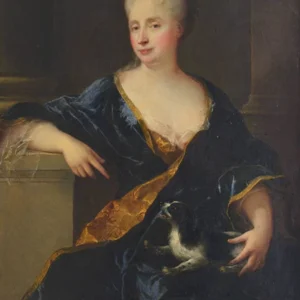
Anne Thérèse de Marguenat de Courcelles, marquise de Lambert
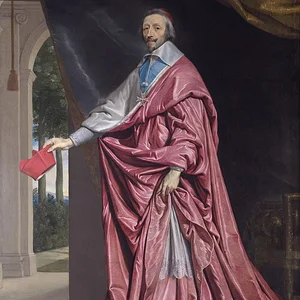
Cardinal de Richelieu
1585 — 1642
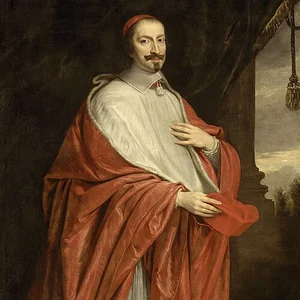
Cardinal Mazarin
1602 — 1661
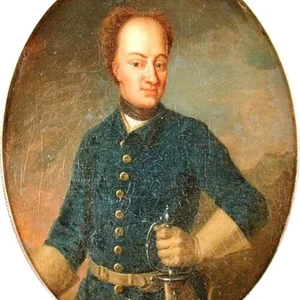
Charles XII of Sweden

Frederick II of Denmark
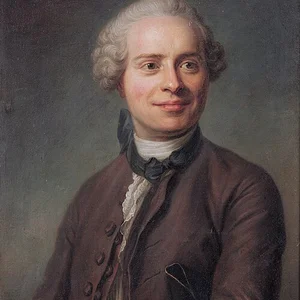
Jean le Rond d'Alembert
1717 — 1783