 flip
flipZuppa di pane e cavolo nero (bread and black kale soup)
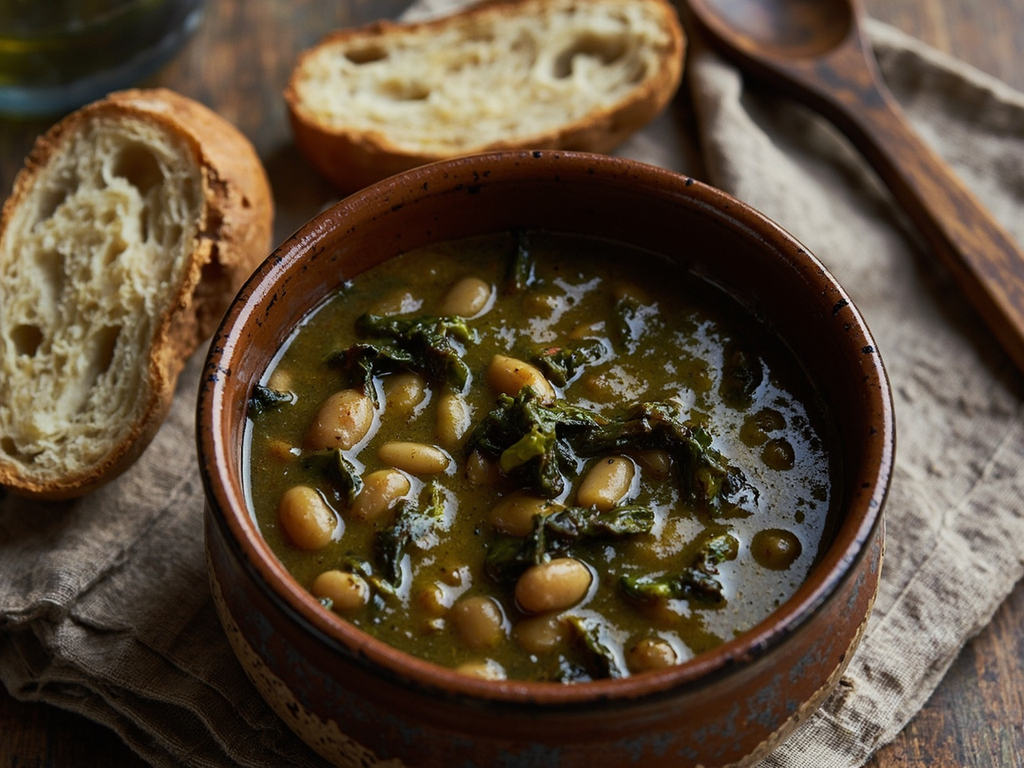
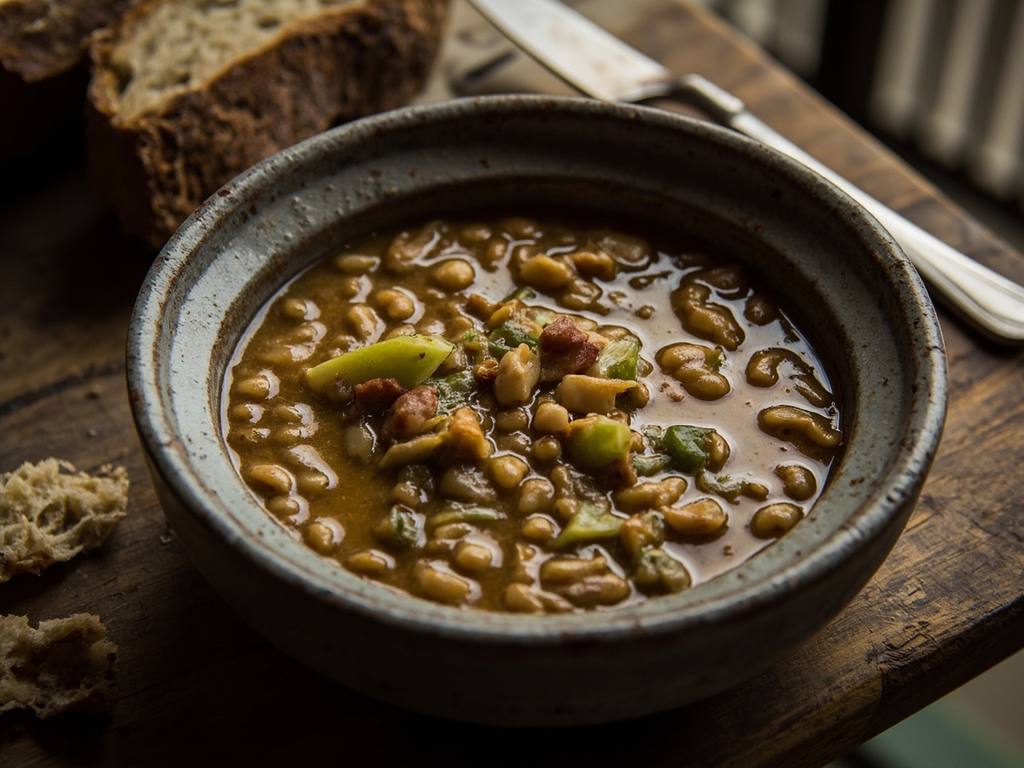
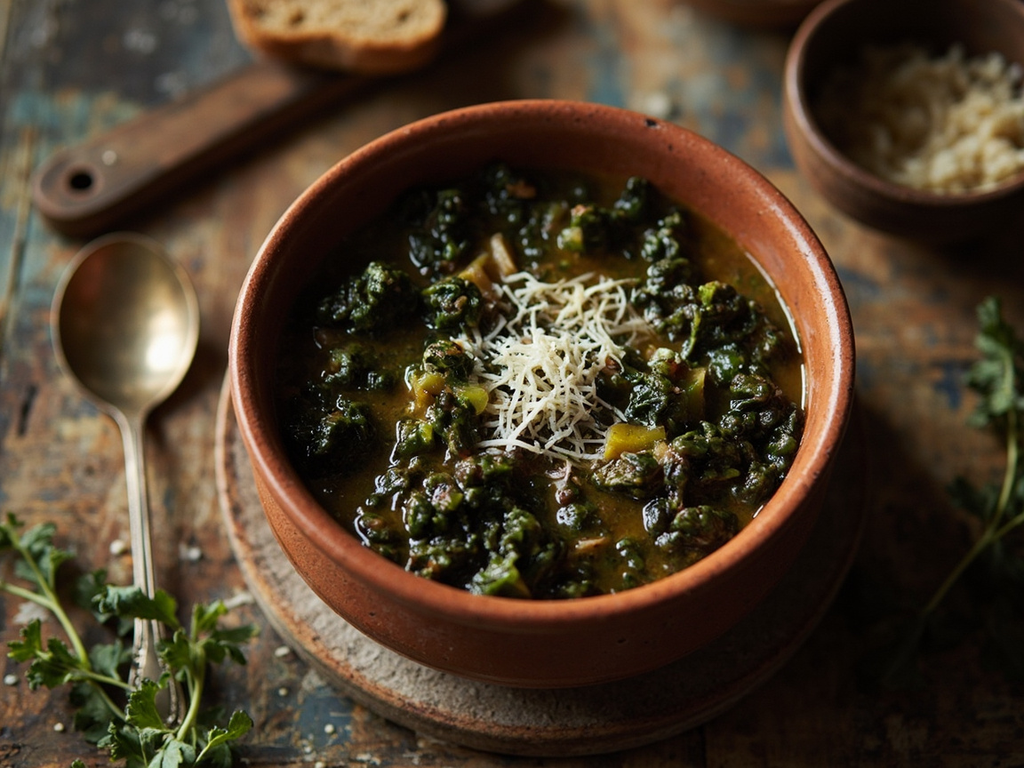
Zuppa di pane e cavolo nero (bread and black kale soup)
Why this dish? Peasant soup from the Tuscan contado, the daily fare of a man who, even after becoming famous, ate simply at Arcetri: stale bread, black kale from the garden, oil, and a little cheese. The everyday meal of a frugal scholar.
A thick soup where stale bread soaks up the vegetable and black kale (cavolo nero) broth, bound with olive oil and sharpened with grated cheese. Comforting, frugal, deeply Tuscan.
You see, I am not a man to scorn a humble bowl: at Arcetri, when my eyes grew dim, my maid would bring me this zuppa where yesterday's bread drinks the broth as a sponge drinks water — just observe with what patience it softens. A drizzle of my green oil on top, a pinch of cheese, and trust me, no prince's banquet ever warmed me more on Tuscan winter nights. Eat it hot, and let the bread do its work.
- •Stale Tuscan bread (saltless) — several thick slices (base that thickens the soup)
- •Black kale (cavolo nero) — one bunch (signature bitter green)
- •Soaked chickpeas or fava beans — a good handful (body and protein)
- •Onion, garlic, sage, rosemary — to taste (aromatics)
- •Tuscan olive oil — generous (binder and fragrance)
- •Grated pecorino (sheep's cheese) — a little (final umami)
Zuppa di pane e cavolo nero (bread and black kale soup)
A thick soup where stale bread soaks up the vegetable and black kale (cavolo nero) broth, bound with olive oil and sharpened with grated cheese. Comforting, frugal, deeply Tuscan.
Why this dish? Peasant soup from the Tuscan contado, the daily fare of a man who, even after becoming famous, ate simply at Arcetri: stale bread, black kale from the garden, oil, and a little cheese. The everyday meal of a frugal scholar.
You see, I am not a man to scorn a humble bowl: at Arcetri, when my eyes grew dim, my maid would bring me this zuppa where yesterday's bread drinks the broth as a sponge drinks water — just observe with what patience it softens. A drizzle of my green oil on top, a pinch of cheese, and trust me, no prince's banquet ever warmed me more on Tuscan winter nights. Eat it hot, and let the bread do its work.
Ingredients (period version)
- Stale Tuscan bread (saltless) — several thick slices (base that thickens the soup)
- Black kale (cavolo nero) — one bunch (signature bitter green)
- Soaked chickpeas or fava beans — a good handful (body and protein)
- Onion, garlic, sage, rosemary — to taste (aromatics)
- Tuscan olive oil — generous (binder and fragrance)
- Grated pecorino (sheep's cheese) — a little (final umami)
Ingredients
- Stale country bread — 4 thick slices (thickener)
- Black kale (or curly kale) — 300 g (bitter green)
- Cooked chickpeas — 200 g (body)
- Onion — 1 (aromatic base)
- Garlic — 2 cloves (aromatic)
- Sage and rosemary — a few leaves (fragrance)
- Extra virgin olive oil — 5 tbsp (binder and finish)
- Grated pecorino — 40 g (umami)
- Water or vegetable broth — 1.2 L (liquid)
Method
- Sauté the chopped onion and garlic in 2 tbsp oil with sage and rosemary.
- Add the washed and roughly chopped black kale, let it wilt for a few minutes.
- Pour in the broth, add the chickpeas, and simmer for 25 minutes.
- Place the stale bread slices into the soup, crush them slightly so they soak, and let rest off the heat for 10 minutes.
- Serve hot with a generous drizzle of raw olive oil and grated pecorino.
How it was made : In 17th-century Tuscany, nothing was wasted: pane sciocco (saltless bread, still typical today) hardened quickly and found a second life in soups. This anti-waste logic gave rise to ribollita and pappa, pillars of cucina povera.
The contemporary twist : Serve in a deep bowl with a spiral of new olive oil and a twist of black pepper: the 'telescope soup', served warm on an observation evening.
Galileo · Charactorium