 flip
flipZuppa di pane, cavolo nero e fave
Zuppa di pane, cavolo nero e fave
Why this dish? During his exile at Sant'Andrea in Percussina, after his disgrace in 1513, Machiavelli shared the daily fare of peasants at the village inn: stale bread that was never thrown away, cabbage from the garden, and fava beans. This economical soup, where nothing is wasted, is the exact opposite of the splendor he knew at the Palazzo della Signoria.
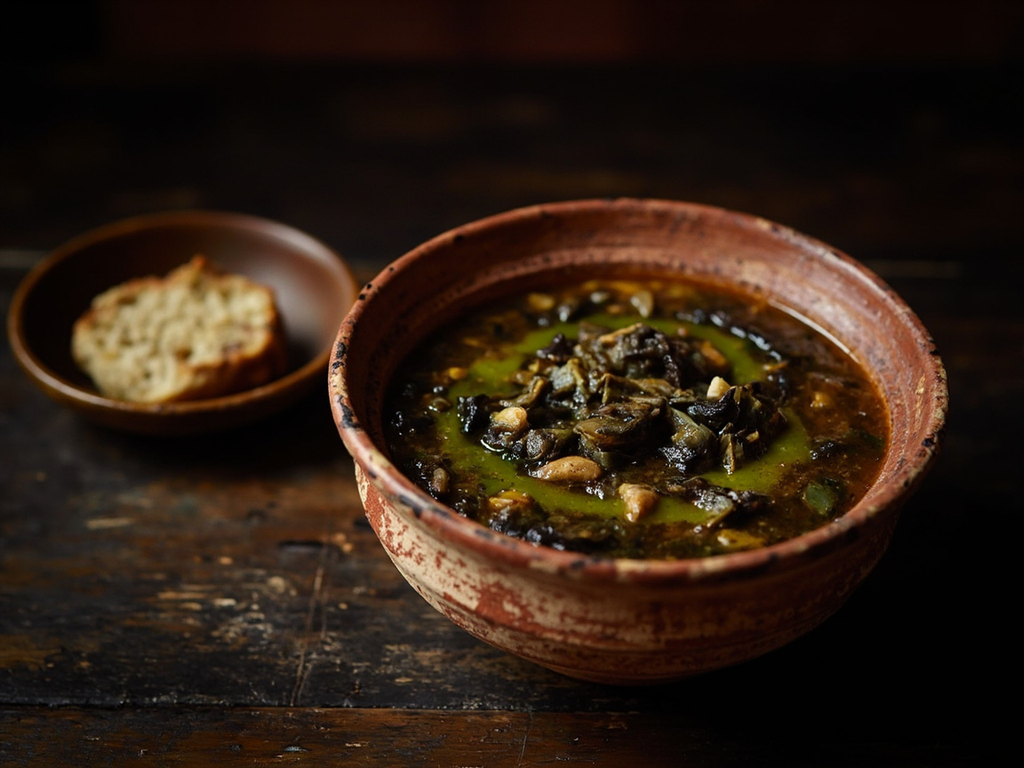
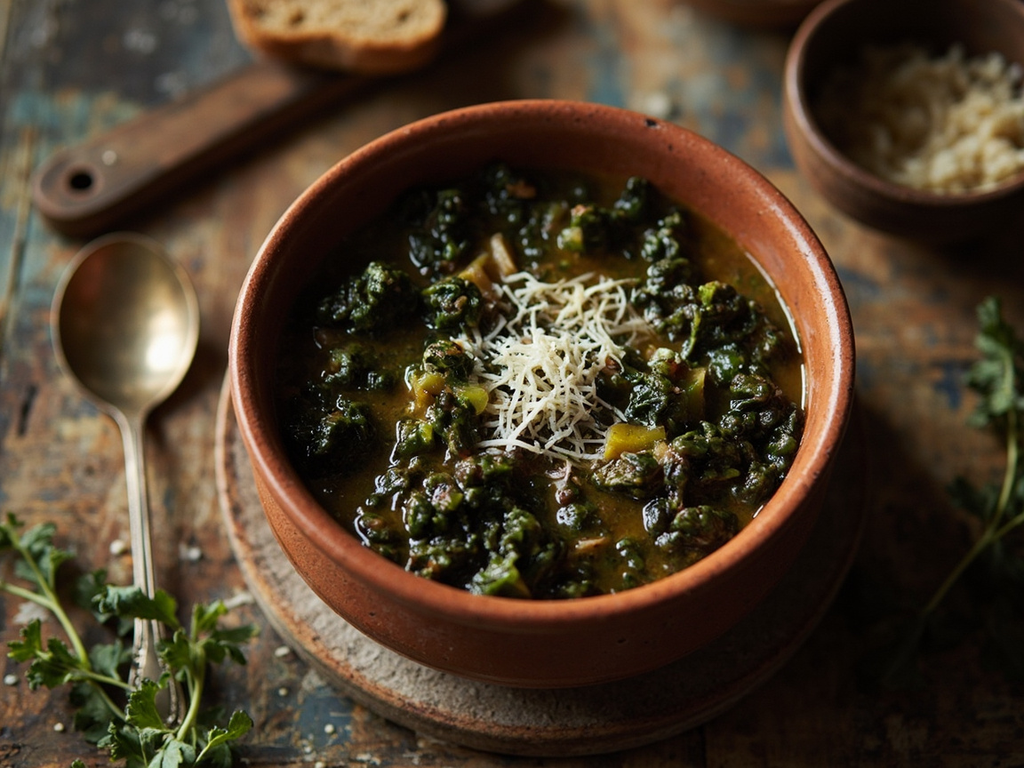
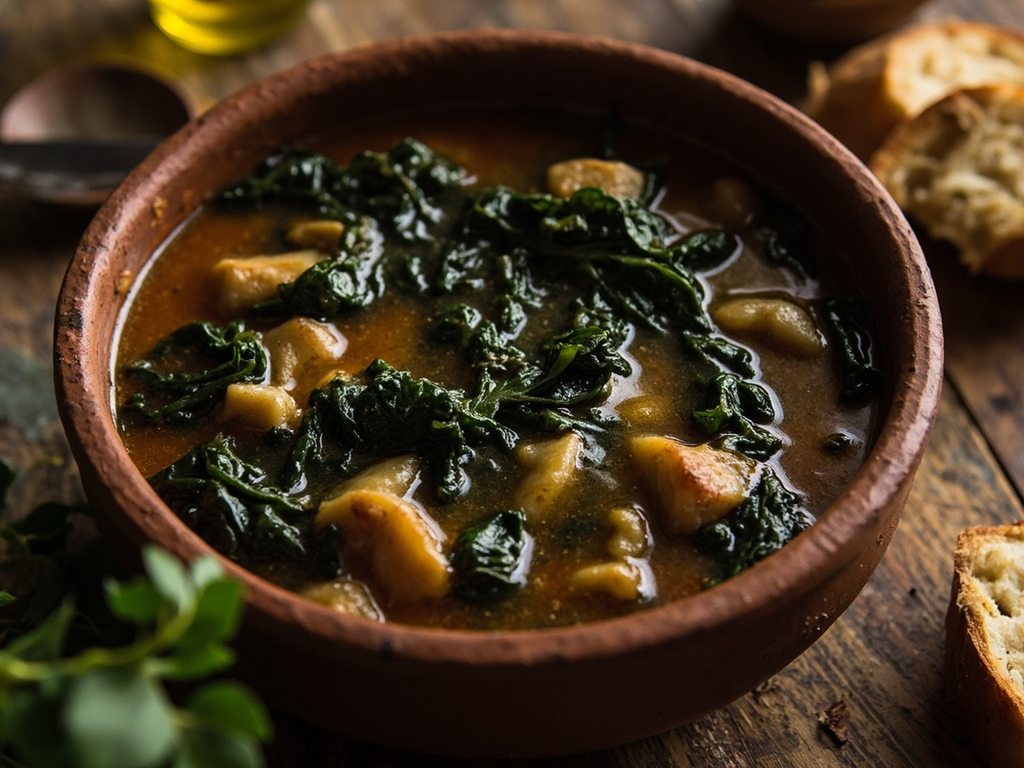
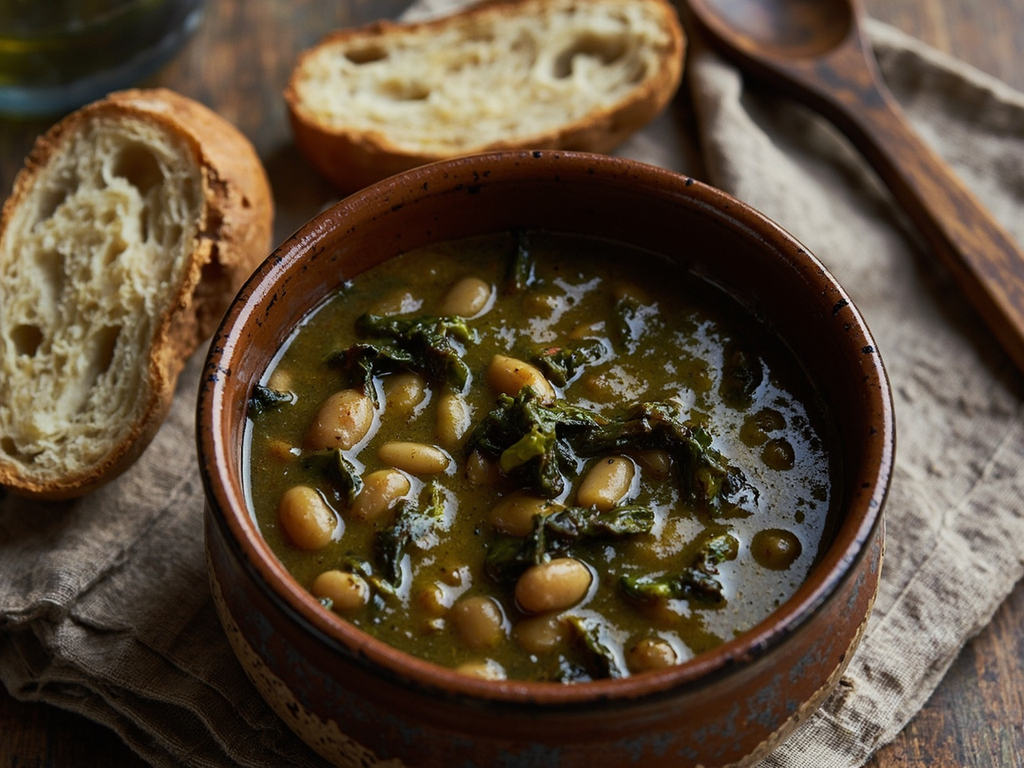
A thick and hearty soup where stale bread acts as a thickener, combined with slightly bitter Tuscan black kale and tender fava beans. The bread swells in the broth flavored with olive oil and garlic: a poor man's dish that warms and satisfies.
Do not mistake this peasant bowl. In the morning I mark my timber in the forest, and in the evening, mud-splattered, I sit at the inn with the butcher and the miller; we play dice, we quarrel with coarse words, and they serve me this soup where yesterday's bread is revived in the broth. Break your dry crust at the bottom of the bowl, pour over the new oil and the bitter kale, let it swell: this is how a man fallen from affairs learns that an honest pot is worth more than the flatteries of a court. Eat hot, and keep your mind cool.
- •Country bread, stale (unsalted, Tuscan style) — several hard slices (thickener and base)
- •Cavolo nero (Tuscan black kale) — one bunch (main vegetable, bitter note)
- •Fresh or soaked dried fava beans — a generous handful (protein and binder)
- •New Tuscan olive oil — generously (fat and flavor)
- •Garlic — a few cloves (aromatic)
- •Onion — one (aromatic base)
- •Salt — to taste (seasoning)
Zuppa di pane, cavolo nero e fave
A thick and hearty soup where stale bread acts as a thickener, combined with slightly bitter Tuscan black kale and tender fava beans. The bread swells in the broth flavored with olive oil and garlic: a poor man's dish that warms and satisfies.
Why this dish? During his exile at Sant'Andrea in Percussina, after his disgrace in 1513, Machiavelli shared the daily fare of peasants at the village inn: stale bread that was never thrown away, cabbage from the garden, and fava beans. This economical soup, where nothing is wasted, is the exact opposite of the splendor he knew at the Palazzo della Signoria.
Do not mistake this peasant bowl. In the morning I mark my timber in the forest, and in the evening, mud-splattered, I sit at the inn with the butcher and the miller; we play dice, we quarrel with coarse words, and they serve me this soup where yesterday's bread is revived in the broth. Break your dry crust at the bottom of the bowl, pour over the new oil and the bitter kale, let it swell: this is how a man fallen from affairs learns that an honest pot is worth more than the flatteries of a court. Eat hot, and keep your mind cool.
Ingredients (period version)
- Country bread, stale (unsalted, Tuscan style) — several hard slices (thickener and base)
- Cavolo nero (Tuscan black kale) — one bunch (main vegetable, bitter note)
- Fresh or soaked dried fava beans — a generous handful (protein and binder)
- New Tuscan olive oil — generously (fat and flavor)
- Garlic — a few cloves (aromatic)
- Onion — one (aromatic base)
- Salt — to taste (seasoning)
Ingredients
- Stale country bread — 250 g (thickener and base)
- Cavolo nero (or kale if unavailable) — 400 g (main vegetable)
- Dried shelled fava beans (or fresh) — 200 g (soaked overnight) (protein and binder)
- Extra virgin olive oil — 6 tbsp (fat and flavor)
- Garlic — 3 cloves (aromatic)
- Onion — 1 large (aromatic base)
- Vegetable broth or water — 1.5 L (cooking liquid)
- Salt and pepper — to taste (seasoning)
Method
- Soak the dried fava beans the night before, then cook them in the broth until tender (about 45 minutes).
- Gently sauté the sliced onion and garlic in half the olive oil until soft.
- Add the chopped cavolo nero (discard tough stems), wilt for a few minutes, then add the broth and fava beans.
- Simmer for 20 to 30 minutes until the kale is tender.
- Place the slices of stale bread in the bottom of bowls, pour the boiling soup over them, and let the bread swell for 5 minutes.
- Drizzle generously with raw olive oil before serving, adjust salt.
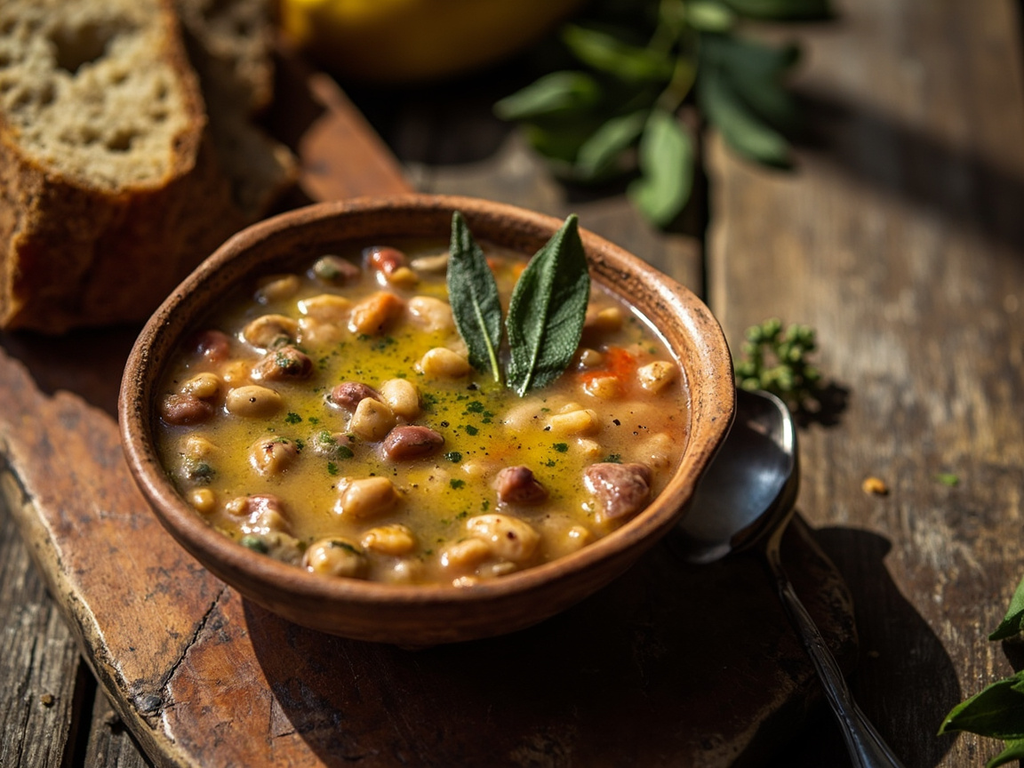
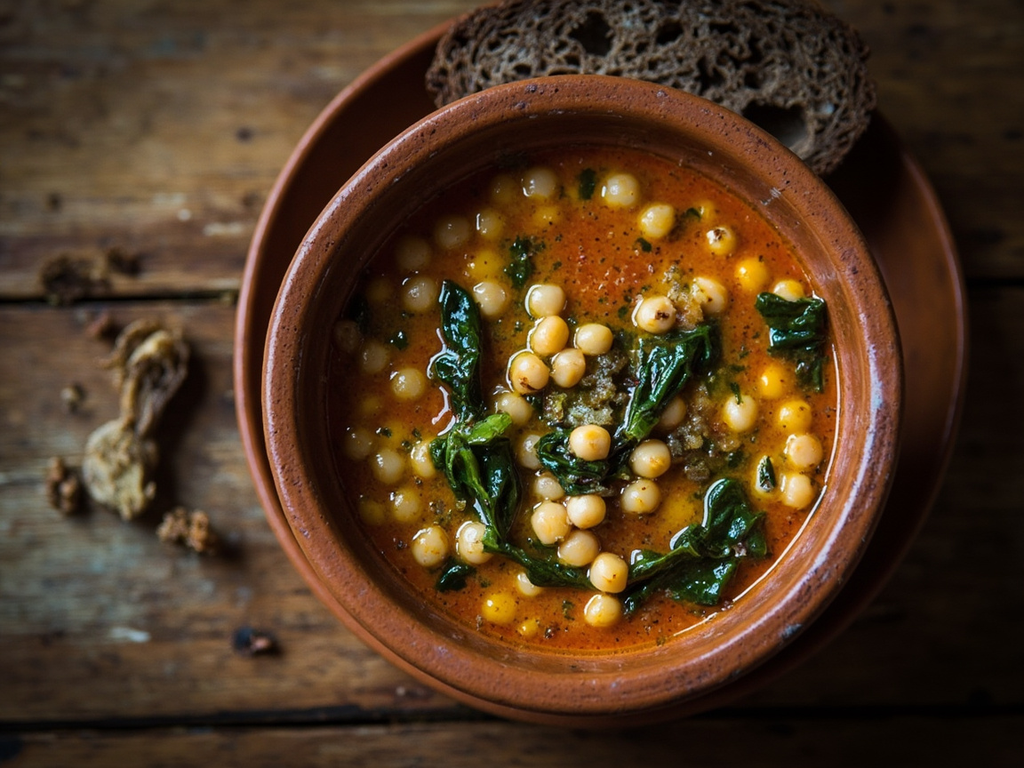
How it was made : Tuscan 'sciocco' bread (unsalted) keeps poorly once stale, hence a whole cuisine designed to recycle it: crumbled into soups, 'rebooted' the next day. The lower classes supplemented with Old World legumes (fava beans, chickpeas, lentils) — definitely not cannellini beans, which came from America and were unknown in Machiavelli's time.
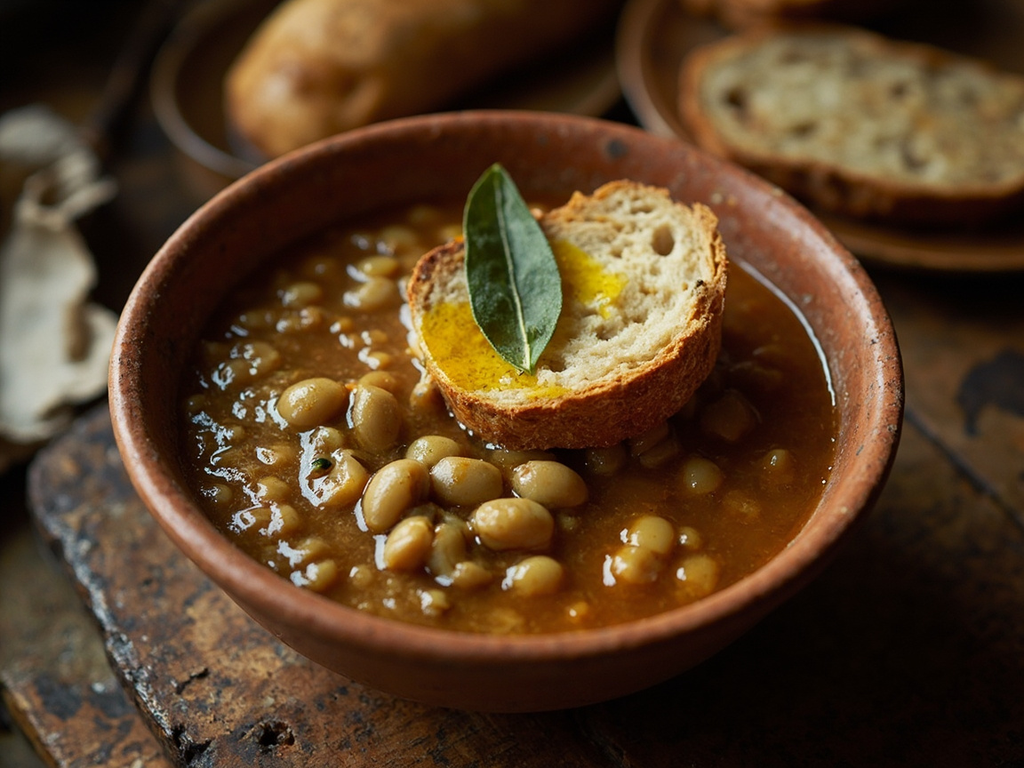
The contemporary twist : Served 'inverted' in a shallow bowl, with toasted bread placed as a crouton on top like a lid, a final drizzle of new oil and a grating of zest: the exile's soup in trattoria style.
Machiavelli · Charactorium