 flip
flipPici alle briciole (Sienese thick spaghetti with breadcrumbs)
Pici alle briciole (Sienese thick spaghetti with breadcrumbs)
Why this dish? Before Roman purple, there was Siena: Chigi was born in the Tuscan city of pici, these thick hand-rolled spaghetti that were dressed, on meatless days, with a simple sauté of breadcrumbs and garlic. This is the taste of the Magnificent banker's Sienese origins.
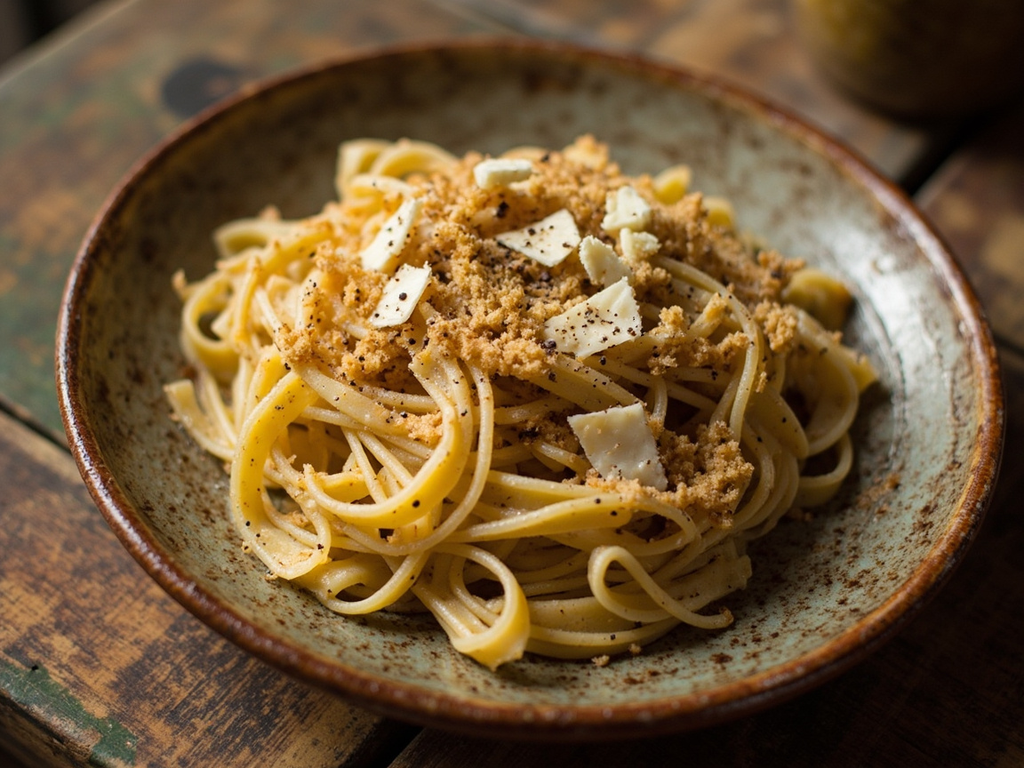
The humblest and most generous pasta of Tuscany: long thick vermicelli, rolled one by one on the palm, coated with a crunchy golden breadcrumb sautéed in garlic and olive oil, finished with pecorino and pepper. The dish of ordinary days, from where he comes.
Before Raphael's frescoes, before the popes, there was Siena and my mother's table. There we rolled pici by hand, one by one, with the tips of floured fingers — no press, no mold, only patience. On lean days, no meat: we fried stale breadcrumbs in good oil with garlic, and those golden crumbs were enough for our happiness. Rich as I have become, I tell you: none of my Roman feasts equals this poor dish when the belly cries out.
- •Wheat flour — as much as needed for the dough (base of pici)
- •Warm water — as needed (hydration)
- •Salt — a pinch (seasoning)
- •Stale breadcrumbs — two handfuls (crunchy umami)
- •Garlic — two cloves (perfume)
- •Tuscan olive oil — a good drizzle (fat)
- •Grated pecorino — as much as you like (salt and umami)
- •Black pepper — to taste (biting spice)
Pici alle briciole (Sienese thick spaghetti with breadcrumbs)
The humblest and most generous pasta of Tuscany: long thick vermicelli, rolled one by one on the palm, coated with a crunchy golden breadcrumb sautéed in garlic and olive oil, finished with pecorino and pepper. The dish of ordinary days, from where he comes.
Why this dish? Before Roman purple, there was Siena: Chigi was born in the Tuscan city of pici, these thick hand-rolled spaghetti that were dressed, on meatless days, with a simple sauté of breadcrumbs and garlic. This is the taste of the Magnificent banker's Sienese origins.
Before Raphael's frescoes, before the popes, there was Siena and my mother's table. There we rolled pici by hand, one by one, with the tips of floured fingers — no press, no mold, only patience. On lean days, no meat: we fried stale breadcrumbs in good oil with garlic, and those golden crumbs were enough for our happiness. Rich as I have become, I tell you: none of my Roman feasts equals this poor dish when the belly cries out.
Ingredients (period version)
- Wheat flour — as much as needed for the dough (base of pici)
- Warm water — as needed (hydration)
- Salt — a pinch (seasoning)
- Stale breadcrumbs — two handfuls (crunchy umami)
- Garlic — two cloves (perfume)
- Tuscan olive oil — a good drizzle (fat)
- Grated pecorino — as much as you like (salt and umami)
- Black pepper — to taste (biting spice)
Ingredients
- Wheat flour (all-purpose or fine semolina) — 300 g (dough)
- Warm water — about 150 ml (hydration)
- Salt — 1 pinch + for pasta water (seasoning)
- Stale breadcrumbs — 100 g (golden crumbs)
- Garlic — 2 cloves, minced (perfume)
- Extra virgin olive oil — 5 tablespoons (fat)
- Grated pecorino — 60 g (salty umami)
- Freshly ground black pepper — generously (spice)
Method
- Knead flour, warm water, and salt into a firm, smooth dough; let rest 30 minutes under a cloth.
- Roll the dough into a thick disc, cut strips, and roll each under your palms into a long, irregular 'thick spaghetti' (pici).
- Brown the breadcrumbs in olive oil with minced garlic over medium heat until crispy and fragrant.
- Cook the pici in a large pot of boiling salted water for 4–6 minutes (they are thick), then drain, reserving a ladle of pasta water.
- Toss the pici with the golden crumbs and a little pasta water to bind; off the heat, add pecorino and plenty of pepper.
How it was made : Pici (sometimes called 'pinci') have long been attested in southern Tuscany, around Siena and Montalcino; they were entirely hand-rolled, a technique accessible to modest households that had no eggs for the dough. The 'alle briciole' (with breadcrumbs) seasoning recycled stale bread, a typical anti-waste principle of Tuscan peasant cooking.
The contemporary twist : A grating of lemon zest over the crumbs brightens the whole dish and recalls the citrus gardens of Roman villas.
Sources : Sienese culinary tradition (pici / pinci) · Pellegrino Artusi, La scienza in cucina e l'arte di mangiar bene (1891)
Agostino Chigi · Charactorium