 flip
flipMorning Ful Medames
Morning Ful Medames
Why this dish? Nasser, born into a modest family in Upper Egypt, ate ful all his life: it is the lunch of the fellah, the officer, and the president. Chronicles of his table in Heliopolis describe him faithful to this simple Nile cuisine, which he claimed as a bond with the people.
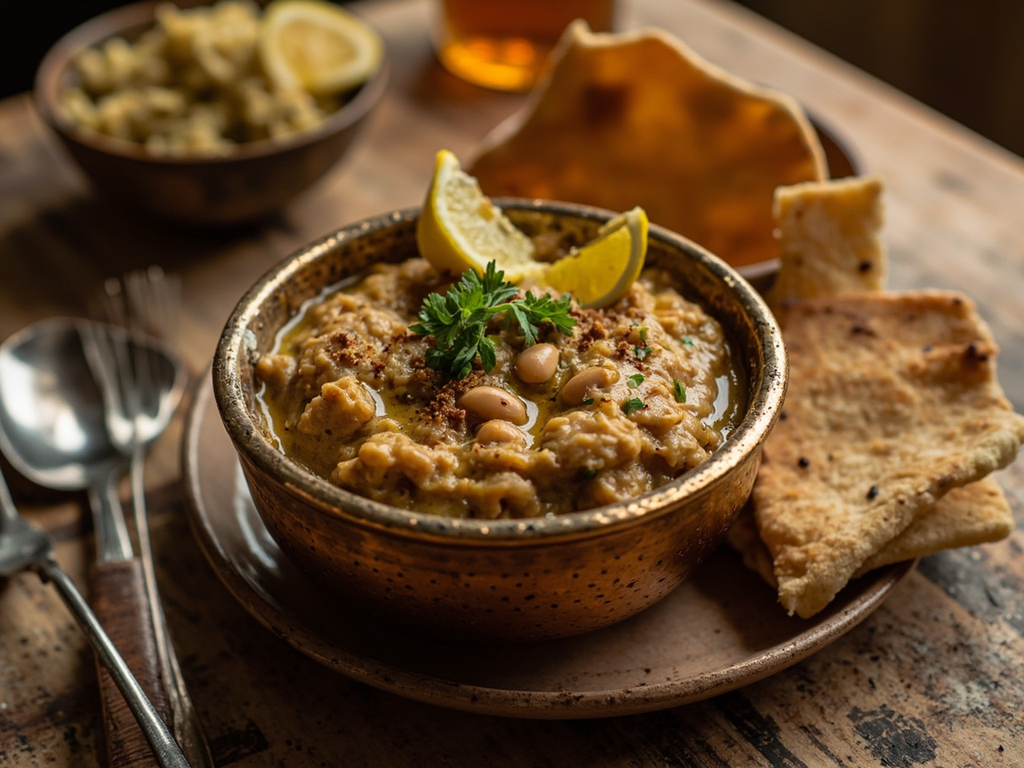
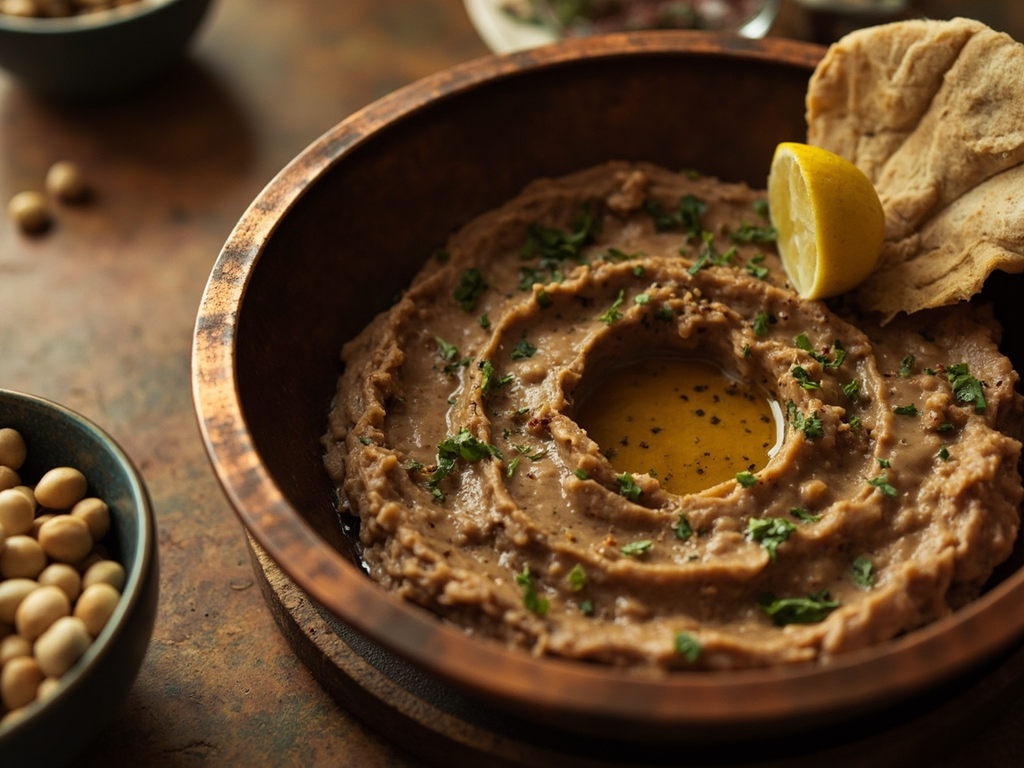
Brown fava beans simmered all night over low heat, coarsely crushed and awakened with oil, garlic, lemon, and cumin. Eaten straight from the pot, scooped up with warm baladi bread. The dish that has nourished Egypt at daybreak since the pharaohs.
Listen to me, my brother: this dish is Egypt itself. When I was little in Beni Mor, my mother would let the fava beans sing on the embers all night, and the smell of kammoun would wake us before the muezzin. You don't eat ful with an effendi's fork — you scoop it up with bread, with your full hand, alongside your brothers. A president who forgets the taste of his village's fava beans has forgotten his people, and I have never forgotten it.
- •Brown fava beans (ful hammam) — a large bowl, soaked overnight (base)
- •Oil (olive or linseed) — a good drizzle (fat binder)
- •Pounded garlic — a few cloves (aromatic)
- •Roasted and ground cumin — a good pinch (signature)
- •Lemon — juice of one (acidity)
- •Salt — to taste (seasoning)
- •Baladi bread — as needed (accompaniment)
Morning Ful Medames
Brown fava beans simmered all night over low heat, coarsely crushed and awakened with oil, garlic, lemon, and cumin. Eaten straight from the pot, scooped up with warm baladi bread. The dish that has nourished Egypt at daybreak since the pharaohs.
Why this dish? Nasser, born into a modest family in Upper Egypt, ate ful all his life: it is the lunch of the fellah, the officer, and the president. Chronicles of his table in Heliopolis describe him faithful to this simple Nile cuisine, which he claimed as a bond with the people.
Listen to me, my brother: this dish is Egypt itself. When I was little in Beni Mor, my mother would let the fava beans sing on the embers all night, and the smell of kammoun would wake us before the muezzin. You don't eat ful with an effendi's fork — you scoop it up with bread, with your full hand, alongside your brothers. A president who forgets the taste of his village's fava beans has forgotten his people, and I have never forgotten it.
Ingredients (period version)
- Brown fava beans (ful hammam) — a large bowl, soaked overnight (base)
- Oil (olive or linseed) — a good drizzle (fat binder)
- Pounded garlic — a few cloves (aromatic)
- Roasted and ground cumin — a good pinch (signature)
- Lemon — juice of one (acidity)
- Salt — to taste (seasoning)
- Baladi bread — as needed (accompaniment)
Ingredients
- Canned cooked fava beans (ful medames) — 2 cans (400 g each) (base)
- Olive oil — 4 tbsp (fat binder)
- Garlic — 2 cloves, pressed (aromatic)
- Ground cumin — 1 tsp (signature)
- Lemon — 1 (juice) (acidity)
- Salt — 1/2 tsp (seasoning)
- Chopped flat-leaf parsley — a handful (garnish)
- Pita or baladi bread — 4 loaves (accompaniment)
Method
- Pour the fava beans with their liquid into a saucepan and heat gently for 10 minutes.
- Coarsely mash with a fork or pestle, leaving some beans whole.
- Off the heat, add the pressed garlic, lemon juice, cumin, and salt; mix.
- Serve in a deep bowl, make a well, and pour the olive oil generously into it.
- Sprinkle with parsley and serve piping hot with warm bread to tear.
How it was made : Before gas, the fava beans cooked for hours in a narrow-necked pot (the qidra) buried in embers or taken to the neighborhood factory (the fawwâl) where each person brought their bowl at dawn. The cumin was dry-roasted and then pounded in a mortar just before use.
The contemporary twist : A spoonful of tahini smoothed into the beans and a soft-boiled egg on top: the ful of a president who skipped the state breakfast.
Sources : Claudia Roden, A Book of Middle Eastern Food · Magda Mehdawy, My Egyptian Grandmother's Kitchen
Gamal Abdel Nasser · Charactorium