 flip
flipFoul medames of dawn
Foul medames of dawn
Why this dish? A son of fellahs from Mit Abou el-Kôm, Sadat claimed a simple, frugal table all his life. Foul, the peasants' dish cooked overnight and eaten at sunrise, was the emblem of that sobriety he displayed right up to the presidential palace.
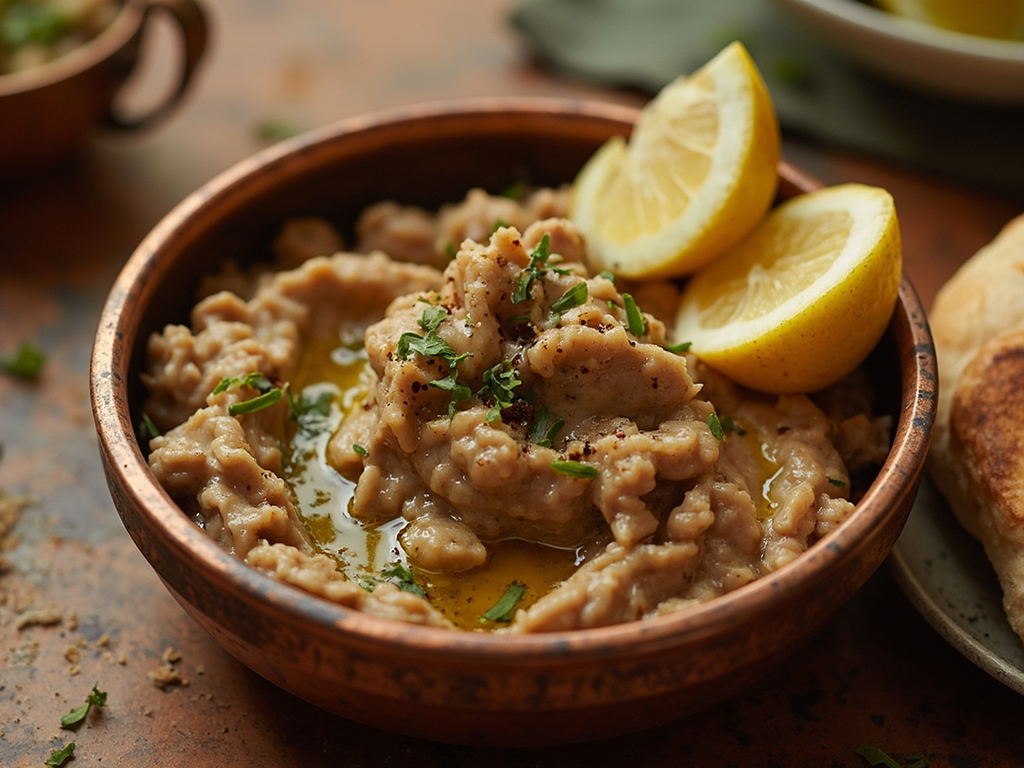
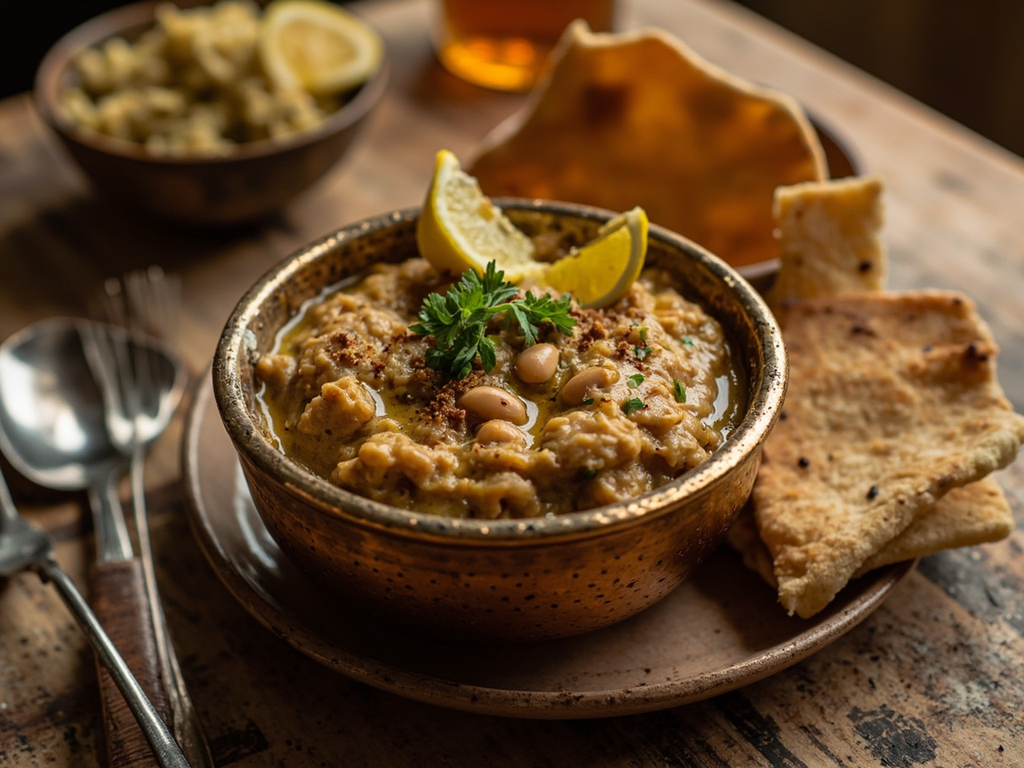
Dried fava beans slowly simmered until melting, coarsely mashed and seasoned with garlic, lemon, cumin, and oil. The breakfast of the Egyptian people, eaten with flatbread at sunrise.
You see, my friend, you may live in the Abdeen Palace, but the belly remembers the village. In Mit Abou el-Kôm, my mother would leave the beans singing in the pot all night over the dying embers, and by the first call to prayer the dish was ready. I crush the beans with a fork, squeeze the lemon, pour the oil and that dust of roasted cumin that wakes everything up—and with a piece of warm bread, there's a satisfied man. The fellah I remain has never been ashamed of that table; it's worth all the feasts.
- •Dried fava beans (foul hammam) — two large handfuls (base, soaked the night before)
- •Crushed garlic — a few cloves (aromatic)
- •Roasted cumin — a good pinch (signature)
- •Lemon juice — to taste (acidity)
- •Oil (olive or sesame) — a generous drizzle (binder, fat)
- •Salt — to taste (seasoning)
Foul medames of dawn
Dried fava beans slowly simmered until melting, coarsely mashed and seasoned with garlic, lemon, cumin, and oil. The breakfast of the Egyptian people, eaten with flatbread at sunrise.
Why this dish? A son of fellahs from Mit Abou el-Kôm, Sadat claimed a simple, frugal table all his life. Foul, the peasants' dish cooked overnight and eaten at sunrise, was the emblem of that sobriety he displayed right up to the presidential palace.
You see, my friend, you may live in the Abdeen Palace, but the belly remembers the village. In Mit Abou el-Kôm, my mother would leave the beans singing in the pot all night over the dying embers, and by the first call to prayer the dish was ready. I crush the beans with a fork, squeeze the lemon, pour the oil and that dust of roasted cumin that wakes everything up—and with a piece of warm bread, there's a satisfied man. The fellah I remain has never been ashamed of that table; it's worth all the feasts.
Ingredients (period version)
- Dried fava beans (foul hammam) — two large handfuls (base, soaked the night before)
- Crushed garlic — a few cloves (aromatic)
- Roasted cumin — a good pinch (signature)
- Lemon juice — to taste (acidity)
- Oil (olive or sesame) — a generous drizzle (binder, fat)
- Salt — to taste (seasoning)
Ingredients
- Dried or canned fava beans (foul medames) — 400 g (1 large can) (base)
- Garlic cloves — 2, crushed (aromatic)
- Ground cumin — 1 tsp (signature)
- Lemon — 1, juiced (acidity)
- Olive oil — 3 tbsp (fat)
- Salt — 1/2 tsp (seasoning)
- Chopped flat-leaf parsley — a few sprigs (freshness (optional))
Method
- If using dried beans, soak them overnight then simmer on very low heat for 1-2 hours until tender (if using canned, simply warm them in their liquid).
- Drain, reserving a little cooking liquid. Coarsely mash half the beans with a fork for a creamy but still chunky texture.
- Add crushed garlic, salt, and cumin; mix while hot.
- Off the heat, drizzle with olive oil and lemon juice. Thin with a little reserved liquid if too thick.
- Sprinkle with parsley and serve piping hot with warm flatbread.
How it was made : Foul has been documented in Egypt since antiquity. Traditionally, the beans cooked all night in a narrow-necked copper pot, the idra, buried in embers or placed on the communal fire of the neighborhood; at dawn, people would come to take their share. It was—and remains—the quintessential popular breakfast of the Delta and Cairo.
The contemporary twist : Serve it "Abdeen Palace style" in a small individual copper pot, topped with a soft-boiled egg and a spiral of olive oil: peasant frugality, but presented as a tribute.
Anwar Sadat · Charactorium