 flip
flipShukto, the Bitter Medley Opening
Shukto, the Bitter Medley Opening
Why this dish? In a Bengali home in Calcutta like the one where Gayatri Chakravorty grew up, the meal opened with the bitter: an Ayurvedic principle as much as a table gesture. This very humble dish accompanied the childhood days she evokes through the ritual of tea and Bengali cooking that remained alive in her.
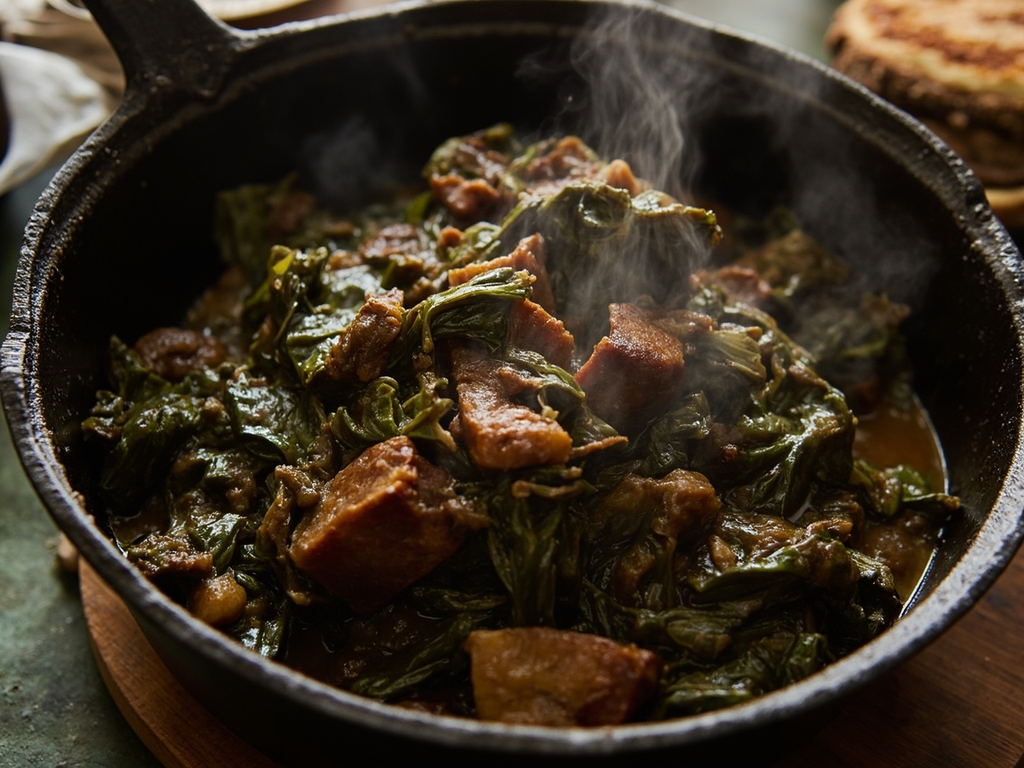
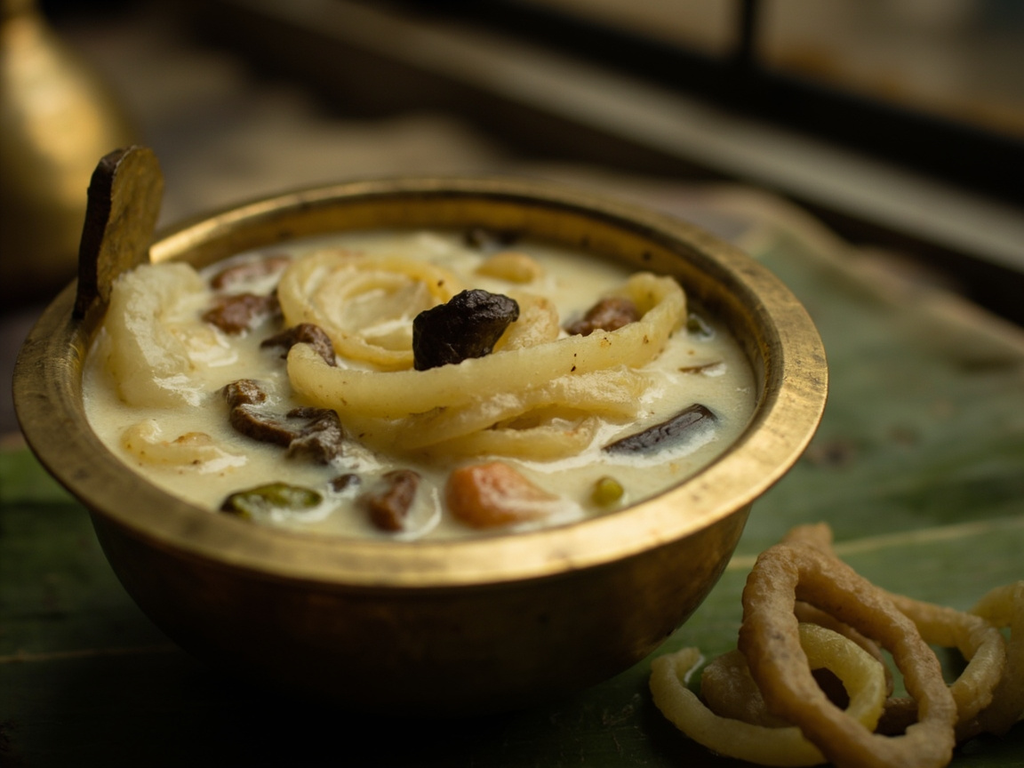
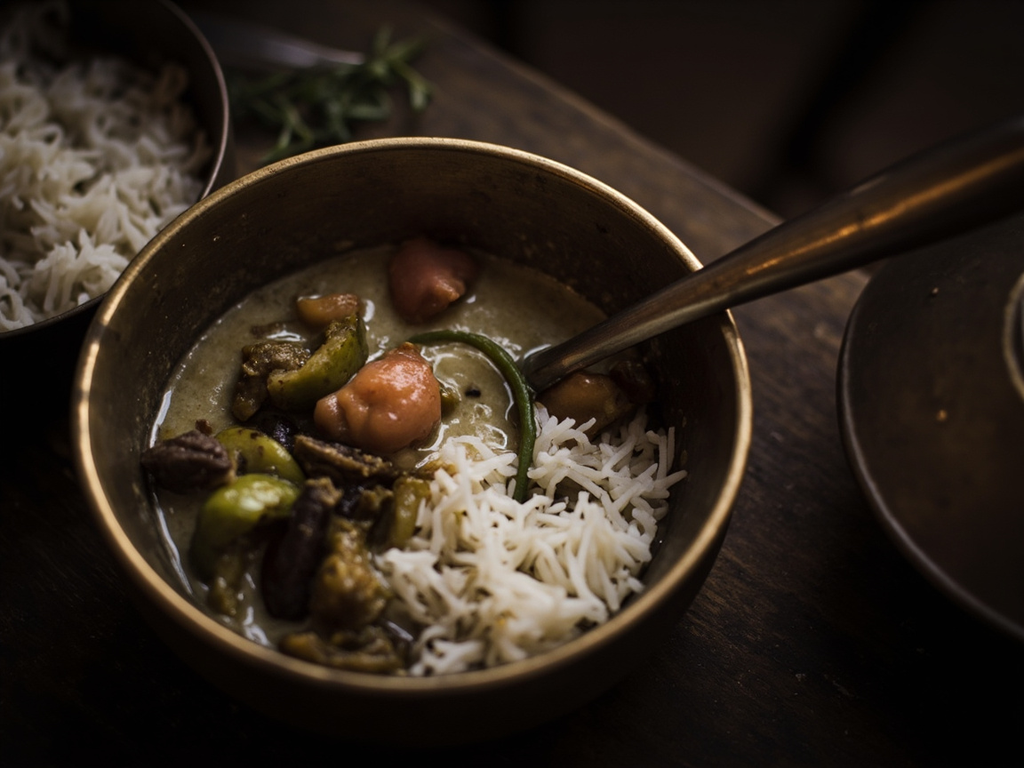
A bittersweet mixture of vegetables (including bitter gourd) simmered in thickened milk, spiced with ginger and mustard. Eaten at the very start of the meal, almost like a palate awakener.
Let me tell you something: at home in Calcutta, we never attacked the rice with sweet. My mother would first place the shukto, and you had to learn to love the bitter — an apprenticeship, like everything else. The bitter gourd intimidates the child, I know, but it prepares the mouth for what follows, exactly as a difficult reading prepares the mind. Fry the panch phoron until it sings in the oil, then let the vegetables take the time they need. One does not rush bitterness; one understands it.
- •Bitter gourd (karela) — a few young fruits (central bitterness)
- •Eggplant and green plantains — equal parts (soft vegetables)
- •White radish (mooli) — according to season (texture and sweetness)
- •Mustard oil — a good drizzle (fragrant fat)
- •Panch phoron — a pinch (opening spice)
- •Ginger and mustard seed paste — a little (pungent binder)
- •Milk — a bowl (roundness of broth)
Shukto, the Bitter Medley Opening
A bittersweet mixture of vegetables (including bitter gourd) simmered in thickened milk, spiced with ginger and mustard. Eaten at the very start of the meal, almost like a palate awakener.
Why this dish? In a Bengali home in Calcutta like the one where Gayatri Chakravorty grew up, the meal opened with the bitter: an Ayurvedic principle as much as a table gesture. This very humble dish accompanied the childhood days she evokes through the ritual of tea and Bengali cooking that remained alive in her.
Let me tell you something: at home in Calcutta, we never attacked the rice with sweet. My mother would first place the shukto, and you had to learn to love the bitter — an apprenticeship, like everything else. The bitter gourd intimidates the child, I know, but it prepares the mouth for what follows, exactly as a difficult reading prepares the mind. Fry the panch phoron until it sings in the oil, then let the vegetables take the time they need. One does not rush bitterness; one understands it.
Ingredients (period version)
- Bitter gourd (karela) — a few young fruits (central bitterness)
- Eggplant and green plantains — equal parts (soft vegetables)
- White radish (mooli) — according to season (texture and sweetness)
- Mustard oil — a good drizzle (fragrant fat)
- Panch phoron — a pinch (opening spice)
- Ginger and mustard seed paste — a little (pungent binder)
- Milk — a bowl (roundness of broth)
Ingredients
- Bitter gourd (karela) — 1 medium, sliced thin (central bitterness)
- Eggplant — 1 small, cut into sticks (softness)
- Green plantain — 1/2, cut into sticks (texture)
- White radish (mooli) — 1/2, cut into half-moons (sweetness)
- Mustard oil — 3 tbsp (fat)
- Panch phoron — 1 tsp (spice)
- Grated ginger — 1 tsp (freshness)
- Mustard paste — 1 tsp (pungency)
- Whole milk — 150 ml (roundness)
- Sugar and salt — a pinch each (balance)
Method
- Fry the bitter gourd separately in mustard oil until golden, set aside.
- In the same oil, crackle the panch phoron, then add the other vegetables and sweat them.
- Add ginger, mustard paste, a little water, and simmer covered until tender.
- Return the bitter gourd, pour in the milk, adjust salt and a pinch of sugar, let thicken gently without boiling hard.
- Serve warm, at the very start of the meal, with white rice.
How it was made : Shukto has been codified in Bengali cooking for centuries: Ayurvedic medicine recommends opening the meal with the bitter taste (tikta) to stimulate digestion. Before today's common oil and vegetables, versions varied according to each home's garden.
The contemporary twist : Present it in a small brass bowl placed at the top of the plate, to respect the ritual order: the bitter first, like a preface.
Sources : Chitrita Banerji, "Life and Food in Bengal", 1991 · K. T. Achaya, "Indian Food: A Historical Companion", Oxford University Press, 1994
Gayatri Spivak · Charactorium