 flip
flipShukto, the Bitter Medley to Start
Shukto, the Bitter Medley to Start
Why this dish? Shukto opens every proper Bengali meal, including in a university family in Santiniketan like the one where Sen grew up. Its measured bitterness connects to his taste for things that 'awaken' before nourishing — and to a palate that, after his mouth cancer, he had to treat with gentle, slow-cooked dishes.
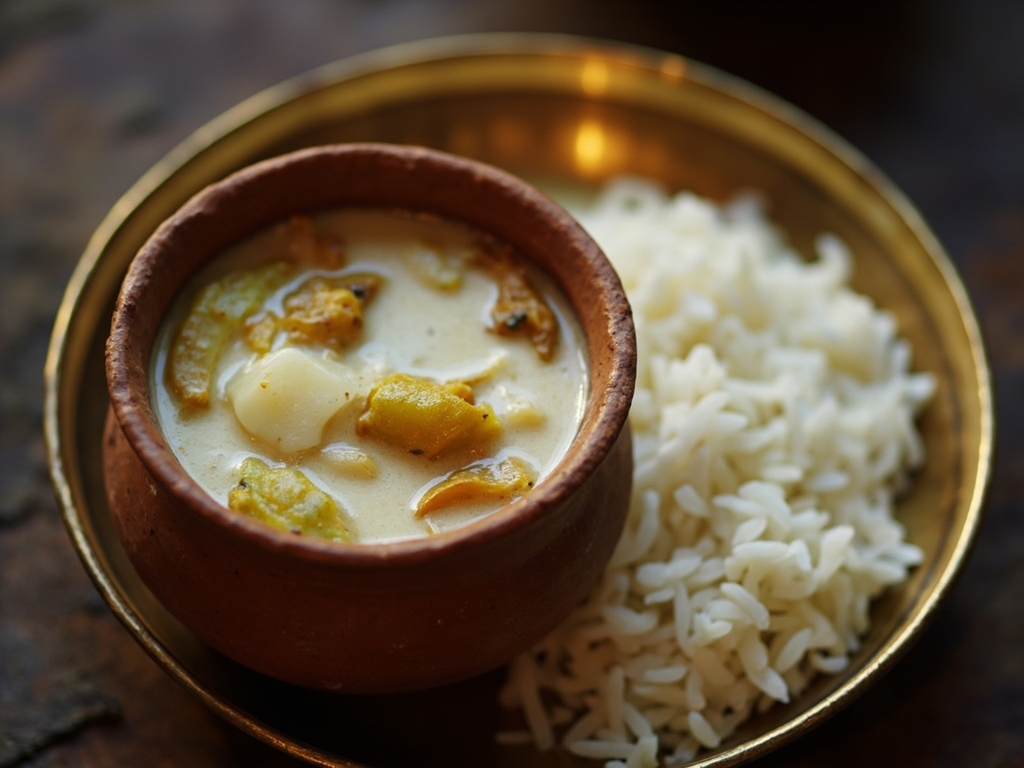
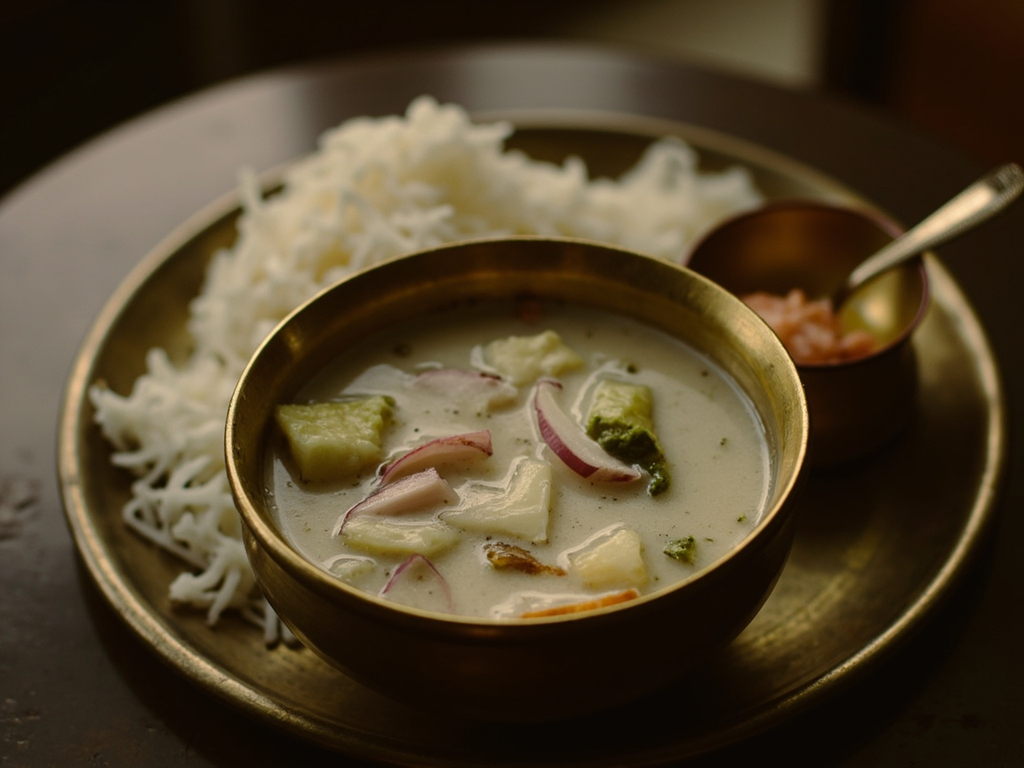
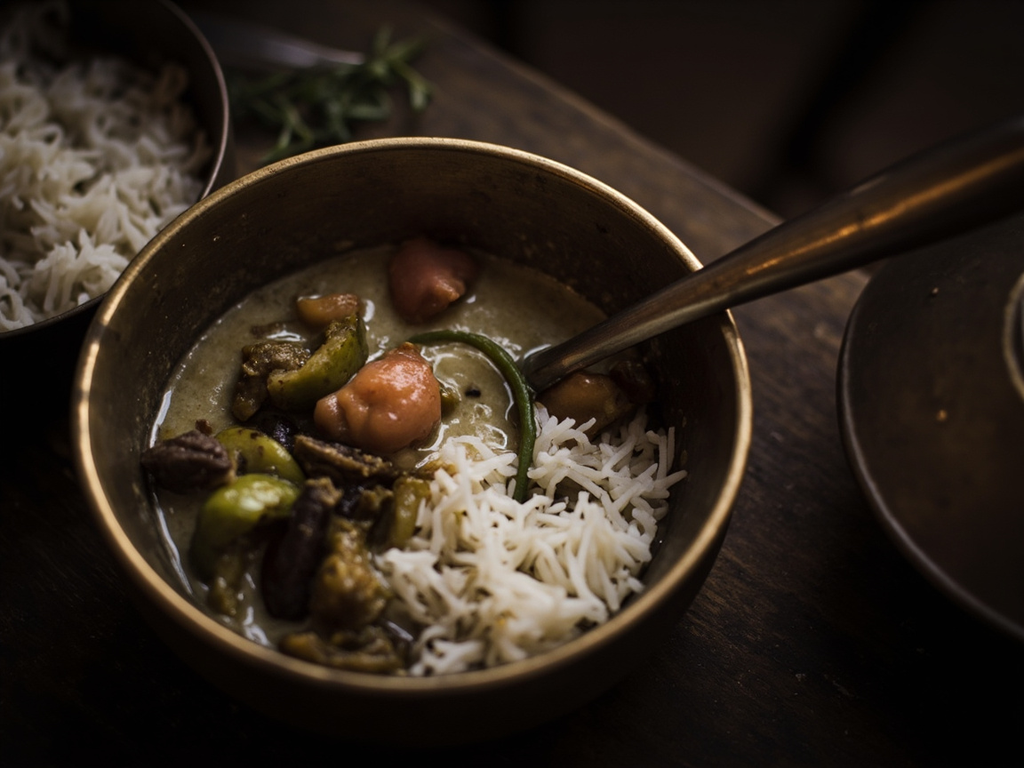
A stewed vegetable dish dominated by bitter gourd, softened with milk and a touch of panch phoron. Served at the very start of the meal, warm, on a corner of rice.
Permettez-moi de commencer, comme nous le faisons toujours au Bengale, par l'amer. Enfant, à Santiniketan, je trouvais ce shukto sévère ; ma mère m'expliquait qu'on ne mérite la douceur d'un repas qu'après en avoir traversé l'amertume — leçon qui, je l'avoue, m'a accompagné bien au-delà de la table. On y met le margose, un peu de lait pour arrondir, et ces cinq graines que l'on fait chanter dans l'huile. Mangez-en peu, sur un nuage de riz : c'est une mise en bouche philosophique avant tout le reste.
- •Bitter gourd (karela) — deux, en rondelles (central bitterness)
- •Eggplant and white radish — quelques morceaux (melting vegetables)
- •Mustard oil — un filet (fragrant fat)
- •Panch phoron — une pincée (aromatic signature)
- •Milk and ginger paste — selon le goût (roundness and sweetness)
Shukto, the Bitter Medley to Start
A stewed vegetable dish dominated by bitter gourd, softened with milk and a touch of panch phoron. Served at the very start of the meal, warm, on a corner of rice.
Why this dish? Shukto opens every proper Bengali meal, including in a university family in Santiniketan like the one where Sen grew up. Its measured bitterness connects to his taste for things that 'awaken' before nourishing — and to a palate that, after his mouth cancer, he had to treat with gentle, slow-cooked dishes.
Permettez-moi de commencer, comme nous le faisons toujours au Bengale, par l'amer. Enfant, à Santiniketan, je trouvais ce shukto sévère ; ma mère m'expliquait qu'on ne mérite la douceur d'un repas qu'après en avoir traversé l'amertume — leçon qui, je l'avoue, m'a accompagné bien au-delà de la table. On y met le margose, un peu de lait pour arrondir, et ces cinq graines que l'on fait chanter dans l'huile. Mangez-en peu, sur un nuage de riz : c'est une mise en bouche philosophique avant tout le reste.
Ingredients (period version)
- Bitter gourd (karela) — deux, en rondelles (central bitterness)
- Eggplant and white radish — quelques morceaux (melting vegetables)
- Mustard oil — un filet (fragrant fat)
- Panch phoron — une pincée (aromatic signature)
- Milk and ginger paste — selon le goût (roundness and sweetness)
Ingredients
- Bitter gourd (karela) — 200 g en rondelles
- Eggplant — 1 petite, en cubes
- White radish (daikon) — 1/2, en bâtonnets
- Sweet potato or potato — 1, en morceaux
- Mustard oil — 2 c. à soupe
- Panch phoron — 1 c. à café
- Grated ginger — 1 c. à café
- Milk — 100 ml
- Salt — au goût
Method
- Let the bitter gourd slices sit with a pinch of salt for 10 minutes, then sauté them separately in a little oil to reduce bitterness.
- In smoking mustard oil, pop the panch phoron until it crackles.
- Add the other vegetables and ginger, stir-fry for a few minutes.
- Pour in a little water, cover, and simmer until everything is tender.
- Stir in the bitter gourd and milk, season with salt, and let thicken gently for 5 minutes. Serve warm.
How it was made : In Bengali kitchens, shukto was simmered over a charcoal fire in an earthen pot, mustard oil was pressed locally, and the bitterness of karela was considered tonic and good for digestion in hot weather.
The contemporary twist : Serve the shukto in a warm verrine with a spoonful of puffed rice on top, a nod to 'capabilities': a humble dish that reveals what each vegetable is capable of.
Sources : Chitrita Banerji, Life and Food in Bengal · Pranati Sengupta, traditions culinaires du Bengale-Occidental
Amartya Sen · Charactorium