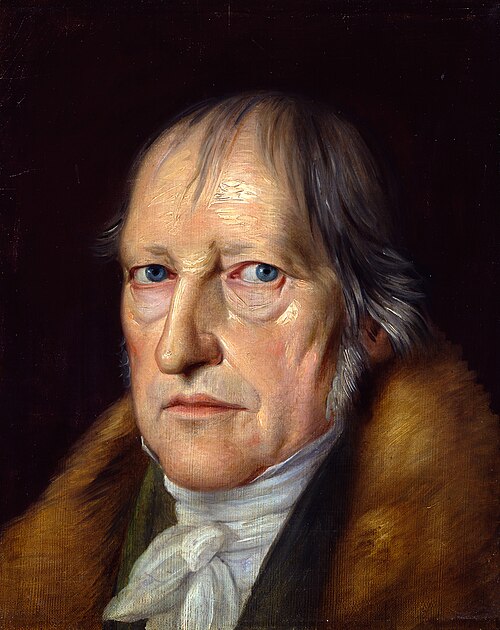
Georg Wilhelm Friedrich Hegel(1770 — 1831)
Georg Wilhelm Friedrich Hegel
Royaume du Wurtemberg
8 min read
German philosopher (1770–1831), Hegel is one of the most influential thinkers of German Idealism. He developed a philosophy of history based on dialectics and the concept of the Absolute Spirit.
Frequently asked questions
Famous Quotes
« What is rational is real, and what is real is rational. »
« World history is the progress of the consciousness of freedom. »
Key Facts
- 1770: born in Stuttgart in the Duchy of Württemberg
- 1807: publication of the Phenomenology of Spirit, a landmark work of modern philosophy
- 1818: appointed professor at the University of Berlin, where he became the dominant figure in German philosophy
- 1821: publication of Elements of the Philosophy of Right
- 1831: died in Berlin, most likely from cholera
Works & Achievements
Hegel's first major systematic work, it traces the journey of human consciousness toward absolute Knowledge. It is one of the most influential and complex philosophical texts in the entire history of Western thought.
A three-volume work setting out Hegel's dialectical logic, in which the thesis-antithesis-synthesis method is developed as the fundamental law of reality. It forms the core of the Hegelian system.
A synthesis of the Hegelian system in three parts: Logic, the Philosophy of Nature, and the Philosophy of Spirit. Originally conceived as a textbook for his students, it provides an overview of his entire thought.
A foundational treatise on the state, family, civil society, and law. Hegel develops his conception of the state as the realization of rational freedom — a work that would go on to influence liberals and Marx alike.
Lectures delivered in Berlin and published after his death by his students. Hegel presents his vision of History as the unfolding of Reason and freedom, from the ancient East to modern Europe.
Lectures reconstructed by his disciples, tracing the history of philosophical thought from Antiquity to Kant. Hegel argues that each philosophy represents a necessary stage in the development of Spirit.
Anecdotes
Hegel was so passionate about the French Revolution that he reportedly planted a 'liberty tree' with his fellow students in Tübingen in 1789. He saw this event as the embodiment of Reason in History — a central idea throughout his entire philosophy.
On October 14, 1806, while he was finishing his masterwork 'The Phenomenology of Spirit' in Jena, Hegel watched Napoleon ride through the city on horseback. He wrote to a friend: 'I saw the World Spirit on horseback.' For Hegel, Napoleon was the living embodiment of History's march forward.
Hegel was notorious for his extraordinarily difficult lectures. He spoke slowly, searched for his words, paused at length, and shuffled through his notes. Yet his lecture halls in Berlin were packed with students who had traveled from across Europe, drawn by the depth of his thought.
Hegel was appointed rector of the Nuremberg gymnasium in 1808, where he taught philosophy to students aged 14 to 18. He firmly believed that philosophy should be taught from adolescence onward, and wrote courses tailored to that audience — demonstrating a genuine concern for pedagogy.
Hegel died in 1831 in Berlin during a cholera epidemic. The speed of his death shocked his contemporaries: he had still been at the height of his intellectual powers the day before he passed away.
Primary Sources
The true is the whole. But the whole is nothing other than the essence consummating itself through its own development. Of the Absolute it must be said that it is essentially a result, that only at the end is it what it truly is.
What is rational is actual, and what is actual is rational. This conviction is shared by every ingenuous consciousness as well as by philosophy.
The only thought which philosophy brings with it is the simple idea of reason — the idea that reason governs the world, and that world history has therefore unfolded rationally.
I saw the Emperor — that world-soul — riding out of the city on reconnaissance. It is truly a remarkable sensation to see such an individual who, concentrated here in a single point, seated on a horse, reaches out across the world and dominates it.
Philosophy may be provisionally defined as the thinking consideration of objects. If the aim of philosophy is to understand what is, then what is, is reason.
Key Places
Hegel's birthplace, where he grew up in a family of Protestant civil servants. The context of the Duchy of Württemberg, a fragmented territory within Germany, shaped his thinking on the state and national unity.
The Protestant seminary where Hegel studied from 1788 to 1793 alongside Schelling and Hölderlin. This crucible of intense intellectual formation was the birthplace of German Idealism, marked by shared enthusiasm for the French Revolution.
The university town where Hegel taught from 1801 to 1807 and wrote his Phenomenology of Spirit. It was here that he witnessed Napoleon riding through the city after the Battle of Jena — a defining experience for his philosophy of history.
The city where Hegel served as headmaster of the gymnasium from 1808 to 1816. There he wrote the Science of Logic and experimented with teaching philosophy to adolescents — a pedagogical experience that influenced his conception of knowledge.
The seat of Hegel's academic fame: appointed professor in 1818, he taught there until his death in 1831 and attracted students from around the world. Berlin, capital of Prussia, gave his political philosophy its fullest context.
Liens externes & ressources
See also
Related Characters
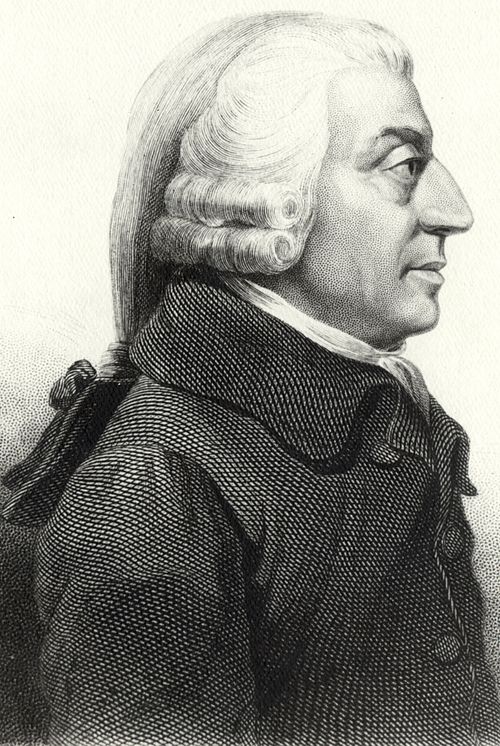
Adam Smith
1723 — 1790
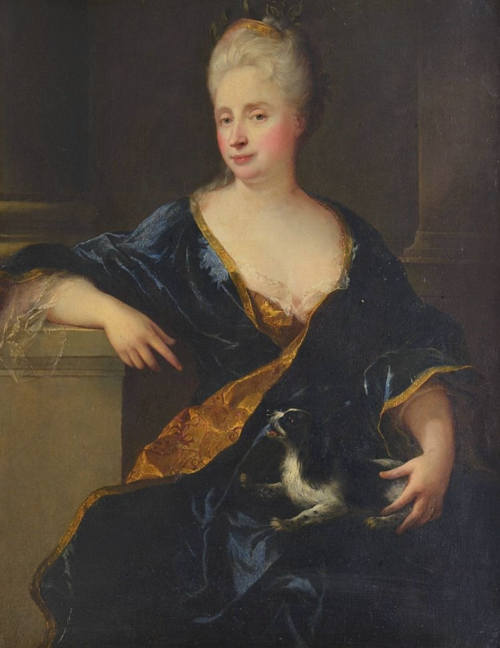
Anne Thérèse de Marguenat de Courcelles, marquise de Lambert
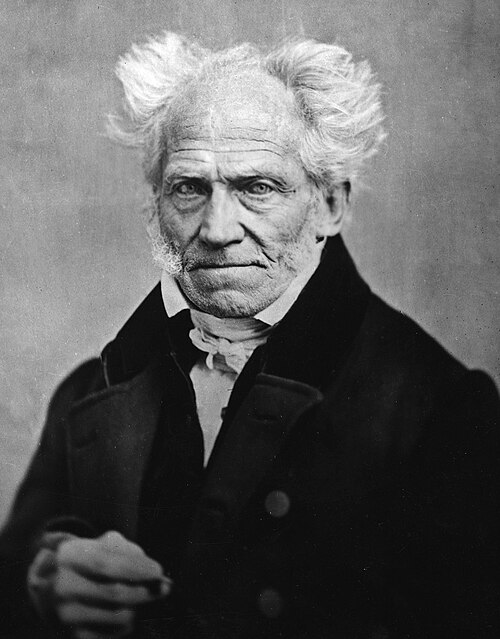
Arthur Schopenhauer
1788 — 1860
Cardinal de Richelieu
1585 — 1642
Cardinal Mazarin
1602 — 1661
Charles XII of Sweden