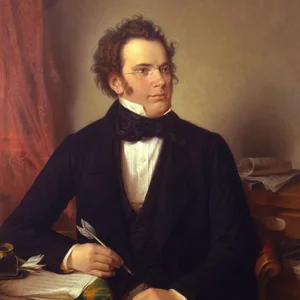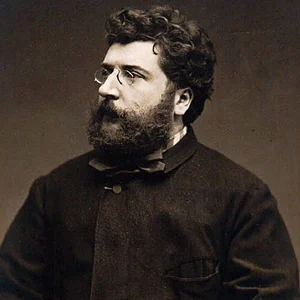
Georges Bizet
Georges Bizet
1838 — 1875
France
A French composer of the 19th century (1838–1875), Georges Bizet is best known for his opera Carmen, a masterpiece of lyric music. Despite a relatively short career, he revolutionized French opera by incorporating bold dramatic elements and daring orchestration.
Émotions disponibles (6)
Neutre
par défaut
Inspiré
Pensif
Surpris
Triste
Fier
Key Facts
- 1857: Entered the Paris Conservatoire and won the Prix de Rome
- 1863: Premiere of his opéra comique The Pearl Fishers
- 1875: Premiere of Carmen at the Opéra-Comique in Paris — a revolutionary work that was poorly received at its debut
- 1875: Premature death at age 36, shortly after the opening night of Carmen
- Use of rich orchestration and popular Spanish melodies throughout Carmen
Works & Achievements
Opera in four acts based on a libretto drawn from Mérimée's novella. A masterpiece of the world's lyric repertoire, it revolutionized opera through its dramatic realism and the richness of its orchestration.
Bizet's first major opera, set in Ceylon. It contains the famous duet 'Au fond du temple saint', which has become a staple of the repertoire for tenor and baritone.
Incidental music composed for Alphonse Daudet's play. The two orchestral suites drawn from this score rank among the most popular symphonic pieces in French music.
Composed at seventeen as an exercise at the Conservatoire, this youthful symphony was not discovered and premiered until 1935. It reveals a precocious mastery of symphonic form.
A suite of twelve pieces for piano four hands evoking childhood games. Bizet orchestrated five of them to form the Petite Suite d'orchestre, remarkable for its freshness and inventiveness.
Opera in four acts inspired by a novel by Walter Scott. Well received at its premiere, it demonstrates Bizet's growing mastery of dramatic and vocal writing.
Anecdotes
Georges Bizet entered the Paris Conservatoire at the age of nine, making him one of the youngest students ever admitted to this prestigious institution. His father, a singing teacher, had already noticed his exceptional gifts from early childhood.
At the premiere of Carmen at the Opéra-Comique on March 3, 1875, the Parisian audience was shocked by the raw realism of the plot: a cigar factory worker, smugglers, a murder on stage. Several critics described the work as immoral and scandalous. Bizet died three months later without knowing that Carmen would become one of the most performed operas in the world.
In 1857, at the age of eighteen, Bizet won the prestigious Prix de Rome for musical composition, allowing him to spend three years at the Villa Medici in Italy. This Roman sojourn exposed him to Italian music and left a profound mark on his orchestral style.
Bizet was a pianist of remarkable virtuosity. Franz Liszt himself, after hearing him sight-read a score, reportedly declared that he considered him one of the three best pianists in Europe. Yet Bizet always refused to pursue a career as a concert performer, preferring to devote himself to composition.
The composer Tchaikovsky, after attending a performance of Carmen, wrote in a letter that he was convinced this opera would become within ten years the most popular lyric work in the world. His prediction proved remarkably accurate.
Primary Sources
I am a man of the theatre. It is impossible for me to write music without having before me a drama, passions, living characters.
Rome is admirable. I work a great deal and I am happy. Italy gives me ideas that France would never have inspired in me.
M. Bizet belongs to the school of the chiselled, the contrived, the recherché, and he furthermore professes to hold the public in contempt. He has a reverence for the ear and a disdain for the heart.
I have learned Bizet's opera by heart from beginning to end. It is in my opinion a masterpiece in every sense of the word, that is to say one of those rare compositions that most powerfully reflect the musical tendencies of an entire era.
Key Places
Parisian hall where The Pearl Fishers (1863) and Carmen (1875) had their premieres. It is the iconic venue of Bizet's career and his posthumous triumph.
Bizet entered as a student at the age of nine and studied under masters such as Halévy, Marmontel, and Gounod. It is where he built his exceptional musical training.
Residence of Prix de Rome laureates where Bizet stayed from 1858 to 1860. This Italian sojourn nourished his inspiration and enriched his musical palette.
Commune in the Yvelines department where Bizet owned a country house. It is there that he died on June 3, 1875, three months after the premiere of Carmen.
Town in the Yvelines department where Bizet lived and composed part of his works in the quiet of the Parisian suburbs.
Typical Objects
Bizet composed daily at the piano, an indispensable instrument for developing his scores and testing his harmonies. His pianistic virtuosity was recognized by the greatest musicians of his time.
Bizet wrote his scores with a quill and ink, carefully annotating each instrumental and vocal part. His manuscripts reveal meticulous orchestration work.
Bizet wore glasses or a pince-nez due to his short-sightedness. This accessory was common among Parisian intellectuals and artists of the Second Empire.
A heavy smoker, Bizet regularly consumed cigars, a habit widespread among Parisian artists and bourgeois of the era. Tobacco is also a central element of the plot of Carmen.
Bizet occasionally conducted his own works and had to master the art of conducting. The baton symbolizes his role as a creator in direct contact with the musicians.
An indispensable tool for the composer to verify the accuracy of notes and tune instruments during rehearsals of his operas.
School Curriculum
Vocabulary & Tags
Key Vocabulary
Tags
Mouvement
Daily Life
Morning
Bizet rose relatively early and devoted his mornings to composition, working at the piano in his study. He needed quiet and concentration to orchestrate his scores, smoking cigar after cigar as he wrote.
Afternoon
Afternoons were often spent at theatre rehearsals or giving piano lessons to wealthy students to supplement his income. He also visited music publishers and kept company with fellow composers such as Gounod and Saint-Saëns.
Evening
In the evenings, Bizet frequently attended performances at the Opéra or the Opéra-Comique, studying the works of his contemporaries. He also took part in Parisian dinner parties and salons where artists, writers, and musicians of the capital would gather.
Food
Bizet's diet was that of a Parisian bourgeois of the Second Empire: classic French cuisine with soups, roasted meats, seasonal vegetables, and cheeses. A great lover of good food, he enjoyed meals shared with friends, accompanied by wine.
Clothing
Bizet dressed according to the male fashion of the Second Empire: dark frock coat, waistcoat, pleated trousers, high-collared shirt with a cravat. For evenings at the opera, he wore black evening dress with a white bow tie, the required attire in polite Parisian society.
Housing
Bizet lived in several Parisian apartments, notably on the Rue de Douai in the Nouvelle-Athènes neighbourhood, a district favoured by artists. He also owned a country house in Bougival, on the banks of the Seine, where he liked to retreat and compose in peace.
Historical Timeline
Period Vocabulary
Gallery
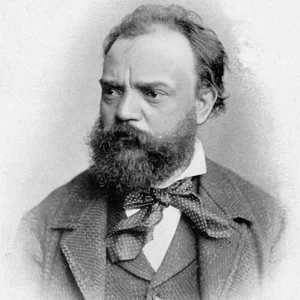
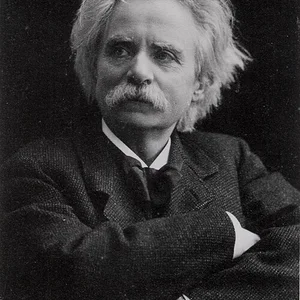
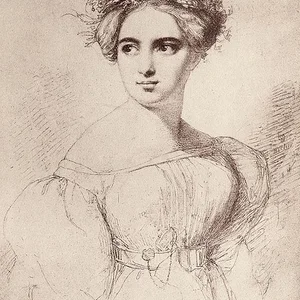
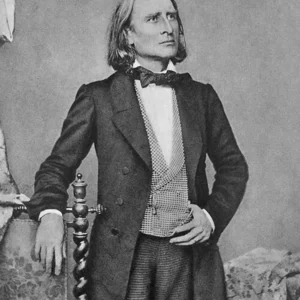
Classical music composers montage
French: Portrait de Jacques Bizet, enfantlabel QS:Lfr,"Portrait de Jacques Bizet, enfant"

French: Mademoiselle Célestine Galli-Marié dans le rôle de Carmenlabel QS:Lfr,"Mademoiselle Célestine Galli-Marié dans le rôle de Carmen"
Félix-Henri Giacomotti, ritratto di georges bizet, 1860-70 ca.

Miola-Bizet
Rosabel Morrison - Carmen poster
Hungarian State Opera House. Giuseppe Verdi & Gounod (Pál Pátzay), - Budapest District VI. Andrássy Ave 22
Monument Ă Bizet, PPS869(2)
Monument Ă Bizet, PPS869(3)
Monument Ă Bizet, PPS869(4)
Visual Style
Le Paris haussmannien du Second Empire avec ses opéras dorés et ses salons bourgeois, contrasté par les couleurs chaudes et méditerranéennes de l'Espagne de Carmen : rouges profonds, ors et lumières théâtrales.
AI Prompt
Haussmannian Paris of the Second Empire and early Third Republic: grand boulevards lit by gas lamps, ornate opera house interiors with gilded balconies and red velvet curtains, warm candlelight on orchestral scores. Rich oil painting aesthetic reminiscent of Manet and Degas, with theatrical chiaroscuro. Deep burgundy reds, gold leaf details, warm amber lighting. Backstage scenes with costume racks and painted backdrops. Contrast between elegant Parisian salons with heavy drapes and the vibrant, sun-drenched colors of southern Spain evoked in Carmen: terracotta walls, wrought iron balconies, a dusty plaza under intense Mediterranean light.
Sound Ambience
L'atmosphère sonore de l'Opéra-Comique parisien dans les années 1870 : l'accordage de l'orchestre, le bruissement du public mondain, puis l'éclat dramatique de la musique de Bizet mêlant cordes, cuivres et percussions aux sonorités espagnoles.
AI Prompt
A grand Parisian opera house in the 1870s: the tuning of orchestral instruments in the pit, violins, cellos, oboes finding their pitch. The rustle of silk dresses and murmur of the bourgeois audience settling into velvet seats. A soprano warming up backstage, scales rising and falling. The three knocks of the brigadier on the stage floor signaling the start of the performance. Then the opening notes of an overture, strings surging with dramatic intensity, punctuated by brass fanfares and the rhythmic click of castanets evoking Spanish atmosphere. Between acts, the clink of champagne glasses in the foyer and animated conversation about the shocking realism of the drama.
Portrait Source
Wikimedia Commons — domaine public — Étienne Carjat — 1875