
Twentieth-century French writer and member of OuLiPo. A master of literary constraints, he is the author of Life: A User's Manual and A Void, a novel written entirely without the letter “e”.
Georges Perec(1936 — 1982)
Georges Perec
France
7 min read
Frequently asked questions
Famous Quotes
« I remember that De Gaulle had a mentally handicapped brother who ran an orphanage.»
« To live is to pass from one space to another, while doing your very best not to bump yourself.»
Key Facts
- Born in 1936 in Paris into a Jewish family of Polish origin; his father died in 1940 and his mother was deported to Auschwitz in 1943
- Published Things: A Story of the Sixties in 1965, which won the Prix Renaudot
- Joined OuLiPo (Workshop for Potential Literature) in 1967
- Published A Void in 1969, a lipogrammatic novel written without the letter “e”
- Brought out Life: A User's Manual in 1978, crowned with the Prix Médicis; died in 1982
Works & Achievements
A novel about a young couple swept up by consumer society; it won the Prix Renaudot and introduced Perec to the wider public.
A second-person narrative about a student who withdraws from the world, later adapted for the screen by Perec himself.
A lipogrammatic novel written entirely without the letter “e”; a tour de force that became an emblem of the OuLiPo.
An essay-stroll that explores every space of life, from the page to the world, by way of the bedroom and the street.
A double work blending fiction and autobiography that indirectly addresses the memory of the Holocaust and the loss of his parents.
A collection of 480 collective memories all beginning with “I remember,” a true record of a generation.
A world-novel describing a Parisian apartment building room by room according to mathematical constraints; it won the Prix Médicis and is Perec's masterpiece.
Anecdotes
In 1969, Perec published La Disparition (translated into English as A Void), a novel of more than 300 pages written without ever using the letter “e”, even though it is the most common letter in French. The feat was so convincing that some critics of the time read the book without noticing the missing vowel. Three years later, playing the opposite game, he wrote Les Revenentes using no vowel other than “e”.
To build La Vie mode d'emploi (Life A User's Manual), Perec imagined a fictional Parisian apartment building at 11 rue Simon-Crubellier and divided its façade into a grid of 10 by 10 squares. He then moved his story from room to room by following the chess “knight's tour”, which visits each square exactly once. On top of that, each chapter also had to obey lists of required elements.
In Je me souviens (I Remember, 1978), Perec lines up 480 ordinary memories shared by an entire generation, all beginning with the same words: “I remember”. He invited readers to fill in for themselves the blank pages left at the end of the book.
Throughout his adult life, Perec earned his living as an archivist in a neurophysiology laboratory at the CNRS: he filed scientific records by day and wrote on the side. He also composed crossword grids for the weekly magazine Le Point.
Orphaned by the Second World War — his father killed at the front in 1940, his mother deported to Auschwitz — Perec opens his autobiographical work W ou le souvenir d'enfance (W, or the Memory of Childhood) with a sentence that has become famous: “I have no childhood memories.” All of his work plays with this memory full of holes.
Primary Sources
I have no childhood memories.
Anton Vowl could not sleep.
Considering the problem as a whole, the puzzle is not a solitary game: every move the puzzler makes, the puzzle-maker has made before him.
The space of our life is neither continuous, nor infinite, nor homogeneous, nor isotropic.
I remember the cafés where you were more comfortable on the bench at the back than on the chairs.
Key Places
Perec's birthplace in 1936 and the central setting of his work, which he endlessly walks and inventories. He grows up in the working-class neighborhood of Belleville.
The street of Perec's childhood, where his family lived before the war. He returns there as a photographer and writer in his project Lieux to measure the neighborhood's disappearance.
A village in the Vercors where the young Georges is kept safe during the Occupation, far from Paris. It is there that he escapes the persecution targeting Jews.
Perec works here as an archivist in a neurophysiology department for nearly twenty years. This day job leaves him time to write on the side.
The place where Perec settles in October 1974 to record everything ordinary that happens there, producing An Attempt at Exhausting a Place in Paris. The mundane becomes literary material.
A town in the Paris suburbs where Georges Perec dies in March 1982, at 45, of cancer. He died there almost at the height of his recognition.
Typical Objects

The writer's daily working tool, on which Perec typed his texts subject to strict formal constraints. It symbolizes the passage from idea to printed text.

The cut-out jigsaw puzzle is the central object-metaphor of Life A User's Manual, in which a character spends his life assembling and then taking apart puzzles. It embodies the idea that every work is an assemblage of fragments.

Perec was a renowned crossword setter who composed grids for the weekly magazine Le Point. The grid of black and white squares echoes his games with letters and constraints.

At the CNRS, Perec filed scientific bibliographic cards; he applied this same taste for classification and lists to his literature. The cards connect his profession and his writing.

For his “live” observations, as in An Attempt at Exhausting a Place in Paris, Perec jotted down in his notebook everything he saw go by. Here writing becomes a record of ordinary reality.

Indispensable to a writer who set himself the task of writing without certain letters or with imposed words, the dictionary was the tool of his Oulipian constraints. In it he hunted for rare words and lists.
School Curriculum
Vocabulary & Tags
Key Vocabulary
Daily Life
Morning
Perec divided his day between a job and his writing. In the morning, he went to his laboratory at the CNRS, where he classified and summarized scientific articles on neurophysiology. This steady work gave him an income and gave structure to his time.
Afternoon
The afternoon might still be taken up with documentation work, then by editorial meetings or gatherings of the OuLiPo. He frequented the cafés and streets of Paris, which he loved to observe and catalog. Composing crossword puzzles was also one of his activities.
Evening
Evening and night were often his true hours as a writer. A heavy smoker and night owl, Perec worked late on his constraint-based texts, piling up lists, notes, and outlines. He gladly went out to meet up with writer and intellectual friends.
Food
Perec lived on the simple, urban cooking of France during the *Trente Glorieuses*, eaten at the café, the restaurant, or at home. He even liked to play with food in his writing, drawing up inventories of menus and dishes. Coffee and cigarettes accompanied his long work sessions.
Clothing
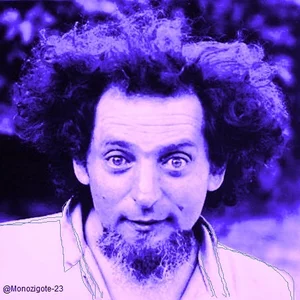
He wore the ordinary clothes of a Parisian intellectual of the 1960s and 1970s: shirt, jacket, sweater. His silhouette remained famous for his beard and his mop of curly hair. Nothing ostentatious: the look of a writer-employee of his time.
Housing
Perec lived in Parisian apartments, after a childhood in the working-class neighborhood of Belleville. Fascinated by the very idea of “living in” a place, he made the apartment building and the flat the subject of his books. His home, like his pages, was peopled with lists and objects.
Historical Timeline
Period Vocabulary
Liens externes & ressources
Références
Œuvres
Les Choses
1965
La Disparition
1969
Espèces d'espaces
1974
W ou le souvenir d'enfance
1975
Je me souviens
1978
La Vie mode d'emploi
1978