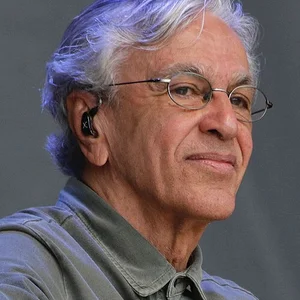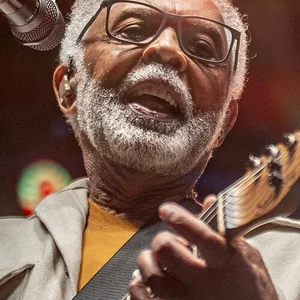

Gilberto Gil is a Brazilian singer, guitarist, and composer, a major figure of the Tropicália movement of the 1960s. Having become Brazil's Minister of Culture under President Lula (2003-2008), he embodies the link between artistic engagement and public service.
Gilberto Gil(1942 — ?)
Gilberto Gil
Brésil
5 min read
Frequently asked questions
Key Facts
- Born in 1942 in Salvador de Bahia, Brazil
- Co-founds the Tropicália movement in 1967-1968 with Caetano Veloso
- Imprisoned and then forced into exile in London in 1969 by the military dictatorship
- Grammy Award winner and recognized worldwide for his musical work
- Brazil's Minister of Culture from 2003 to 2008 under President Lula
Works & Achievements
Collective manifesto album of the Tropicália movement, which revolutionized Brazilian popular music by blending local traditions with modern sounds.
A song that became a classic, written as an affectionate farewell to Rio just before his exile; a disguised anthem of resistance.
The album marking his return from exile, infused with British influences and a fresh creative energy.
An iconic album blending Bahian roots, ecology, and spirituality, among the most beloved in his discography.
An album in which Gil fully embraces reggae and funk, illustrating his openness to international Black music.
An ambitious album honored with a Grammy Award, reflecting his artistic maturity and his scientific and spiritual curiosity.
As Minister, he democratized access to culture with the “Pontos de Cultura” program and championed the free sharing of works.
Anecdotes
In 1969, Gilberto Gil and his friend Caetano Veloso were arrested by the Brazilian military dictatorship and imprisoned for several months, without any real trial. Forced into exile, they went to live in London until 1972, where Gil discovered reggae and British rock, which would leave their mark on his music.
The Tropicália movement, which he founded in 1967-1968 with Caetano Veloso, boldly blended Brazilian samba and bossa nova with the electric guitars of Western rock. This fusion shocked both conservatives and certain left-wing activists, who saw it as a betrayal of national culture.
In 2003, Gilberto Gil became Brazil's Minister of Culture under President Lula: a popular singer, Black and a former political prisoner, joining the government of the very country that had once imprisoned him. He would remain in office until 2008.
As minister, Gil was an early champion of Creative Commons licenses and the free sharing of music on the internet, going so far as to make some of his own songs available for free download. He saw in the digital world a way to democratize access to culture.
In 2005, Gilberto Gil received a Grammy Award and, in the same decade, he sang at the United Nations headquarters and was awarded the French Legion of Honour. His journey has made him one of the most internationally recognized Brazilian artists.
Primary Sources
“Alô, alô, Realengo, aquele abraço!” — a song written by Gil in 1969 as a tender farewell to Rio de Janeiro, just before his forced departure into exile.
Gil states his wish to make culture a state policy serving the diversity and inclusion of all Brazilians, rather than a mere ornament.
The manifesto album of Tropicalism, bringing together Gil, Caetano Veloso, Gal Costa, Os Mutantes and Tom Zé, laying down the aesthetic foundations of the movement.
Gil tells how exile in London, painful because it was imposed, was also an opening: there he discovered reggae, rock and another way of thinking about music.
Key Places
Gilberto Gil's birthplace, capital of Afro-Brazilian culture, and the cradle of his musical and spiritual influences.
The site of his forced exile (1969-1972), where he discovered reggae and British rock, which transformed his music.
The nerve center of the Brazilian music scene, where Gil triumphed at the televised song festivals, and the place of his arrest.
Brazil's capital, where Gil served as Minister of Culture in the Lula government.
A major metropolis where the Tropicália movement took shape, particularly around the recording studios and television stations.
Typical Objects

Gil's instrument of choice, which he played with a virtuosity blending Bahian rhythms, bossa nova, and African influences. It accompanied him on stage throughout his career.

A sonic emblem of Tropicalism, it symbolized an opening to Western music and shocked the purists of Brazilian music. Gil turned it into an aesthetic manifesto.

The medium on which his major works appeared, from Tropicalist albums to Brazilian reggae records. Vinyl was the main vehicle of his fame.

An Afro-Brazilian musical bow associated with capoeira, a symbol of the African roots of Bahian culture that Gil proudly claimed.
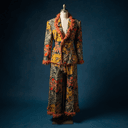
The flamboyant, multicolored outfits worn on stage by Gil and the Tropicalists, defying the sober dress codes of the era.

The post of Minister of Culture, which he held from 2003 to 2008, a symbol of his move from the stage to government.
School Curriculum
Vocabulary & Tags
Key Vocabulary
Tags
Daily Life
Morning
As a young man in Salvador, Gil pursued his studies in business administration while tirelessly practicing the accordion and then the guitar. Later, while on tour, his mornings were devoted to composing and rehearsing.
Afternoon
His afternoons as a musician were divided between recording studios, songwriting, and meetings with other artists of the Tropicália movement. As a government minister, he juggled meetings, travel, and public debates.
Evening
The evening belonged to the stage: vibrant concerts where he sang for hours, blending samba, reggae, and rock. Evenings were also times of intense connection with the audience and fellow musician friends.
Food
Gil enjoyed Bahian cuisine, rich in African flavors: fish moqueca, acarajé, dishes made with palm oil (dendê) and coconut milk. Having embraced a healthy lifestyle, he favored a frequently vegetarian diet.
Clothing
On stage, he wore the colorful, eccentric outfits typical of Tropicália, then flowing garments with African patterns. As a government minister, he adopted more understated suits while keeping a personal touch.
Housing
Born into a middle-class family in Bahia, he spent his childhood in the state's interior (Ituaçu) and then in Salvador. As a famous adult, he split his life between Salvador, Rio, and various residences according to his international tours.