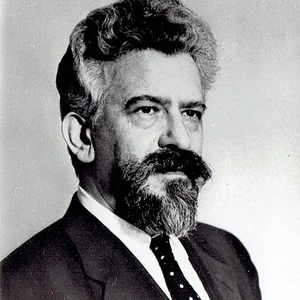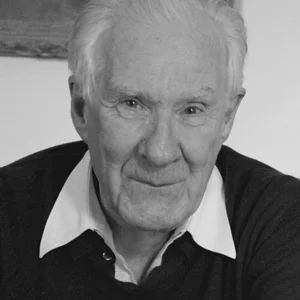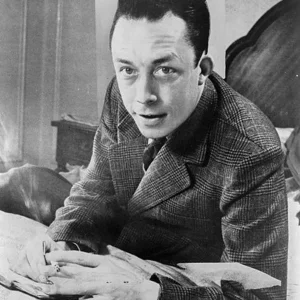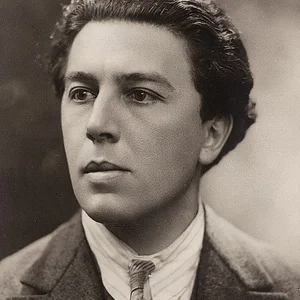
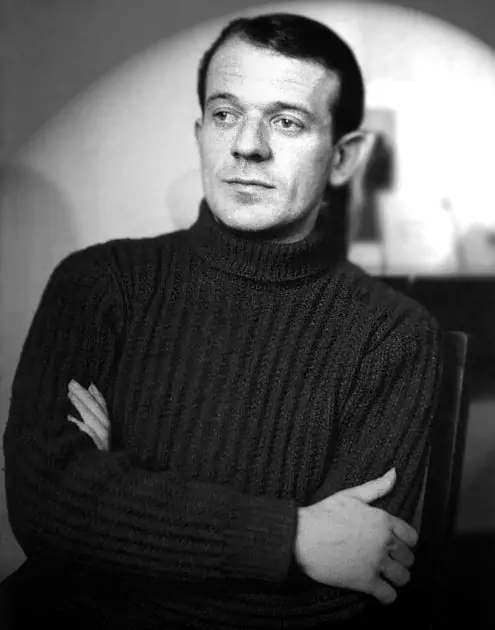
Gilles Deleuze (1925-1995) was a major French philosopher of the 20th century. The author of a powerful body of work in metaphysics, aesthetics, and politics, he profoundly renewed contemporary thought, notably through his collaboration with the psychoanalyst Félix Guattari.
Gilles Deleuze(1925 — 1995)
Gilles Deleuze
France
7 min read
Frequently asked questions
Famous Quotes
« The shame of being a man—is there any better reason to write?»
Key Facts
- Born on January 18, 1925, in Paris into a modest family
- Published his thesis Difference and Repetition in 1968, a major work of metaphysics
- Collaborated with Félix Guattari on Anti-Oedipus (1972) and A Thousand Plateaus (1980), where he developed the concept of the rhizome
- Professor of philosophy at the University of Paris VIII (Vincennes) from 1969 to 1987
- Took his own life on November 4, 1995, in Paris, suffering from a severe respiratory illness
Works & Achievements
Deleuze's first book, devoted to Hume's philosophy and the question of subjectivity.
A fresh reading of Nietzsche that helped bring him back to the heart of French thought.
His main doctoral thesis and a major metaphysical work, which thinks difference for its own sake, without subordinating it to identity.
An original essay blending logic, Stoicism, and Lewis Carroll to explore the notions of sense and event.
A radical critique of psychoanalysis and capitalism, the first volume of “Capitalism and Schizophrenia.”
A teeming work introducing the concepts of the rhizome, becoming, and the machine, the second volume of the diptych.
A sweeping philosophical reflection on cinema, conceived as a way of producing images and time.
Their last joint work, which defines philosophy as the art of creating concepts.
Anecdotes
Gilles Deleuze hated travel and society gatherings. He liked to repeat that a philosopher had no need to move in order to think, and that he preferred to stay home and work. He used to say that the true journeys were those of thought — motionless, yet intense.
For years, Deleuze taught his courses at the University of Vincennes (later Saint-Denis), in a packed, smoke-filled lecture hall crowded with students, artists, the curious, and even people who had come from all over the world. His seminars, recorded on cassette tapes, were genuine improvised intellectual performances.
Deleuze always kept his fingernails very long, which intrigued his students. He explained with humor that he lacked the ordinary “protective fingerprints” at the tips of his fingers, which made direct contact painful, and that these nails therefore served him as protection.
His meeting with the psychoanalyst Félix Guattari in 1969 gave rise to one of the most famous philosophical collaborations of the 20th century. Together they wrote *Anti-Oedipus* and then *A Thousand Plateaus*, teeming books that blend philosophy, psychoanalysis, anthropology, and politics.
Suffering from a severe respiratory illness that exhausted him and prevented him from writing, Deleuze took his own life on 4 November 1995 by leaping from the window of his Paris apartment. His death deeply affected the French intellectual world.
Primary Sources
“The task of life is to make all the differential degrees coexist in a diffuse sheet of consciousness.” Here Deleuze develops a metaphysics of difference in itself, independent of any resemblance or identity.
“It is at work everywhere, functioning smoothly at times, at other times in fits and starts. It breathes, it heats, it eats. It shits and fucks.” The opening line presents the unconscious as a factory, a desiring-machine, against the familialist reading of psychoanalysis.
“Make rhizomes, not roots, never plant!” The authors contrast arborescent, hierarchical thought with the logic of the rhizome, a network with neither center nor fixed origin.
“If you don't admire something, you are lost.” Deleuze runs through the alphabet from A as in Animal to Z as in Zigzag, openly laying out his conception of philosophy and of life.
“Philosophy is the art of forming, inventing, and fabricating concepts.” Their last joint book, it defines philosophy as the creation of concepts, distinct from science and art.
Key Places
Deleuze's birthplace, where he was born in 1925 into a middle-class family. He would spend most of his life here.
Parisian school where the young Deleuze completed part of his secondary education and discovered philosophy.
University where Deleuze studied philosophy in the post-war years, trained by masters such as Ferdinand Alquié and Georges Canguilhem.
Experimental university born after May 1968 where Deleuze taught from 1969 to 1987. His seminars there became legendary.
City where Deleuze taught at the university in the 1960s before moving to Paris. An important stage in his academic career.
His place of residence and work in his final years, where Deleuze, weakened by illness, took his own life in 1995.
Typical Objects

Deleuze's lectures were recorded on cassettes by his students, creating a vast sound archive of his living thought. These recordings were later transcribed and circulated around the world.

Deleuze wrote profusely by hand, filling notebooks with preparatory notes. His manuscripts bear witness to a patient labor of conceptual construction.

A recognizable feature of his figure, the hat often accompanied Deleuze, giving him a singular look. It was part of his appearance as a discreet intellectual.

Deleuze was a voracious reader of the classical philosophers — Spinoza, Leibniz, Hume, Nietzsche, Bergson — whom he reread endlessly. His library was the primary tool of his work as a “stationary traveler.”

A heavy smoker, Deleuze taught in a lecture hall where smoke hung permanently in the air. His respiratory illness, which darkened his final years, was worsened by tobacco.

During his seminars, Deleuze used the board to sketch diagrams and concepts before a large audience. It was the medium for his thought in the making.
School Curriculum
Vocabulary & Tags
Key Vocabulary
Daily Life
Morning
Deleuze, a man of habit, devoted his mornings to reading and writing, at home, in quiet. He liked to work slowly, endlessly rereading the great philosophers to extract new concepts from them.
Afternoon
On teaching days, he traveled to the university of Vincennes and later Saint-Denis, where a packed lecture hall awaited him. His seminars, long and improvised, were the heart of his intellectual life.
Evening
In the evening, Deleuze rejoined his family and sometimes continued his reading. Hardly a socialite, he avoided dinners in town and academic conferences, preferring the calm of his home.
Food
Deleuze led a sober life with no excess at the table, in the French manner. A heavy smoker, the cigarette accompanied his work far more than fine dining did.
Clothing
He was recognizable by his felt hat, his plain jackets, and his very long fingernails that intrigued his students. His appearance was that of a discreet intellectual, with no quest for ostentatious elegance.
Housing
He lived in a Parisian apartment, surrounded by his books, which were his main working tool. It was there, in his home in the 17th arrondissement, that he spent his final years, weakened by illness.
Historical Timeline
Period Vocabulary
Liens externes & ressources
Références
Œuvres
Empirisme et subjectivité
1953
Nietzsche et la philosophie
1962
Différence et répétition
1968
Logique du sens
1969
L'Anti-Œdipe (avec Félix Guattari)
1972
Mille Plateaux (avec Félix Guattari)
1980