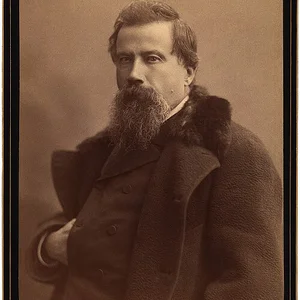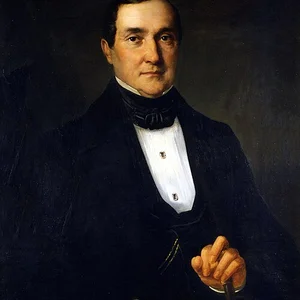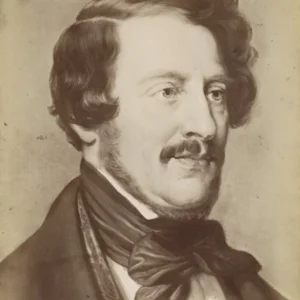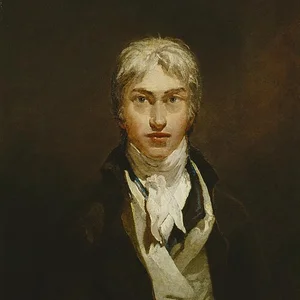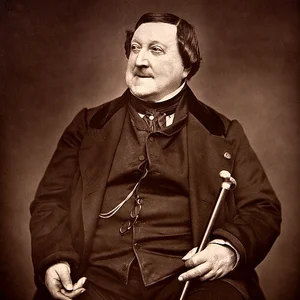

Italian composer (1792–1868), Rossini is one of the masters of 19th-century opera. His most celebrated work, The Barber of Seville (1816), remains a masterpiece of the world operatic repertoire.
Gioachino Rossini(1792 — 1868)
Gioachino Rossini
États pontificaux, royaume d'Italie
9 min read
Frequently asked questions
Famous Quotes
« Appetite comes with eating, but thirst goes away with drinking.»
« Give me a laundry list and I'll set it to music.»
Key Facts
- Born in Pesaro (Italy) in 1792
- Composed The Barber of Seville in 1816, at just 24 years old
- Composed William Tell in 1829, his last opera
- Retired from the operatic stage after William Tell, at age 37, and wrote no more operas
- Died in Paris in 1868
Works & Achievements
Rossini's first major serious opera, premiered in Venice. The aria 'Di tanti palpiti' became so popular that it was nicknamed 'l'aria dei rizzi' because gondoliers would sing it while cooking their rice.
A masterpiece of opera buffa, composed in 27 days according to legend. Its virtuosic overture and irresistible comic situations make it a model of the genre that has never left the operatic stage.
Considered the absolute masterpiece of opera buffa, adapted from Beaumarchais's play. Its overture, arias (such as 'Largo al factotum'), and burlesque ensembles rank among the most brilliant pages in the entire history of opera.
An operatic version of the Cinderella tale, in which the glass slipper is replaced by a bracelet. This opera demands a mezzo-soprano of exceptional virtuosity and remains one of the pinnacles of bel canto.
Rossini's last Italian opera, premiered in Venice. This tragedy inspired by Voltaire is one of the most monumental works in the bel canto repertoire, with its extremely demanding vocal parts.
Rossini's final opera, premiered at the Paris Opéra. Inspired by Schiller's Swiss hero, it is a visionary work that heralds the grand Romantic opera. Its overture, with its famous final gallop, is one of the most recognizable orchestral pieces in the world.
A collection of 150 light pieces for piano, voice, and small ensembles, composed during his Parisian retirement. Rossini himself described them as 'little nothings', but they reveal a surprising harmonic inventiveness that anticipates Satie and the music of the twentieth century.
Anecdotes
Born on February 29, 1792, Rossini technically only had a birthday once every four years. He liked to joke that he had the advantage of aging four times slower than his contemporaries. This quirk amused his friends and added to his reputation as a witty man.
The premiere of The Barber of Seville on February 20, 1816 in Rome was a resounding disaster: a singer tripped on stage, a guitar string snapped in mid-air, and a stray cat invaded the set to the jeers of the audience. Yet by the second performance, the opera triumphed and became one of the most celebrated works in the world repertoire.
Rossini had a habit of composing while lying in bed. One day, according to an anecdote recounted by his contemporaries, he dropped a page of sheet music on the floor. Rather than getting up to retrieve it, he simply rewrote the entire passage from memory. This legendary laziness did nothing to curb his extraordinary output: he composed nearly 40 operas in fewer than 20 years.
In 1822, Rossini visited Beethoven in Vienna. The German master, already deaf and reputed to hold Italian opera in contempt, gave the young composer a warm welcome and told him: “The Barber of Seville is the finest comic opera ever written.” Rossini was deeply moved and cherished the memory for the rest of his life.
After the triumph of William Tell in 1829, Rossini abruptly stopped composing operas at the age of 37, at the very height of his fame. He lived another 39 years without writing a single additional opera, devoting himself instead to gastronomy and his celebrated *Sins of Old Age*, a collection of light pieces for piano and voice. This mysterious retirement continues to fascinate historians.
Primary Sources
I work without respite; I am determined to make a name for myself in this country, and I hope to succeed. The success of The Barber has given me wings.
This man's glory knows no bounds; since Mozart, there has been only one man to whom music owes so much. Bonaparte is no more, but another man of whom Europe already speaks is making himself known in Moscow, Naples, Paris, London, Vienna, Berlin: that man is Rossini.
Beethoven said to him: “Ah, Rossini! You are the composer of The Barber of Seville? I congratulate you; it is an excellent opera buffa. I read it with great pleasure and enjoyed it immensely. It will be performed for as long as opera buffa exists.”
Rossini told me: “I composed with the speed of lightning and the laziness of a philosopher. I never revised what had been written at a single stroke, unless it was plainly bad.”
These modest little songs were born in my hours of leisure. I dedicate them to my pianist friends, my singer friends, and to all those who deign to welcome them with indulgence.
Key Places
Rossini's birthplace on the Adriatic coast of the Papal States. The city honours him with a museum and the prestigious Rossini Opera Festival, held every summer since 1980.
The theatre where *The Barber of Seville* premiered on 20 February 1816. Despite the disastrous first night, it became the site of Rossini's first great Roman triumph.
Rossini directed this great royal theatre from 1815 to 1822, composing his most ambitious serious operas there, including *Otello* (1816) and *Mosè in Egitto* (1818). Naples was the laboratory of his artistic maturity.
Rossini served as its director from 1824 to 1829. This house on the Boulevard des Italiens was the temple of opera in France and the stage for his final Parisian triumphs.
During his triumphant visit to Vienna in 1822, Rossini was received at the imperial court and acclaimed throughout the city, rivalling even Beethoven in popularity.
Rossini's residence from 1855 until his death in 1868. There he held his celebrated musical salon, the "Samedis de Rossini," gathering the Parisian artistic elite — Liszt, Wagner, Verdi, and Meyerbeer among them.