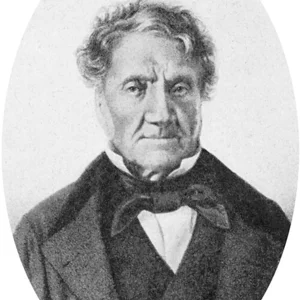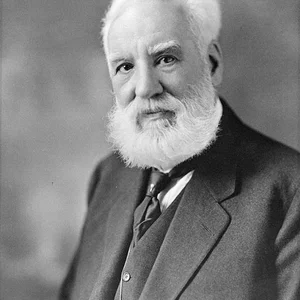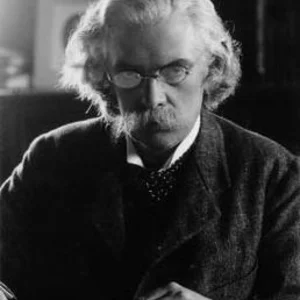

Swedish mathematician, a major figure in complex analysis. Founder of the journal Acta Mathematica, he played an international role in spreading mathematics during the late 19th and early 20th centuries.
Gösta Mittag-Leffler(1846 — 1927)
Gösta Mittag-Leffler
Suède
6 min read
Frequently asked questions
Key Facts
- Born in 1846 in Stockholm, died in 1927
- States Mittag-Leffler's theorem in complex analysis (1870s-1880s)
- Founds the international mathematical journal Acta Mathematica in 1882, which he directs until his death
- Professor at Stockholm University, where he secures the appointment of the mathematician Sofia Kovalevskaya in 1884
- Bequeaths his house and library to create the Mittag-Leffler Institute (1916)
Works & Achievements
Creation of an international mathematics journal that became one of the most influential in the world and a bridge between national schools.
A major result in complex analysis that makes it possible to construct a meromorphic function with prescribed poles; it bears his name today.
He pushed through the appointment of one of the first women professors of mathematics in Europe, a pioneering gesture for equality in the sciences.
He oversaw the contest that crowned Henri Poincaré; the correction of his memoir paved the way for chaos theory.
A summation method that extends a power series beyond its circle of convergence, into a region called its “star”.
He bequeathed his villa, his fortune, and his library to found a mathematical research center that is still active today.
Anecdotes
A persistent legend claims that there is no Nobel Prize in mathematics because Mittag-Leffler supposedly seduced the wife (or fiancée) of Alfred Nobel. Historians reject this story: Nobel was never married, and there is no evidence of any such rivalry. The real reason is simply that Nobel was interested in applied, useful sciences, not in pure mathematics.
In 1884, Mittag-Leffler had the Russian Sofia Kovalevskaya appointed as a professor in Stockholm: she became one of the very first women professors of mathematics in Europe. He had to fight against the prejudices of the time, as many considered it scandalous for a woman to teach at a university.
For the 60th birthday of King Oscar II of Sweden, in 1889, Mittag-Leffler organized a great mathematical competition. The winner was Henri Poincaré, but an error was discovered in his paper after it had been printed. Poincaré had to correct everything at his own expense — and in fixing his mistake, he caught a glimpse of what would later be called chaos theory.
A passionate collector, Mittag-Leffler assembled an immense mathematical library in his villa in Djursholm, near Stockholm. Upon his death, he bequeathed his house and his books to create a research institute: the Mittag-Leffler Institute still exists today and welcomes mathematicians from all over the world.
In 1882, he founded the journal *Acta Mathematica*, which he intended to be resolutely international: in it he published French, German, and Scandinavian authors side by side at a time when these nations were wary of one another. The journal helped reconcile mathematicians across borders and wars.
Primary Sources
The new journal aims to bring together the mathematical works of all nations and to foster regular scientific relations between the geometers of different countries.
Here Mittag-Leffler sets out the theorem now bearing his name, on the construction of meromorphic functions with prescribed poles.
Exchanges concerning King Oscar II's prize competition, in which Mittag-Leffler informs Poincaré of the error discovered in his memoir and arranges the corrected reprint.
Letters preparing Kovalevskaya's arrival in Stockholm and discussing the resistance aroused by appointing a woman to a university chair.
Key Places
Mittag-Leffler's birthplace and home of the Högskola where he was a professor and founded Acta Mathematica.
Residence near Stockholm where he lived and assembled his library; it became the Mittag-Leffler Institute. Place of his death in 1927.
Where he studied under Karl Weierstrass, the founder of modern analysis, who shaped his entire career.
Where he attended the lectures of Charles Hermite and formed lasting ties with the French mathematical school.
Where he obtained his first post as a professor of mathematics, at the University of Helsingfors, in 1877.
University town where he pursued his higher studies and defended his mathematics dissertation.
Liens externes & ressources
Références
Œuvres
Fondation de la revue Acta Mathematica
1882
Théorème de Mittag-Leffler
1884
Nomination de Sofia Kovalevskaïa à Stockholm
1884
Organisation du concours du roi Oscar II
1889
Étoile de Mittag-Leffler
1898-1900
Création de l'Institut Mittag-Leffler
1916-1927