 flip
flipPuls Punica — Punic porridge with fresh cheese and honey
Puls Punica — Punic porridge with fresh cheese and honey
Why this dish? Here is the table of the Barca family, the great Carthaginian house from which Hannibal came. The *puls punica*—"Carthaginian-style porridge"—was so renowned in antiquity that even the Romans recorded the recipe: a festive dish, rich with cheese, honey, and egg, served when honoring a guest or the gods.
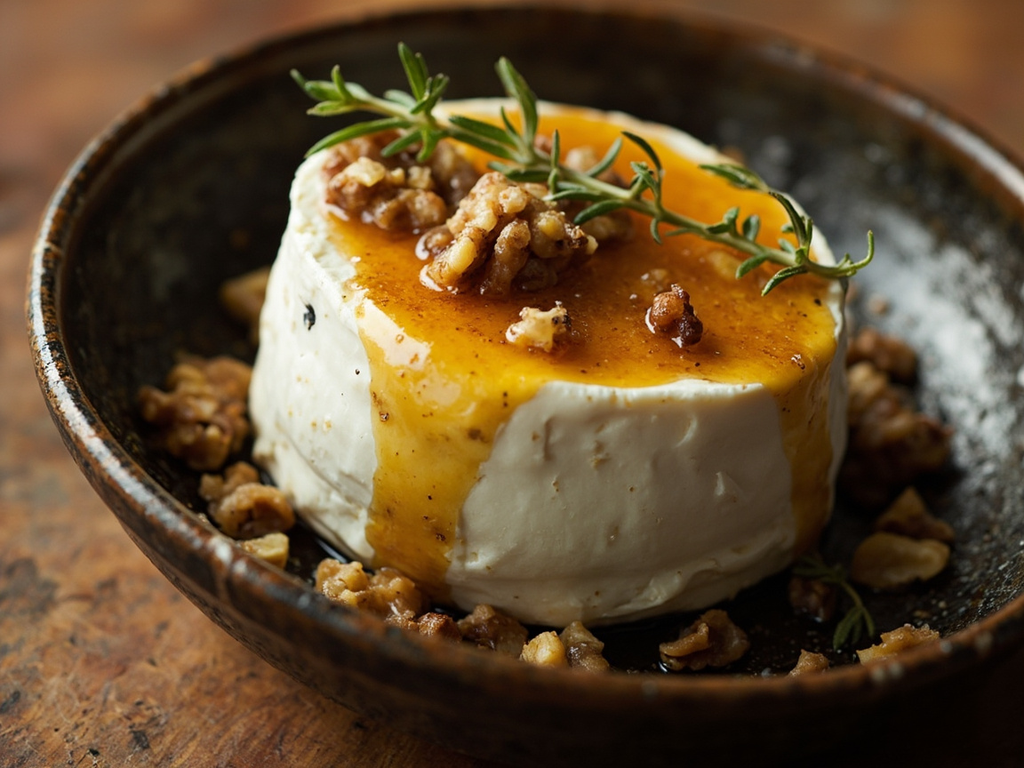
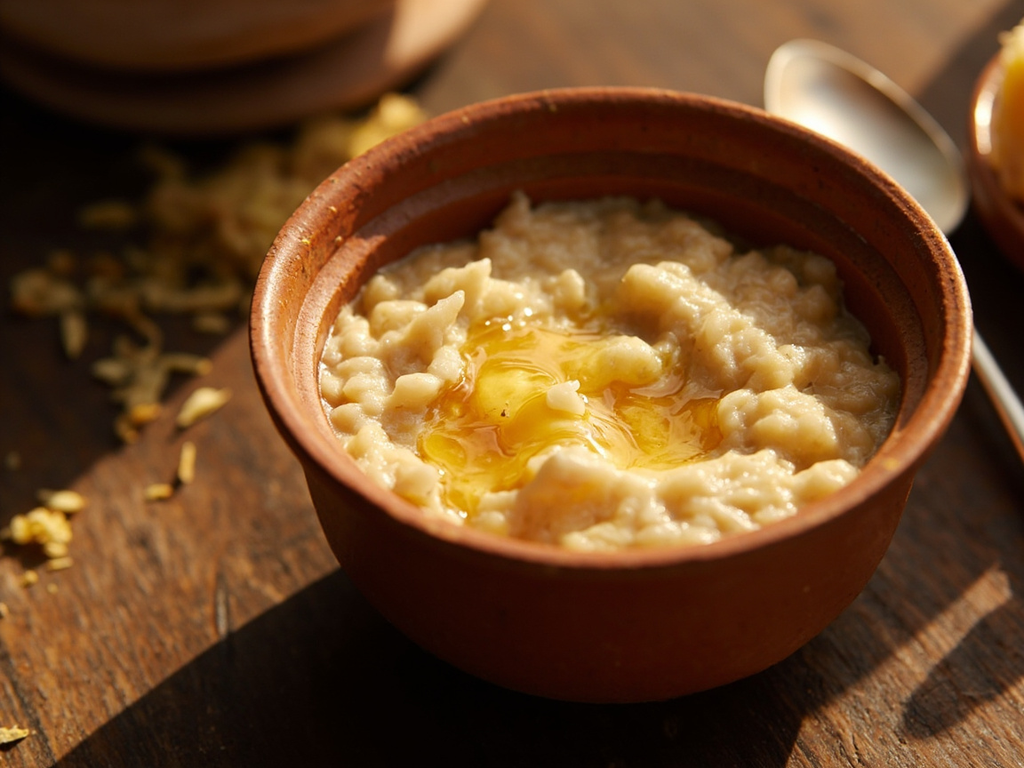
The noble version of the porridge: wheat semolina cooked until velvety, enriched with fresh cheese, golden honey, and an egg that binds it. Sweet, creamy, it is the festive face of Punic cuisine.
At my father Hamilcar's table, we did not serve the gray porridge of the camps, but the *puls* of the Barca, the one that even our enemies in Rome copied. Know that you take the flower of wheat, let it swell in water until it becomes soft as wax, then mix in fresh cheese, honey from the hives of our coast, and an egg to bind it. You pour it out while still hot, let it set, and give thanks to Tanit for abundance. Taste it, stranger, and you will know why Carthage was the pride of the sea.
- •Fine wheat flour / semolina (alica) — one pound (base)
- •Fresh cheese — three pounds (richness, binder)
- •Honey — half a pound (sweetness)
- •Egg — one (binder)
- •Water — as needed (cooking liquid)
Puls Punica — Punic porridge with fresh cheese and honey
The noble version of the porridge: wheat semolina cooked until velvety, enriched with fresh cheese, golden honey, and an egg that binds it. Sweet, creamy, it is the festive face of Punic cuisine.
Why this dish? Here is the table of the Barca family, the great Carthaginian house from which Hannibal came. The *puls punica*—"Carthaginian-style porridge"—was so renowned in antiquity that even the Romans recorded the recipe: a festive dish, rich with cheese, honey, and egg, served when honoring a guest or the gods.
At my father Hamilcar's table, we did not serve the gray porridge of the camps, but the *puls* of the Barca, the one that even our enemies in Rome copied. Know that you take the flower of wheat, let it swell in water until it becomes soft as wax, then mix in fresh cheese, honey from the hives of our coast, and an egg to bind it. You pour it out while still hot, let it set, and give thanks to Tanit for abundance. Taste it, stranger, and you will know why Carthage was the pride of the sea.
Ingredients (period version)
- Fine wheat flour / semolina (alica) — one pound (base)
- Fresh cheese — three pounds (richness, binder)
- Honey — half a pound (sweetness)
- Egg — one (binder)
- Water — as needed (cooking liquid)
Ingredients
- Fine wheat semolina (or wheat polenta / alica) — 150 g (base)
- Ricotta or fresh cheese (brousse, drained faisselle) — 250 g (richness, binder)
- Honey — 4 tbsp (sweetness)
- Egg — 1 (binder)
- Water — 500 ml (cooking liquid)
Method
- Soak the wheat semolina in cold water for 1 hour.
- Gently bring to a simmer, stirring, until a smooth, thick porridge forms (10 to 15 minutes).
- Off the heat, stir in the fresh cheese and honey, mixing well until melted.
- Add the beaten egg and return to very low heat for a few minutes, whisking to bind without coagulating the egg.
- Pour into cups, let cool slightly so the mixture sets, and drizzle with honey before serving.
How it was made : The *puls punica* is one of the very few Carthaginian recipes explicitly transmitted: Cato the Elder records it in his *De Agricultura* (chap. 85), proof that Punic cuisine fascinated Rome. It mixed *alica* (crushed wheat), fresh cheese, honey, and egg—a sweet-dairy dish, halfway between porridge and dessert, reserved for feast days and honored guests.
The contemporary twist : Serve it warm in verrines, like an "ancient semolino," with a few sliced fresh figs and a splash of orange blossom water—a banquet sweetness from the Mediterranean.
Sources : Cato the Elder, De Agricultura, chap. 85 (Puls Punica) · Andrew Dalby & Sally Grainger, The Classical Cookbook (1996) · Andrew Dalby, Food in the Ancient World from A to Z (2003)
Hannibal Barca · Charactorium