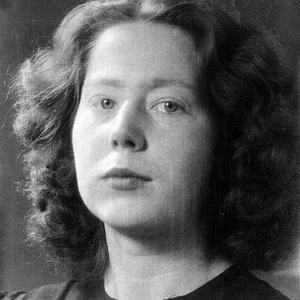

Dutch resistance fighter during the Nazi occupation of the Netherlands. Nicknamed “the girl with the red hair,” she took part in sabotage operations and the execution of collaborators before being arrested and shot at the age of 24, three weeks before the liberation.
Hannie Schaft(1920 — 1945)
Hannie Schaft
Royaume des Pays-Bas
6 min read
Frequently asked questions
Key Facts
- Born on 16 September 1920 in Haarlem (Netherlands), she studied law in Amsterdam
- Joined the Raad van Verzet (Council of Resistance) after the start of the occupation in 1940
- Took part in sabotage operations and armed actions against collaborators and Nazi occupiers
- Arrested in March 1945, she was executed on 17 April 1945 near Bloemendaal, shortly before the end of the war
- Became a national symbol of the Dutch Resistance; an annual commemoration has been dedicated to her since 1945
Works & Achievements
Before the armed struggle, Hannie stole identity cards and helped Jewish friends go into hiding, her first act of defiance against the occupier.
Her public refusal to sign the Nazi oath required of students was an act of civic resistance that pushed her into the underground.
Within the resistance council, she took part in acts of sabotage and in smuggling weapons and clandestine documents.
Alongside the Oversteegen sisters, she carried out targeted actions against Dutch collaborators and Nazis, among the riskiest operations of the resistance.
Named a “symbol of the resistance” by Queen Wilhelmina, she became a national figure honored every year in the Netherlands.
Her story inspired Theun de Vries's novel (1956) and later a film (1982), spreading her memory far beyond the Netherlands.
Anecdotes
Hannie Schaft was nicknamed “the girl with the red hair” (het meisje met het rode haar) by the Germans, who were actively hunting for her. To throw them off the trail during her missions, she dyed her distinctive red hair black and wore glasses, but her natural color ultimately betrayed her at the moment of her arrest.
A law student in Amsterdam, Hannie refused to sign the declaration of loyalty that the Nazis imposed on students in 1943. This refusal ended her studies and pushed her permanently into the underground and armed resistance.
Hannie often operated alongside the sisters Truus and Freddie Oversteegen, two young resistance fighters. Together, they would sometimes lure Nazi officers or collaborators out of bars before gunning them down, extremely dangerous operations carried out by women under the age of 25.
Arrested at a checkpoint on 21 March 1945 while transporting underground newspapers, Hannie was executed on 17 April 1945, barely three weeks before the liberation of the Netherlands. According to the account that has come down to us, a first shooter only wounded her, and she is said to have shouted “I shoot better than you” before being finished off.
In 1951, the memory of Hannie Schaft became a political issue: the annual commemoration organized by former communist resistance fighters was banned and supervised by the army at the height of the Cold War. Yet Queen Wilhelmina had described her as a “symbol of the resistance.”
Primary Sources
The novel, based on testimonies from resistance fighters who knew Hannie Schaft, traces her journey from law student to clandestine combatant of the Dutch resistance.
Truus Oversteegen, who fought alongside Hannie, described in her memoirs the acts of sabotage and the operations carried out by their armed resistance group in Haarlem.
German administrative documents mention the arrest at a checkpoint on 21 March 1945 and the execution in the dunes of Overveen on 17 April 1945.
Hannie Schaft was designated a “symbol of the resistance” at her official reburial in the Field of Honour cemetery at Overveen in November 1945.
Key Places
Hannie Schaft's birthplace and the main setting for her resistance activities. It was also there that she was arrested in March 1945.
Where she studied law, until her studies were cut short by her refusal to sign the declaration of loyalty to the Nazis in 1943.
The site of her execution by the Nazis on 17 April 1945. She now rests there in the Cemetery of Honour (Eerebegraafplaats).
The Dutch national war cemetery where Hannie was solemnly reburied in November 1945, in the presence of Queen Wilhelmina.
A park in Haarlem where a statue of Hannie Schaft has stood since 1982, the focal point of the annual commemorations.
Typical Objects

A concealed handgun used by Hannie for targeted killings of collaborators and occupying forces. Discretion and speed of use were vital for the resistance fighters.

An indispensable means of transport for the Dutch resistance, used to get around and to carry weapons and underground newspapers. Hannie used it for her liaison work and her missions.

Hannie dyed her red hair black and wore glasses to escape the description the Nazis were circulating of her. A simple but crucial disguise for survival.

Banned resistance press, distributed in secret to inform the population under occupation. Hannie was carrying some at the time of her arrest.

False papers used by members of the underground to move about despite German checkpoints. The resistance's forgers produced these documents to protect fighters and people who were being hunted.
School Curriculum
Vocabulary & Tags
Key Vocabulary
Daily Life
Morning
Under the occupation, a clandestine resistance fighter's day began with caution: sometimes changing addresses, checking papers, watching out for German patrols. A student before 1943, **Hannie** would have started her mornings with classes and reading, driven by a passion for law and justice.
Afternoon
Afternoons were devoted to courier runs by bicycle across **Haarlem**: carrying messages, banned newspapers, or weapons. Every trip carried the risk of being stopped at the checkpoints that became frequent toward the end of the war.
Evening
In the evening, under the curfew imposed by the Nazis, the resistance fighters gathered discreetly to plan their actions, secretly listen to Radio Orange, or encode messages. The night was often used for the most dangerous operations.
Food
During the “Hunger Winter” of 1944–1945, the western Netherlands suffered a terrible famine: people ate tulip bulbs, poor-quality bread, and meager rations. Food was scarce, rationed, and often obtained through the black market.
Clothing
**Hannie** wore ordinary civilian clothes to go unnoticed—a coat, a skirt, and the simple shoes typical of the 1940s. Her best-known disguise was dyeing her red hair black and wearing glasses.
Housing
Clandestine resistance fighters did not live in their own homes: they moved between hideouts (*onderduikadressen*), staying with brave families or in discreet rooms. **Hannie** lived in hiding, no longer able to freely see her parents.
Historical Timeline
Period Vocabulary
Liens externes & ressources
Références
Œuvres
Aide aux Juifs persécutés
1941-1943
Refus de la déclaration de loyauté
1943
Sabotages et transports d'armes
1943-1944
Symbole posthume de la résistance
1945