 flip
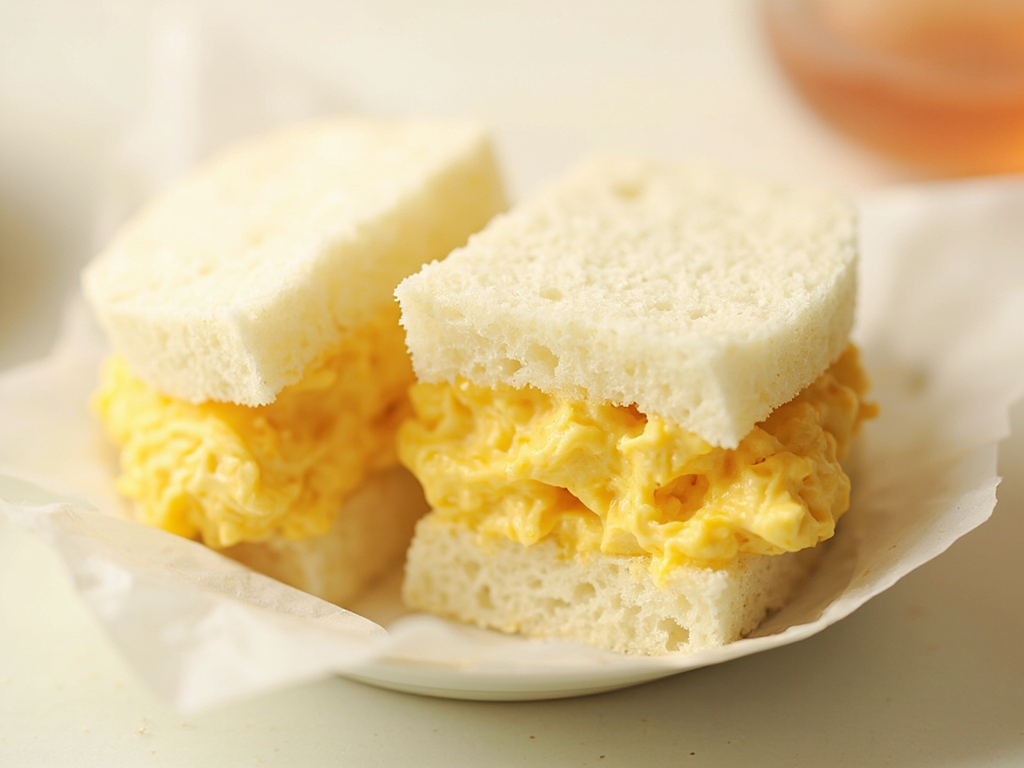
flipTamago sando, the egg sandwich from the konbini
Tamago sando, the egg sandwich from the konbini
Why this dish? Sandwiches run through Murakami's work as city food, grabbed between trains or chapters. The tamago sando — that Japanese egg sandwich, soft and pale — is the archetype of the quick meal in contemporary Tokyo where his characters move.
Two slices of ultra-soft white bread (shokupan), filled with a creamy egg salad made with Japanese mayonnaise. The quintessential urban snack, sold on every street corner in Japan, soft and comforting.
There are days when you don't really stop working, when you eat standing up, almost absently. The egg sandwich is that: very soft bread, eggs crushed with a little mayonnaise, nothing complicated, and yet it consoles. My characters often eat them, at stations, on trains, because the city moves on and you have to eat without ceremony. Cut it in half, look at the pale yellow inside: it's modest, but it's honest.
- •White sandwich bread (shokupan) — 2 slices (base)
- •Eggs — 2 (filling)
- •Mayonnaise — to taste (binder)
- •Salt and pepper — a pinch (seasoning)
Tamago sando, the egg sandwich from the konbini
Two slices of ultra-soft white bread (shokupan), filled with a creamy egg salad made with Japanese mayonnaise. The quintessential urban snack, sold on every street corner in Japan, soft and comforting.
Why this dish? Sandwiches run through Murakami's work as city food, grabbed between trains or chapters. The tamago sando — that Japanese egg sandwich, soft and pale — is the archetype of the quick meal in contemporary Tokyo where his characters move.
There are days when you don't really stop working, when you eat standing up, almost absently. The egg sandwich is that: very soft bread, eggs crushed with a little mayonnaise, nothing complicated, and yet it consoles. My characters often eat them, at stations, on trains, because the city moves on and you have to eat without ceremony. Cut it in half, look at the pale yellow inside: it's modest, but it's honest.
Ingredients (period version)
- White sandwich bread (shokupan) — 2 slices (base)
- Eggs — 2 (filling)
- Mayonnaise — to taste (binder)
- Salt and pepper — a pinch (seasoning)
Ingredients
- Soft white bread (shokupan type) — 2 thick slices (base)
- Eggs — 2 large (filling)
- Japanese mayonnaise (Kewpie type) — 1.5 tbsp (creamy binder)
- Mild mustard (optional) — 1/2 tsp (kick)
- Salt and white pepper — to taste (seasoning)
- Soft butter — a little (spread on bread)
Method
- Hard-boil the eggs (9-10 min), cool and peel.
- Coarsely mash the eggs with a fork, mix with mayonnaise, mustard, salt, and pepper.
- Lightly butter the bread slices (this waterproofs them).
- Spread the egg salad generously, close the sandwich, and press gently.
- Remove the crusts, cut into two neat triangles. Serve fresh.
How it was made : Soft white bread and sandwiches became established in Japan in the 20th century; the tamago sando became a classic in trains, kissaten, and then konbini (24-hour convenience stores). Its sweetness comes from Japanese mayonnaise, richer in yolks and seasoned with rice vinegar.
The contemporary twist : Keep the whole sandwich chilled for an hour under a light weight, then slice cleanly to reveal the pale filling — the famous "Instagram cut" of Japanese sando.
Sources : Haruki Murakami's works — recurrence of sandwiches and urban meals eaten on the go · Contemporary Japanese food culture — the sando as konbini classic
Haruki Murakami · Charactorium