 flip
flipTarichos, Salted Fish for the Crossing
Tarichos, Salted Fish for the Crossing
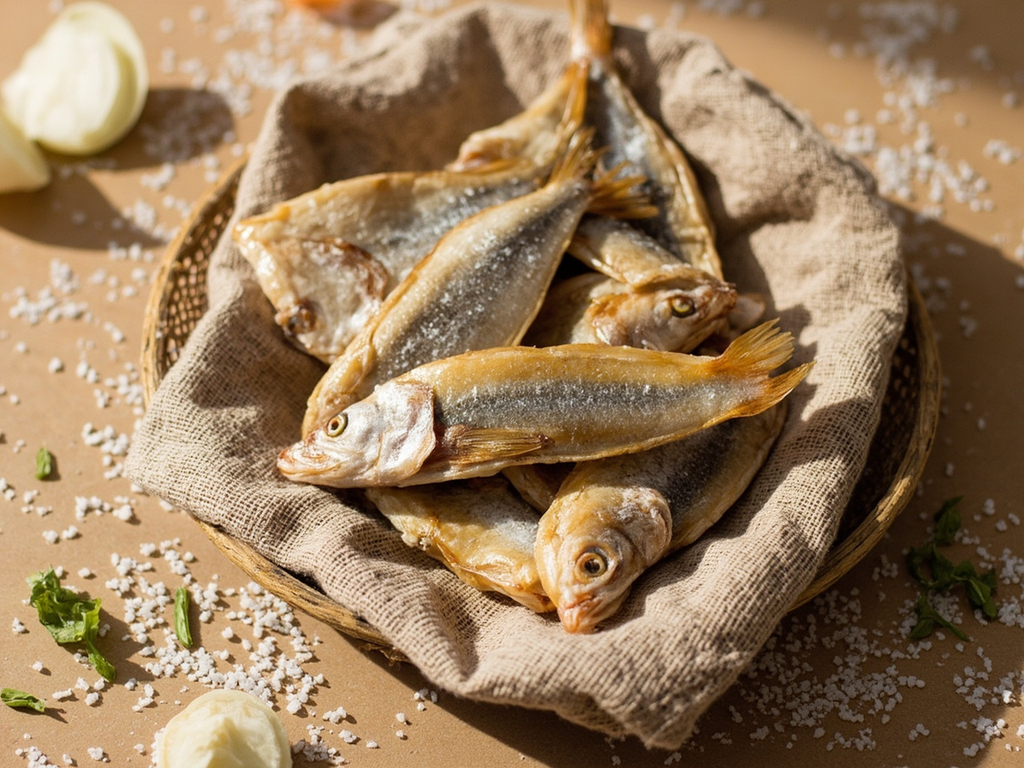
Why this dish? Helen's fate is entirely in a crossing: abducted from Sparta, led by sea to Troy on Paris's ship. Greek long voyages relied on provisions that would not spoil. Tarichos, salted and dried fish, is the traveler's and sailor's food par excellence—the one that could have accompanied her flight across the waves.
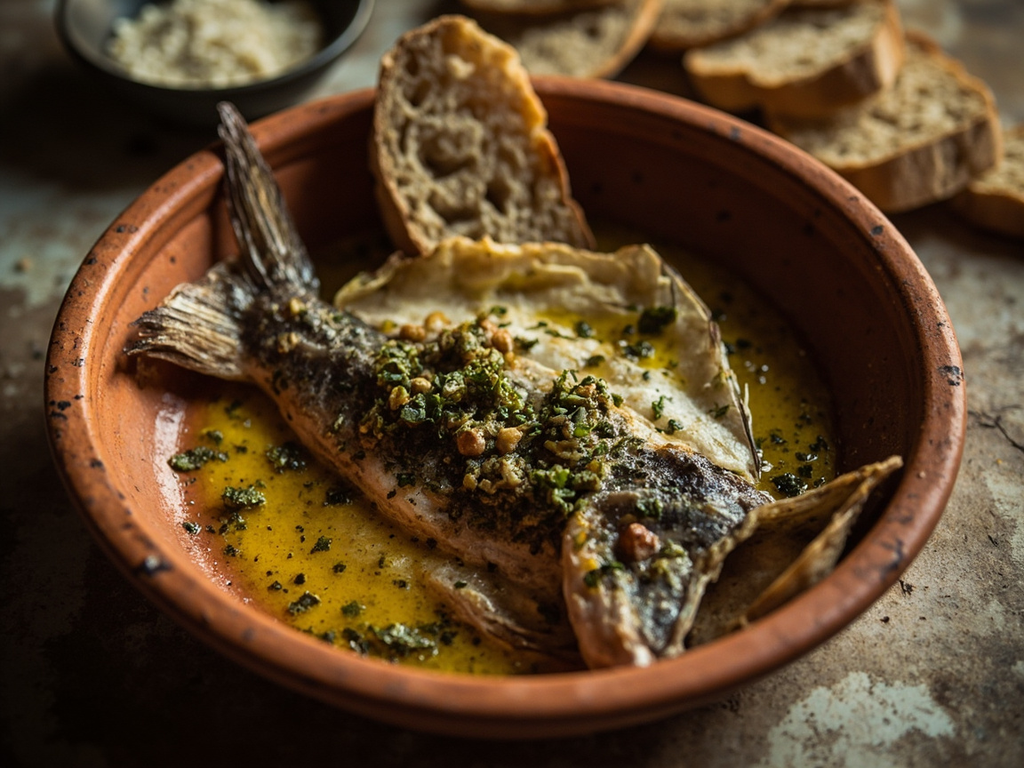
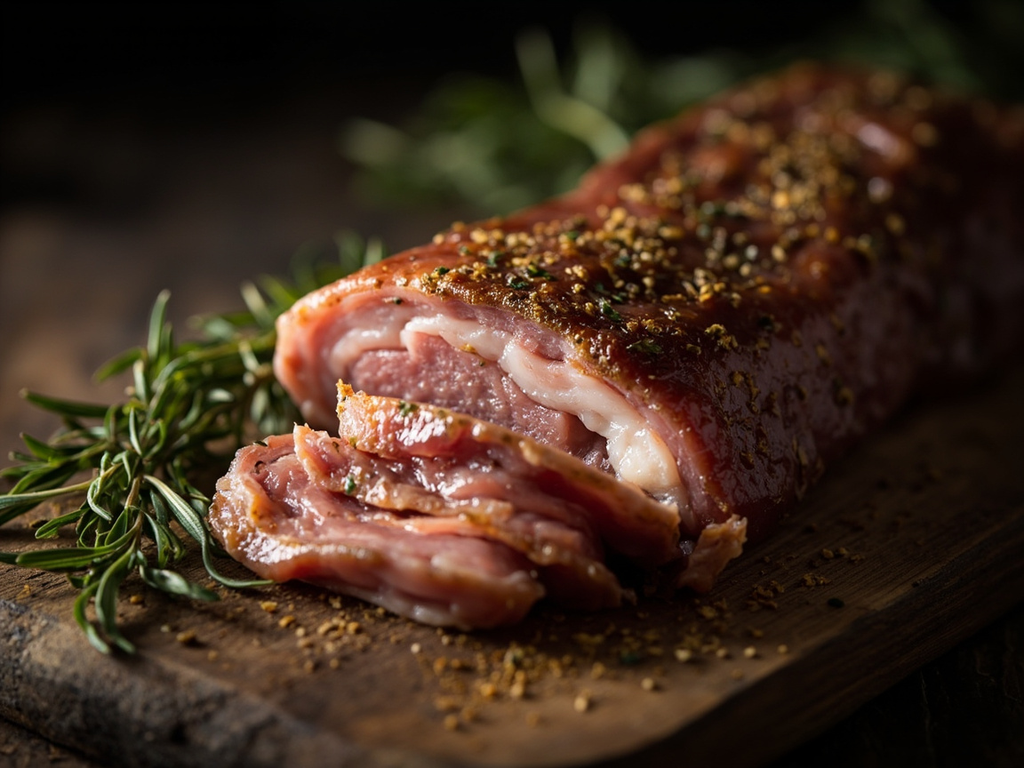
Fish fillets preserved in salt and dried, then desalted and tenderized with olive oil and herbs. Robust, saline, deeply umami: the preserved food that crosses seas.
The sea is long, stranger, and the belly does not wait for the shore. Before entrusting my fate to the waves, they loaded jars of fish taken in salt—thus the flesh keeps for whole moons without rotting. Soak it to remove the excess salt, then coat it with oil and a few herbs, and you will have enough to last to the farthest coast. It is poor sailor's fare, I know—but it carried me to the walls of Troy.
- •Mediterranean fish (tuna, mackerel, or sardine) — according to the catch (base to preserve)
- •Sea salt — in abundance (preservation)
- •Olive oil — for serving (tenderize and flavor)
- •Oregano, coriander seeds — a little (fragrance)
Tarichos, Salted Fish for the Crossing
Fish fillets preserved in salt and dried, then desalted and tenderized with olive oil and herbs. Robust, saline, deeply umami: the preserved food that crosses seas.
Why this dish? Helen's fate is entirely in a crossing: abducted from Sparta, led by sea to Troy on Paris's ship. Greek long voyages relied on provisions that would not spoil. Tarichos, salted and dried fish, is the traveler's and sailor's food par excellence—the one that could have accompanied her flight across the waves.
The sea is long, stranger, and the belly does not wait for the shore. Before entrusting my fate to the waves, they loaded jars of fish taken in salt—thus the flesh keeps for whole moons without rotting. Soak it to remove the excess salt, then coat it with oil and a few herbs, and you will have enough to last to the farthest coast. It is poor sailor's fare, I know—but it carried me to the walls of Troy.
Ingredients (period version)
- Mediterranean fish (tuna, mackerel, or sardine) — according to the catch (base to preserve)
- Sea salt — in abundance (preservation)
- Olive oil — for serving (tenderize and flavor)
- Oregano, coriander seeds — a little (fragrance)
Ingredients
- Mackerel or tuna fillets (fresh) — 4 fillets (base)
- Coarse sea salt — 500 g (for salting) (preservation)
- Extra-virgin olive oil — 5 tbsp (serving)
- Dried oregano — 1 tsp (fragrance)
- Crushed coriander seeds — 1/2 tsp (fragrance)
- Grape verjuice or wine vinegar — 1 tbsp (optional) (brightness)
Method
- Salting: completely bury the fillets in the coarse salt in a dish, and refrigerate for 24 to 36 hours depending on thickness (the flesh should firm up).
- Rinse thoroughly, then desalt in cold water for 1 to 2 hours, changing the water once.
- Pat dry well and, if desired, let dry for a few hours in cool air for a firmer texture (an ancient preservation step).
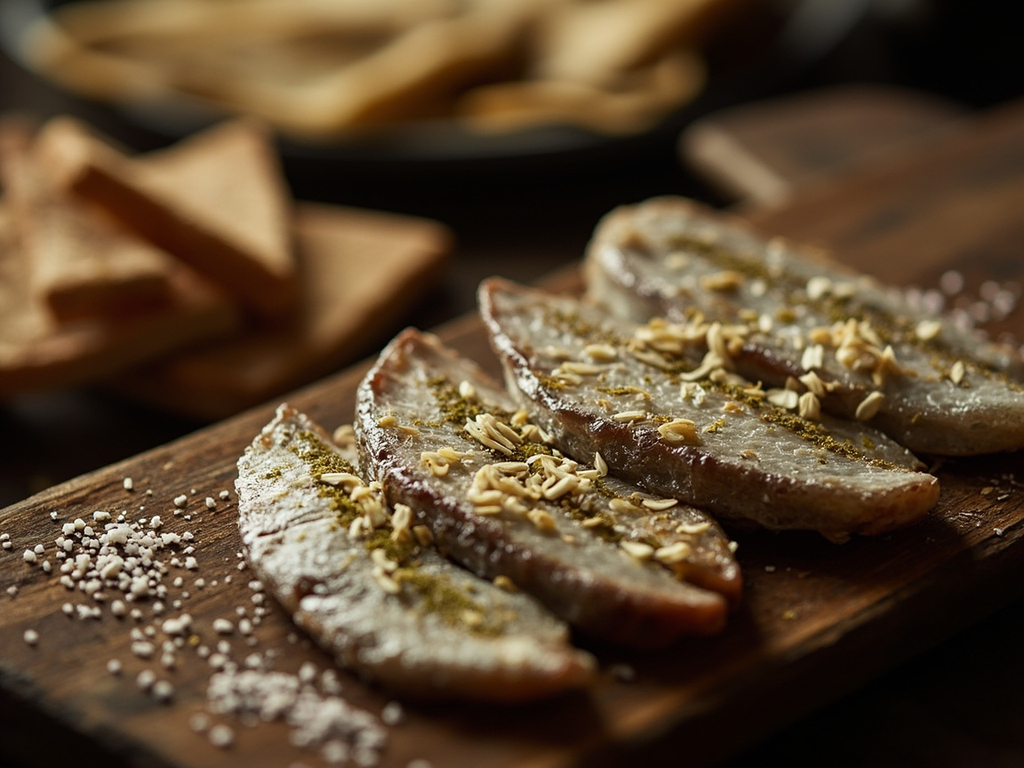
- Slice into thin strips, arrange in a dish, cover with olive oil, sprinkle with oregano and coriander.
- Add a dash of verjuice or vinegar, let marinate 30 minutes, and serve with maza.
How it was made : Fish salting (tarichos) is one of the oldest Greek preservation techniques, essential for navigation and trade. Without refrigeration, salt—abundant thanks to salt marshes—allowed storage of tuna, mackerel, and small fish for months. Salted fish was a common and cheap food, as opposed to fresh fish, which was more prestigious.
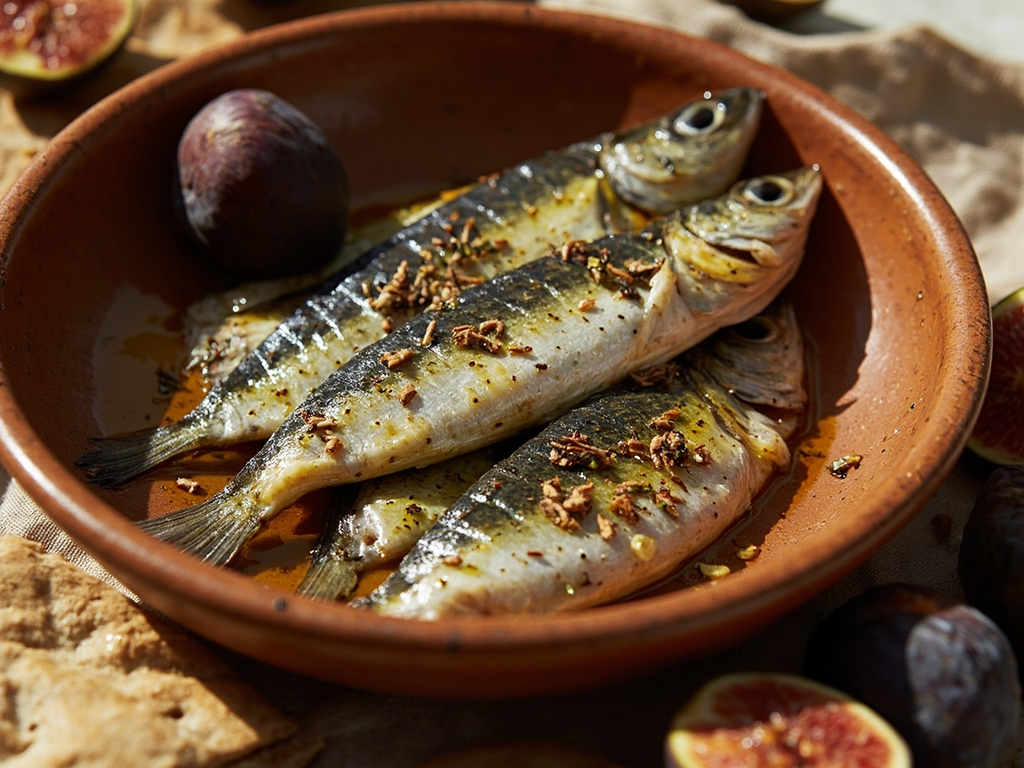
The contemporary twist : Serve as 'Aegean antipasti': marinated mackerel strips, olive oil, oregano, and thin slices of fresh fig, on crispy barley flatbread.
Sources : Andrew Dalby, Siren Feasts: A History of Food and Gastronomy in Greece (1996) · James Davidson, Courtesans and Fishcakes: The Consuming Passions of Classical Athens (1997)
Helen of Troy · Charactorium