 flip
flipTarichos of the Nile, Salted Fish from Naucratis
Tarichos of the Nile, Salted Fish from Naucratis
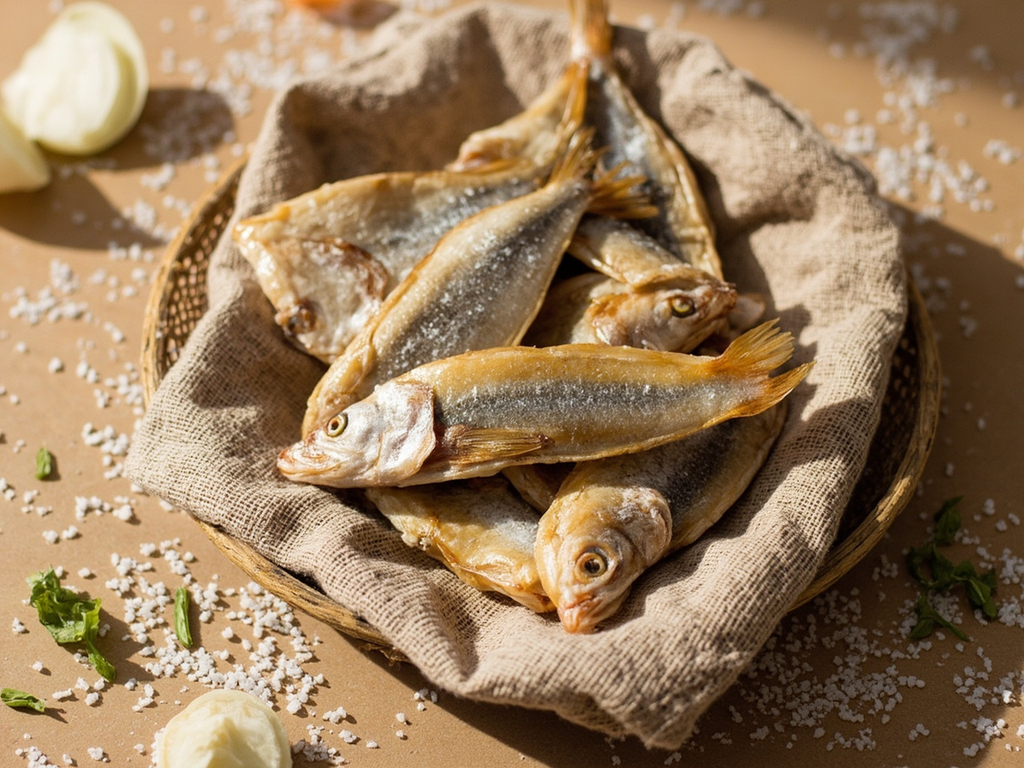
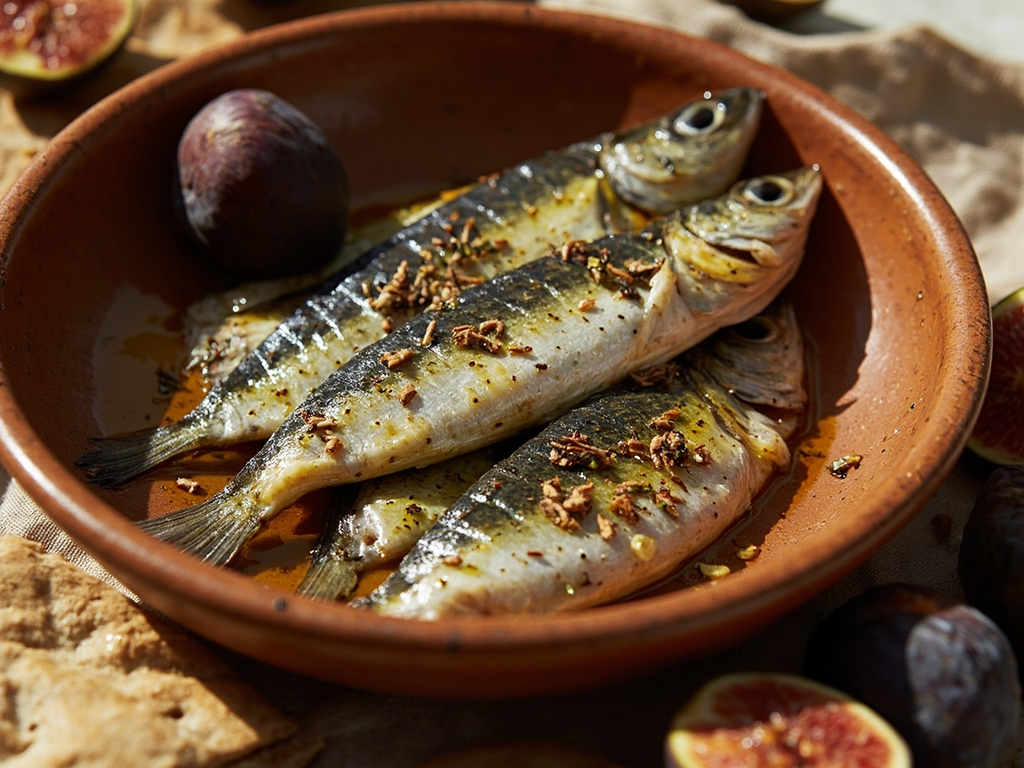
Why this dish? Naucratis, the Greek trading post in the Delta, lived on salted Nile fish exported throughout the Mediterranean. Apollonius, a Greek settled in Egypt, had on his table this *tarichos* that traveled better than any other food — just as his own verses crossed the seas to Rhodes.
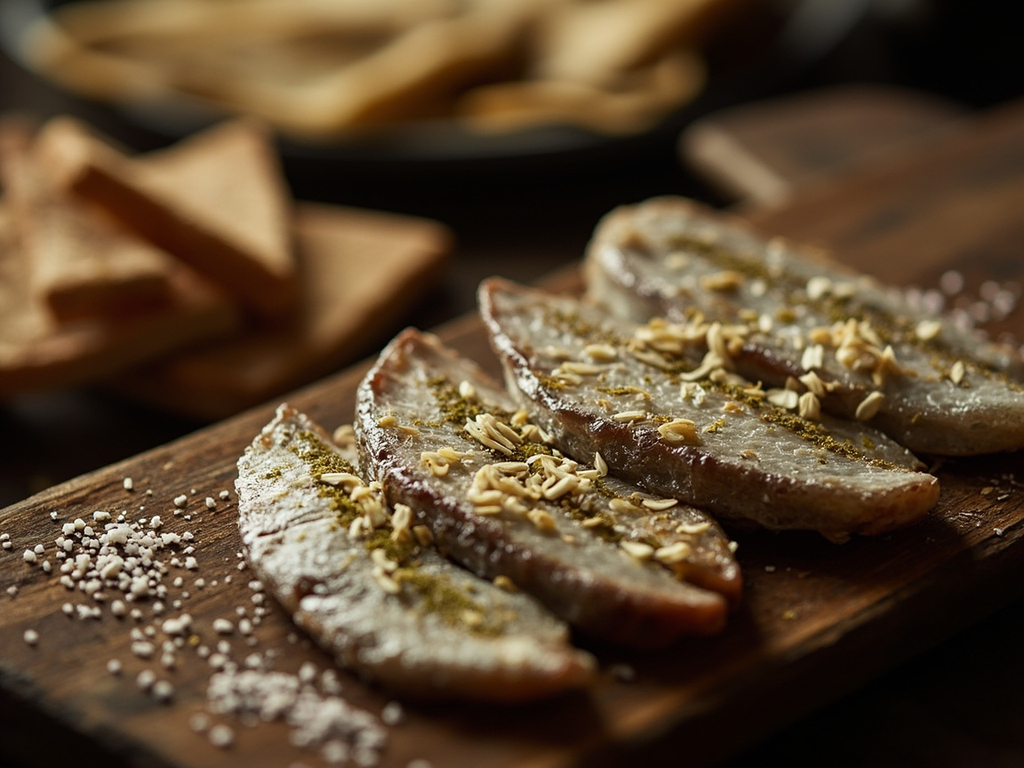
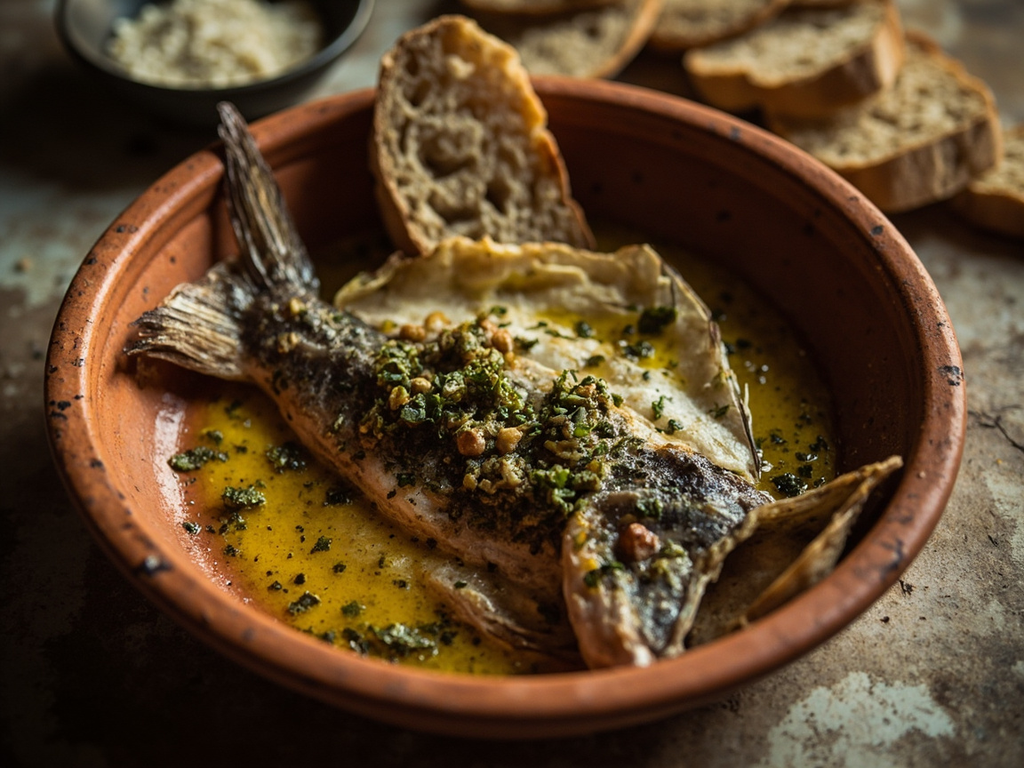
Fish preserved in brine, then desalted, flaked, and seasoned with oil, herbs, and a dash of vinegar or *garos*. The salt draws out the water and keeps the fish for months: it is the *opson*, the 'that-which-accompanies' placed on bread to enhance every bite.
You see, in Egypt the Nile gives so much fish that you cannot eat it all fresh: so we salt it, and it becomes the *tarichos* that sails on our ships. I desalt it in water overnight, I flake it, I pour oil and a few drops of *garos* over it, and it alone wakes up a bland cake. At sea, when I was sailing to Rhodes, it was this fish that held my stomach when land was scarce.
- •Salted Nile fish (tarichos) — one portion (base)
- •Olive oil — generously (binder)
- •Garos (fish sauce) — a few drops (umami)
- •Wine vinegar — a dash (acidity)
- •Oregano or rue — to taste (herb)
Tarichos of the Nile, Salted Fish from Naucratis
Fish preserved in brine, then desalted, flaked, and seasoned with oil, herbs, and a dash of vinegar or *garos*. The salt draws out the water and keeps the fish for months: it is the *opson*, the 'that-which-accompanies' placed on bread to enhance every bite.
Why this dish? Naucratis, the Greek trading post in the Delta, lived on salted Nile fish exported throughout the Mediterranean. Apollonius, a Greek settled in Egypt, had on his table this *tarichos* that traveled better than any other food — just as his own verses crossed the seas to Rhodes.
You see, in Egypt the Nile gives so much fish that you cannot eat it all fresh: so we salt it, and it becomes the *tarichos* that sails on our ships. I desalt it in water overnight, I flake it, I pour oil and a few drops of *garos* over it, and it alone wakes up a bland cake. At sea, when I was sailing to Rhodes, it was this fish that held my stomach when land was scarce.
Ingredients (period version)
- Salted Nile fish (tarichos) — one portion (base)
- Olive oil — generously (binder)
- Garos (fish sauce) — a few drops (umami)
- Wine vinegar — a dash (acidity)
- Oregano or rue — to taste (herb)
Ingredients
- Salted mackerel or sardine fillets (or desalted anchovies) — 200 g (base)
- Olive oil — 4 tbsp (binder)
- Fish sauce (nam pla, or garos substitute) — 1 tsp (signature umami)
- Wine vinegar — 1 tsp (acidity)
- Dried oregano — 1 tsp (herb)
- Spring onion, sliced — 1 (freshness)
Method
- If the fish is very salty, soak it in cold water for 4 to 12 hours, changing the water, then drain and pat dry.
- Flake the flesh, removing bones and skin.
- Mix the oil, vinegar, fish sauce, and oregano.
- Pour over the fish, add the spring onion, and mix gently.
- Let rest for 15 minutes and serve on barley cakes or bread, in small sharing portions.
How it was made : Egypt exported salted fish since Pharaonic times; the Greeks of Naucratis made it a major trade. Salt, a precious commodity, served as a preservative currency. *Garos*, the juice of fish fermented in the sun, was the king condiment, ancestor of Roman *garum*.
The contemporary twist : Presented as a spread on barley crackers, dubbed 'Library Rillettes' — a nod to the director who catalogued even the fish.
Sources : Herodotus, *Histories*, Book II · Athenaeus, *Deipnosophistae*, Book III (on *tarichos*)
Apollonius of Rhodes · Charactorium