 flip
flipLaridum — the Salted Pork of the Annona Militaris
Laridum — the Salted Pork of the Annona Militaris
Why this dish? An army reconquering an empire cannot rely on fresh supplies: it needs durable food. Aurelian, a fine organizer of the annona militaris (commissariat), supplied his legions with salted pork, a concentrated and imperishable protein that greased the puls and sustained men on long marches.
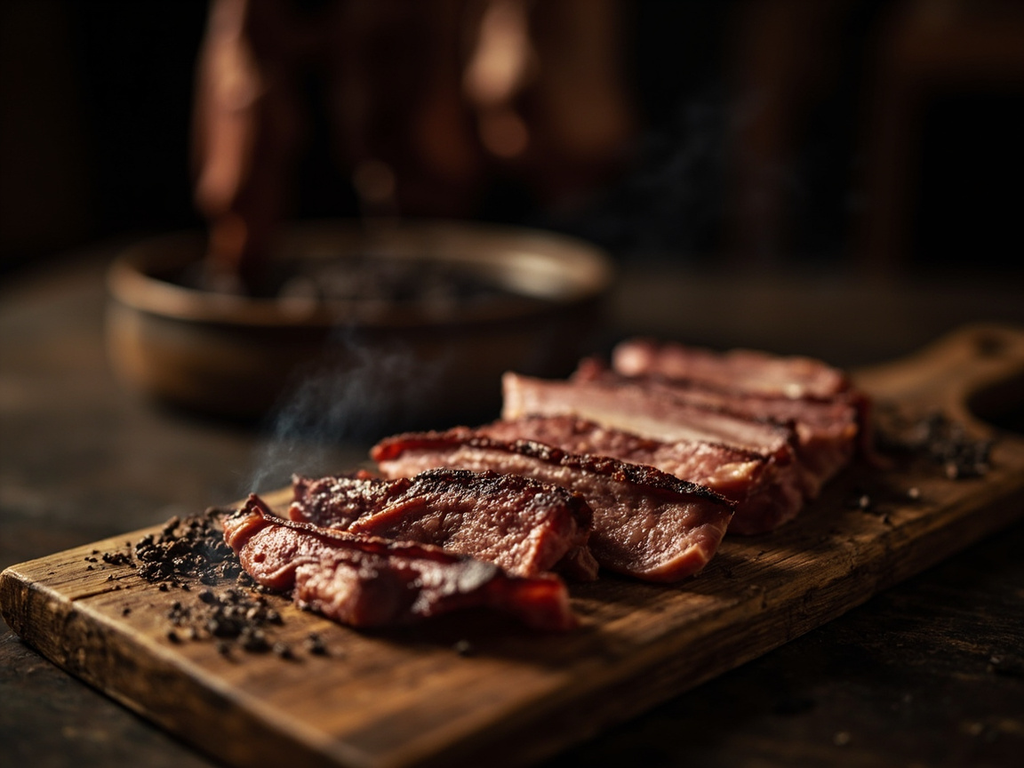
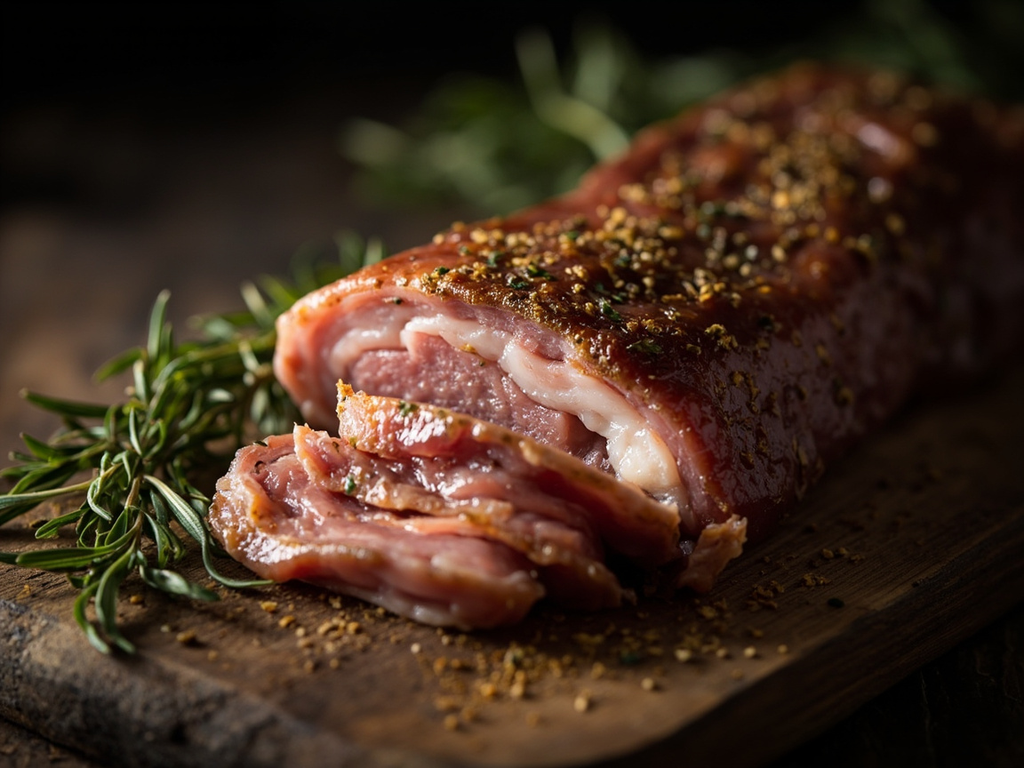
Pork belly rubbed with salt and dried herbs, aged dry until firm and flavorful. Diced, it flavors the porridge; sliced thin, it is eaten with the marching bread.
Fresh food rots in three days; an empire is reconquered in three years. That is why my quartermasters salted the pork and hung it dry in the army stores. Rub the flesh with salt using full hands, add savory and fennel, and time will do the rest: the meat hardens, concentrates, and nourishes twice as much as fresh. A dice in the porridge, a slice on the biscuit—it is with this pantry discipline that I held my men from the Danube to the Euphrates.
- •Pork belly or side — one piece (meat to preserve)
- •Sea salt — in abundance (curing agent)
- •Dried savory and fennel seeds — a good handful (flavor and preservation)
- •Crushed pepper — as available (taste)
Laridum — the Salted Pork of the Annona Militaris
Pork belly rubbed with salt and dried herbs, aged dry until firm and flavorful. Diced, it flavors the porridge; sliced thin, it is eaten with the marching bread.
Why this dish? An army reconquering an empire cannot rely on fresh supplies: it needs durable food. Aurelian, a fine organizer of the annona militaris (commissariat), supplied his legions with salted pork, a concentrated and imperishable protein that greased the puls and sustained men on long marches.
Fresh food rots in three days; an empire is reconquered in three years. That is why my quartermasters salted the pork and hung it dry in the army stores. Rub the flesh with salt using full hands, add savory and fennel, and time will do the rest: the meat hardens, concentrates, and nourishes twice as much as fresh. A dice in the porridge, a slice on the biscuit—it is with this pantry discipline that I held my men from the Danube to the Euphrates.
Ingredients (period version)
- Pork belly or side — one piece (meat to preserve)
- Sea salt — in abundance (curing agent)
- Dried savory and fennel seeds — a good handful (flavor and preservation)
- Crushed pepper — as available (taste)
Ingredients
- Fresh pork belly (with rind) — 1 kg (meat to cure)
- Coarse salt — about 1 kg (to cover) (dry curing)
- Dried savory and fennel seeds — 2 tablespoons (flavor)
- Crushed black pepper and thyme — 1 tablespoon (taste)
Method
- Mix the salt with the herbs and pepper. Vigorously rub the entire surface of the belly with this mixture.
- Place the meat in a dish, cover it completely with coarse salt, and refrigerate (or keep in a cold place at 3–5°C).
- Let the salt draw out water for 4 to 7 days, turning the piece daily and pouring off the liquid.
- Rinse the meat quickly, dry it well, and rub it with a little fresh herbs.
- Hang it in a clean cloth in a cool, dry, ventilated place for 1 to 3 weeks, until firm.
- Slice thinly to serve, or dice to flavor puls (recipe r1). Always cook the dice before use.
How it was made : Laridum (lard) and pernae (hams) were pillars of Roman provisioning; dry curing, inherited from the Gauls renowned for their hams, allowed meat to be stored for months. The annona militaris organized the collection and distribution of these supplies across the Empire. Without modern refrigeration, this process is a cautious reconstitution—to be practiced with care.
The contemporary twist : Cut into thin slices on a board with a few nuts and a drizzle of honey, this period lard becomes a 'farm-to-table' charcuterie worthy of a wine bar.
Sources : Cato the Elder, De agricultura (pork curing) · Varro, De re rustica · Marcus Junkelmann, studies on the annona militaris
Aurelian · Charactorium