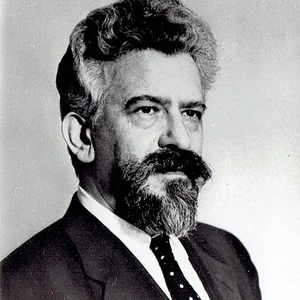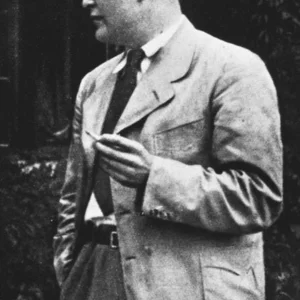

Henri de Lubac (1896-1991) was a French Jesuit and Catholic theologian, a major figure in the 20th-century theological renewal. A leading voice of the “new theology,” he profoundly influenced the Second Vatican Council and was made a cardinal in 1983 by John Paul II.
Henri de Lubac(1896 — 1991)
Henri de Lubac
France
5 min read
Frequently asked questions
Key Facts
- Born on 20 February 1896 in Cambrai and entered the Society of Jesus in 1913
- Published “Catholicism” (1938) and then “The Mystery of the Supernatural” (1946), key works of the new theology
- During the Occupation, led the spiritual resistance to Nazism through the Cahiers du Témoignage chrétien (1941-1944)
- Played an influential role as an expert (peritus) at the Second Vatican Council (1962-1965)
- Made a cardinal by John Paul II in 1983
Works & Achievements
A foundational work showing the communal and universal dimension of Christian salvation.
A historical study of the Eucharist and the Church that renews our understanding of the sacraments.
A critical analysis of modern atheisms (Feuerbach, Nietzsche, Marx) and their consequences for humankind.
A major and controversial book on the relationship between nature and grace, at the heart of the “new theology.”
A vast publishing endeavor presenting the Church Fathers, still ongoing today.
A reflection on the mystery of the Church that would influence the constitution Lumen Gentium of Vatican II.
A great study of how the Middle Ages read the Bible, in four volumes.
A defense and presentation of the thought of his fellow Jesuit, then much disputed.
Anecdotes
Mobilized in 1914, Henri de Lubac was seriously wounded in the head near Verdun in November 1917. For the rest of his life he suffered from violent headaches and ringing in his ears, which he would offer up as part of his intellectual work.
During the Occupation, he took part in the spiritual resistance against Nazism and antisemitism, launching with other Jesuits the *Cahiers du Témoignage chrétien*, distributed clandestinely. Hunted by the Gestapo, he had to flee **Lyon** and go into hiding several times.
In 1950, his ideas on the “new theology” were called into question in **Rome**: he was barred from teaching and several of his books were removed from Jesuit libraries. Rehabilitated a few years later, he became one of the most heeded experts of the **Second Vatican Council**.
In 1983, Pope **John Paul II** made him a cardinal, when he was 87 years old. Out of humility, de Lubac first asked to be exempted from the episcopal ordination usually tied to this office, and the pope agreed.
Throughout his life, de Lubac maintained a deep intellectual friendship with the Swiss theologian **Hans Urs von Balthasar**, who called himself his disciple, and with the Jesuit **Teilhard de Chardin**, whose often-contested thought he defended.
Primary Sources
Christianity is not merely an individual matter: the salvation it proclaims has a social dimension; it brings together the whole of humanity.
Man can indeed organize the world without God, but without God he can ultimately only organize it against man.
The Church is a mystery: it infinitely overflows the sum of its members and its visible institutions.
I never wished to found a school or to propose novelties: only to return to the living sources of the Christian tradition.
Key Places
Town in northern France where Henri de Lubac was born in 1896.
Where he taught fundamental theology and the history of religions from 1929 onward.
Section of the front where he was severely wounded in the head in 1917.
Site of the Second Vatican Council, where he served as an expert, and later where he was created a cardinal in 1983.
City where Henri de Lubac died in 1991.
Typical Objects

Black garment of the religious priest, a sign of belonging to the Society of Jesus and of consecration to God.

Book of prayers that the priest recites each day at the different hours, giving rhythm to his spiritual life.

Notes, drafts, and patristic quotations accumulated by de Lubac to write his works of theology.

Clandestine publications circulated during the Occupation to denounce Nazism and antisemitism in the name of faith.

Red cap and ring given to cardinals; insignia of the dignity received in 1983.

Collection of texts by the Church Fathers that he co-founded in 1942 to make the ancient tradition accessible.
School Curriculum
Vocabulary & Tags
Key Vocabulary
Daily Life
Morning
A Jesuit's day begins early with prayer and the celebration of Mass. De Lubac would then devote the morning to study and to reading the Church Fathers, pen in hand, despite the headaches he had carried since the war.
Afternoon
His afternoons were divided between teaching at the Catholic University of Lyon, preparing his lectures, and writing his books. He also received students and fellow priests to discuss theology.
Evening
In the evening came community life with the other Jesuits: meals taken together, evening prayer, and reading. De Lubac often continued his research late into the night, amassing notes and quotations.
Food
As a religious, he shared the simple, regulated meals of the Jesuit community, with no taste for luxury. His diet followed the rhythm of the liturgical calendar, with periods of fasting and abstinence.
Clothing
He wore the black cassock and the priest's collar, the ordinary dress of the clergy of his time. From 1983 onward, as a cardinal, he could don the red insignia proper to that dignity.
Housing
He lived in the houses and residences of the Society of Jesus, in community, in plain rooms furnished mainly with books. Over the course of his life, he resided notably in Lyon, and later in Paris.
Historical Timeline
Period Vocabulary
Liens externes & ressources
Références
Œuvres
Catholicisme. Les aspects sociaux du dogme
1938
Corpus Mysticum
1944
Le Drame de l'humanisme athée
1944
Surnaturel. Études historiques
1946
Cofondation de la collection Sources Chrétiennes
1942
Méditation sur l'Église
1953
Exégèse médiévale. Les quatre sens de l'Écriture
1959