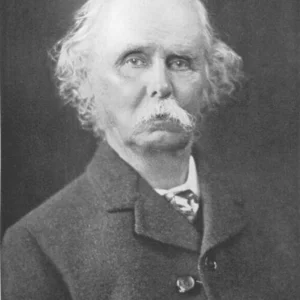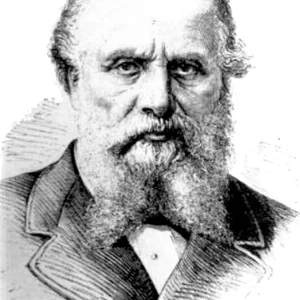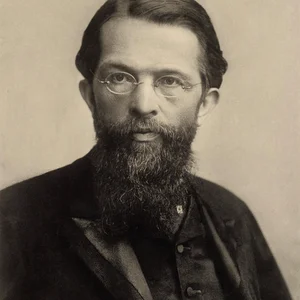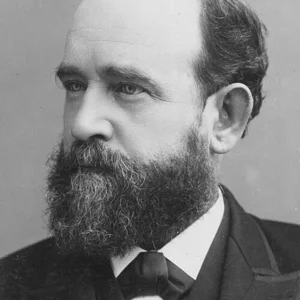

Henry George was an American economist and journalist. He is famous for his book Progress and Poverty (1879), in which he argues for a single tax on land value as a remedy for inequality.
Henry George(1839 — 1897)
Henry George
États-Unis
5 min read
Frequently asked questions
Key Facts
- Born on September 2, 1839, in Philadelphia
- Published Progress and Poverty in 1879, a worldwide success
- Advocated the single tax on the value of land
- Candidate for mayor of New York in 1886
- Died on October 29, 1897, in New York
Works & Achievements
His major work, which analyzes why poverty worsens despite progress and proposes a single tax on land value. A worldwide best-seller in economics.
An essay applying his ideas to the Irish agrarian crisis, which broadened his audience in Europe.
An accessible reflection on the inequalities of industrial society and their remedies.
A plea for free trade and a critique of customs tariffs, which left its mark on American economic debates.
A work of theoretical synthesis, published posthumously after his death in 1897.
Notable labor candidacies; in 1886 he finished ahead of the future president Theodore Roosevelt.
Anecdotes
Before becoming an economist, Henry George knew real hardship. As a young married man in San Francisco, he was one day so poor that he admitted to having stopped a stranger in the street to ask him for five dollars, ready, he said, to strike him if he refused — a memory that fed all his thinking about poverty.
The central idea of his life is said to have come to him in a flash. While riding on horseback through the hills near San Francisco, he asked a passerby the price of land: he was told an enormous sum per acre. He then understood that the value of land rose with the growth of cities, enriching landowners without any effort on their part.
*Progress and Poverty* (1879) was at first refused by publishers. George had to print it himself in an author's edition. The book ended up selling millions of copies and was, it is said, one of the most widely read works of economics of the 19th century, translated into many languages.
In 1886, Henry George ran for mayor of New York on the workers' ticket. He came in second, ahead of a young Republican candidate named Theodore Roosevelt, the future president of the United States.
George died in the middle of a campaign: in 1897, he was again running for mayor of New York despite his doctors' advice. Exhausted by the speeches, he suffered a stroke a few days before the election. Tens of thousands of people followed his funeral procession.
Primary Sources
The great fundamental question of our present time: why, despite the growth of productive power, do wages tend toward a minimum that leaves only a life of misery?
We must make land common property. The rent of land, created by society as a whole, must return to society through taxation.
In every civilized society there is a deep-seated cause of the unequal distribution of wealth: it is the private appropriation of the soil that belongs to all.
The deepest poverty exists precisely where wealth accumulates most: this is the great paradox we must solve.
Key Places
Birthplace of Henry George, where he was born in 1839 into a modest middle-class family.
The city where George experienced poverty and then became a journalist. It was there that he forged his ideas about land and wrote Progress and Poverty.
The city where George settled, ran his campaigns for mayor (1886 and 1897), and died.
George traveled there in 1881-1882 as a correspondent; the Irish land question gave a resounding echo to his theories on land ownership.
The neighborhood where George spent his final years; his death in 1897 there sparked an immense popular funeral procession.
Typical Objects

Tool of the print compositor who assembled the lead type to form text. George worked in this trade before becoming a journalist.

George's major book, sold in millions of copies and translated into many languages. It spread the idea of the single tax on land.

George's everyday instruments as a newspaper writer and editor in San Francisco. He wrote articles and essays by hand.

Document certifying ownership of a piece of land. At the heart of George's thinking: he wanted to tax the value of the soil, whose rise benefited landowners without any work on their part.

The stand from which George harangued the crowds during his election campaigns in New York. His last campaign proved fatal to him.
School Curriculum
Vocabulary & Tags
Key Vocabulary
Tags
Daily Life
Morning
A journalist and essayist, George often started early, reading the press and writing articles or chapters by pen. The discipline of writing daily allowed him to produce his major works despite a turbulent life.
Afternoon
He would go to the newspapers' editorial offices, talk with printers and colleagues, or walk through the city. His observations of urban land speculation fed his economic thinking.
Evening
Evenings were devoted to public meetings, lectures, and political debates. A passionate orator, he defended the single tax before audiences of workers.
Food
George led a frugal life, having known poverty in his youth. His diet was that of the 19th-century American middle class: bread, meat, potatoes, and coffee.
Clothing
He wore the dark suit customary among men of letters and public figures of the time: a frock coat or jacket, a stiff-collared shirt, and a tie.
Housing
After years of hardship in San Francisco, he lived in modest middle-class housing, first in San Francisco and then in New York and Brooklyn, where he settled with his family.
Historical Timeline
Period Vocabulary
Liens externes & ressources
Références
Œuvres
Progrès et Pauvreté (Progress and Poverty)
1879
The Land Question (La Question de la terre)
1881
Problèmes sociaux (Social Problems)
1883
Protection ou libre-échange (Protection or Free Trade)
1886
La Science de l'économie politique (The Science of Political Economy)
1898
Campagnes pour la mairie de New York
1886 et 1897