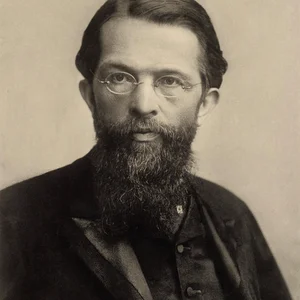

A French industrialist of the 19th century, Édouard Chaligny was a key figure in the development of the 12th arrondissement of Paris. His name lives on through the rue Chaligny and the Faidherbe-Chaligny metro station (line 8).
Édouard Chaligny
Édouard Chaligny
8 min read
Frequently asked questions
Key Facts
- Industrialist active in the 12th arrondissement of Paris in the 19th century
- Contributed to the economic and urban development of the faubourg Saint-Antoine
- The rue Chaligny in the 12th arrondissement bears his name
- The Faidherbe-Chaligny metro station (line 8), opened in 1931, preserves his memory alongside that of Marshal Faidherbe
Works & Achievements
Édouard Chaligny's contribution to the economic and manufacturing growth of the 12th arrondissement through the establishment and development of industrial enterprises in the faubourg Saint-Antoine district, helping to make this area one of the capital's most productive hubs.
Like many industrialists of his generation, Chaligny incorporated the new Haussmann infrastructure into the organization of his business activities, contributing to the economic transformation of Second Empire Paris through his investments in the 12th arrondissement.
The naming of a Parisian street in honor of Édouard Chaligny reflects official recognition of his role in the development of the 12th arrondissement, leaving a lasting and still-visible mark on the place names of Paris.
Anecdotes
Rue Chaligny, laid out in the 12th arrondissement during the Haussmann transformations of the second half of the 19th century, bears the name of Édouard Chaligny in recognition of his role in the neighborhood's economic development. This kind of toponymic tribute was common practice under the Second Empire: industrialists who actively contributed to the modernization of the capital could hope to see their name engraved on the street signs of Paris.
The 12th arrondissement where Chaligny was active was, in the 19th century, one of the nerve centers of Parisian industry: tanneries, carpentry workshops, furniture factories, and various manufacturing businesses stood side by side along the faubourg Saint-Antoine. It was within this dense and industrious economic fabric that businessmen like Chaligny built their reputations and their fortunes.
The Faidherbe-Chaligny metro station, inaugurated in 1931 on line 8, brings together in a single name two figures from the 19th century: General Louis Faidherbe, hero of the defense of northern France during the Franco-Prussian War of 1870, and Édouard Chaligny, a local industrialist. This symbolic pairing illustrates how the collective memory of Paris weaves together military glory and the figures of local economic life.
Under the Second Empire, industrialists like Chaligny benefited from the new infrastructure created by Haussmann: the opening of grand boulevards, the installation of gas lighting, improved water supply, and the modernization of the sewer system. These transformations greatly facilitated the transport of goods and the supply of workshops, offering dynamic entrepreneurs unprecedented opportunities for growth.
Primary Sources
The successive editions of the Bottin du commerce catalogue the industrial establishments of the 12th arrondissement and allow us to trace the evolution of economic activity in the area around the rue de Charenton and the faubourg Saint-Antoine throughout the second half of the 19th century.
The deliberations of the Paris Municipal Council include the acts naming new streets, among which the rue Chaligny appears as one of the streets created during the Haussmann-era transformations of the 12th arrondissement — a testament to the official recognition granted to this industrialist.
The municipal archives record the decisions assigning street names and the expropriation orders linked to Haussmann's urban works, making it possible to reconstruct the timeline of the developments that transformed the 12th arrondissement and its key economic figures.
The Paris Chamber of Commerce regularly published surveys on the state of industry across the arrondissements, recording the number of establishments, workers employed, and the nature of production — documenting the industrial boom of the 12th arrondissement under the Second Empire.
Key Places
A public street in the 12th arrondissement named after Édouard Chaligny, laid out during the urban transformations of the second half of the 19th century between the rue de Charenton and the edges of the faubourg Saint-Antoine. It is the most direct trace of this industrialist's memory in the Parisian street map.
A Paris Métro station opened in 1931, whose name combines General Faidherbe and Édouard Chaligny. It is today the most visible tribute to this industrialist's memory, used daily by thousands of commuters who are often unaware of the origin of the name.
A historic district of Parisian craftsmanship and industry, renowned since the 17th century for its cabinetmaking and carpentry workshops. It was within this dense economic fabric that industrialists like Chaligny built their businesses in the 19th century, drawing on an exceptional pool of skilled craftsmen.
The seat of Paris's municipal administration, where the City Council made decisions regarding the naming of new streets. It was here that the name rue Chaligny was officially adopted during deliberations following the Haussmann-era works in the 12th arrondissement.
Typical Objects

A large leather-bound ledger, kept with a quill pen, in which a 19th-century industrialist recorded his income, expenses, receivables, and debts. For a businessman active in the 12th arrondissement like Chaligny, this tool was indispensable to the day-to-day management of his establishments.

A precise cartographic document produced by the Seine prefecture services, used to locate plots and newly opened thoroughfares. In the context of Haussmann's urban works, these maps were essential for industrialists who had to negotiate the siting or relocation of their workshops.

An industrial property title granted by the State for a period of fifteen years, protecting a manufacturing process or technical device. Industrialists active under the Second Empire frequently filed patents with the relevant authorities to secure their innovations.

The emblematic headwear of the 19th-century business bourgeoisie, worn for official visits, trips to government offices, or meetings with commercial partners. An indispensable outward sign of social respectability for any Parisian industrialist seeking to establish his standing.

A coal-fired heat engine used in the workshops of the 12th arrondissement to drive mechanical machine tools. The adoption of steam power was the hallmark of modernizing industrialists in the second half of the 19th century, setting them apart from craftsmen who still relied on human muscle.

A notarized deed establishing ownership of a plot or building in Paris, and a central instrument in building up an industrial estate. In the 12th arrondissement, in the midst of Haussmann's development, control of real estate was a decisive factor in ensuring the long-term survival of one's establishments.
School Curriculum
Vocabulary & Tags
Key Vocabulary
Tags
Daily Life
Morning
A Parisian industrialist of the nineteenth century like Chaligny started his day early, around five or six in the morning, to oversee the opening of his workshops before the workers arrived. He would go through the economic press (Le Moniteur industriel, Le Journal des débats) and sort through the commercial mail that had arrived with the morning post.
Afternoon
The afternoon was devoted to administrative and commercial errands: visits to the Seine prefecture, appointments with notaries for real-estate transactions, meetings with raw-material suppliers or wholesale clients. The Paris Bourse de commerce, at the heart of the city, was also a regular port of call for taking the pulse of the markets.
Evening
The evenings of a notable industrialist of the Second Empire were divided between family life in a bourgeois apartment and business dinners at a neighborhood restaurant or a private club. Reading technical publications and reviewing the accounts would often close out the day before ten o'clock.
Food
The Parisian industrial bourgeoisie ate abundantly and regularly: soup and bread in the morning, a midday meal with meat (beef, veal, poultry), vegetables and cheese, and a hearty dinner in the evening. Ordinary table wine accompanied every meal, and black coffee after lunch was an immutable ritual in business circles.
Clothing
The Parisian industrialist wore the canonical bourgeois dress of his era: a black wool frock coat or morning coat, a buttoned waistcoat, matching trousers, a white shirt with a high collar, and a knotted cravat. A top hat was an indispensable complement to the outfit for official outings, while a smock or work jacket was worn in the workshops.
Housing
Prosperous industrialists of the 12th arrondissement often lived close to their establishments, in bourgeois apartments with newly built Haussmann-style facades: high ceilings with moldings, oak parquet flooring, marble fireplaces, patterned wallpaper, and velvet curtains. Some also owned a country house in the near suburbs, where the family would retreat in summer.
Historical Timeline
Period Vocabulary
Liens externes & ressources
Références
Œuvres
Développement industriel dans le XIIe arrondissement de Paris
circa 1855-1880
Participation à la modernisation haussmannienne de Paris
1853-1870
Attribution officielle du nom de la rue Chaligny
circa 1868-1875