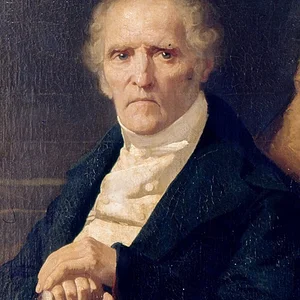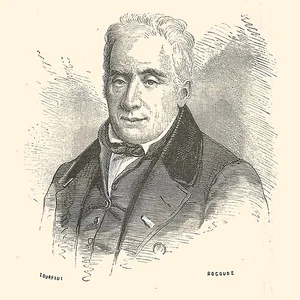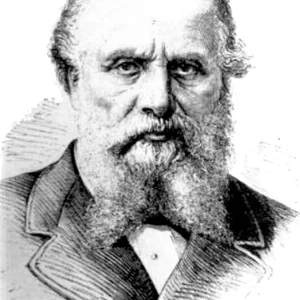

Aristide Boucicaut (1810-1877) was a French entrepreneur who founded Le Bon Marché in Paris in 1852, inventing the concept of the modern department store. He revolutionized retail by introducing fixed prices, free entry, and clearance sales.
Aristide Boucicaut(1810 — 1877)
Aristide Boucicaut
France
8 min read
Frequently asked questions
Key Facts
- 1810: born in Bellême (Orne) into a modest family
- 1852: founding of Le Bon Marché in Paris with Justin Videau, the world's first modern department store
- 1869: full buyout of Le Bon Marché and launch of the store's major expansion
- Introduction of clearly displayed fixed prices, free entry with no obligation to buy, and the first clearance sales
- 1877: at his death, Le Bon Marché employed thousands of workers; his wife Marguerite continued his philanthropic work
Works & Achievements
Boucicaut bought a share of the modest Le Bon Marché shop and turned it into the world's first true department store, introducing fixed prices, free entry, and specialized departments. This model would be copied around the world.
Boucicaut organized the first periodic clearance sales of unsold stock at reduced prices, creating a new form of commercial relationship built on urgency and price appeal. This practice is today regulated by law in France.
The first illustrated catalog mailed to customers in the provinces and abroad, allowing them to order items without traveling to Paris. It foreshadowed modern distance selling and e-commerce.
Boucicaut commissioned a monumental building from architect Louis-Charles Boileau, with iron structures designed by Gustave Eiffel. This light-filled, airy architecture of glass and metal embodied the modernity of the Second Empire.
Boucicaut established a pension fund, paid sick leave, and a subsidized canteen for his 2,000 employees, anticipating French labor laws by several decades. This policy earned him exceptional loyalty from his staff.
Anecdotes
Before Boucicaut, shopping was a battle: prices were never displayed, and merchants adjusted their rates based on the customer's appearance. Boucicaut introduced fixed prices and visible price tags on every item, upending a commercial practice centuries old. The neighborhood merchants accused him of “betraying the trade.”
Boucicaut invented free entry: before him, walking into a shop came with an unspoken obligation to buy. At Le Bon Marché, anyone could browse, touch the fabrics, and leave empty-handed. This idea, dismissed as madness by his competitors, drew thousands of Parisian women who turned shopping into a leisure activity.
Born into a very modest family in Bellême in the Orne, Boucicaut began his career as a traveling peddler, selling goods on foot from village to village. This experience taught him the art of winning over a skeptical clientele — a skill he would later apply on a grand scale in his department store.
Boucicaut organized the first true sales in French commercial history, clearing unsold stock at reduced prices rather than storing it. This practice, commonplace today, was a revolution: it created a sense of urgency in buyers and built loyalty among everyday customers drawn to a good deal.
Boucicaut was also a social employer ahead of his time: he established a pension fund for his employees, paid sick leave, and a subsidized canteen — at a time when no law required any of it. When he died in 1877, his employees formed a guard of honor outside the store as a sign of gratitude.
Primary Sources
Every sales clerk shall treat the customer with the utmost courtesy, state the price without bargaining, and leave them free to leave without making a purchase, showing no sign of impatience or ill temper.
The partners undertake to develop the Bon Marché trade on the principle of the fixed and non-negotiable marked price, in order to establish public trust and increase sales volume through rapid stock turnover.
The Bon Marché store presents an unusual sight: hundreds of ladies move about freely, goods are labeled at fixed prices, and the saleswomen, trained in courtesy, compel no one to buy.
An immense store, with overhead light pouring through the skylights. The departments are organized like regiments. The owner moves about, sees everything, knows his department heads by their first names. You sense a single driving will behind this selling machine.
Key Places
A small Norman town where Aristide Boucicaut was born on July 15, 1810. His father worked there as a traveling hatter, and it was in this world of small itinerant trade that the future owner of Le Bon Marché learned the basics of salesmanship.
The historic site of the department store founded and transformed by Boucicaut from 1852 onward. The current building, constructed from 1869, still houses the oldest department store in the world still in operation.
A commercial street in Haussmann-era Paris where the original shop stood before its expansion. The Saint-Germain neighborhood was at the time a hub for the fabric and novelty goods trade.
The burial place of Aristide Boucicaut, who died on December 26, 1877. His tomb, funded by his employees, stands as a testament to the deep affection his staff held for him.
Typical Objects

A small cardboard label attached to each item showing a fixed, non-negotiable price. Boucicaut made it the symbol of his retail revolution, putting an end to the traditional haggling between seller and buyer.

A printed brochure mailed to customers throughout France, illustrated with engravings of available items and their prices. Invented by the Bon Marché around 1872, it was the forerunner of mail-order shopping.

A large bound register in which department heads recorded daily sales, stock levels, and supplier orders. Boucicaut reviewed the figures every evening to steer his business.

The long piece of furniture behind which shop assistants unfolded and displayed fabrics for customers. At the Bon Marché, their arrangement into specialist departments created an entirely new shopping experience, modelled on visiting an exhibition.

A graduated wooden or metal rule used to measure fabric sold by the length. A daily tool in the drapery trade, it represents the entry-level craft in which Boucicaut started out as a simple shop assistant.

Boucicaut was among the first to separate the act of selling (carried out by the assistant) from payment (handled at a central cash desk), thereby reducing the risk of fraud and establishing rigorous financial oversight.
School Curriculum
Vocabulary & Tags
Key Vocabulary
Daily Life
Morning
Boucicaut arrived at the Bon Marché at dawn, before opening time, to inspect the shelving and check the overnight deliveries. He reviewed the department heads, consulted the previous day's sales figures, and adjusted supplies according to stock levels. His daily presence on the shop floor was legendary among his staff.
Afternoon
Afternoons were devoted to receiving suppliers of fabrics, haberdashery, and fashion goods who came to present their collections. Boucicaut personally negotiated bulk purchases — the essential condition for offering low prices. He also moved through the departments to observe customers' behavior and fine-tune the arrangement of merchandise.
Evening
In the evenings, Boucicaut gathered his senior department heads for a review of the day, going over the sales ledgers and discussing upcoming campaigns. He would then return to his private apartment near the store, where he shared a modest dinner with his wife Marguerite, who assisted him in managing the staff welfare programs.
Food
A man of humble origins, Boucicaut kept simple eating habits: he had a quick lunch at the store canteen alongside his employees, which also allowed him to assess the quality of the meals being served. In the evenings, a classic bourgeois dinner — soup, roast meat, seasonal vegetables — reflected his social rise without any ostentation.
Clothing
Boucicaut dressed as a prosperous bourgeois of the Second Empire: a buttoned black frock coat, a plain waistcoat, a carefully knotted cravat, and a top hat for formal occasions. Paradoxically, this man who sold the latest Parisian fashions preferred a classic, unadorned appearance, in keeping with his image as a serious and trustworthy employer.
Housing
Boucicaut lived in a comfortable apartment in the 7th arrondissement, just steps from the Bon Marché, so he could respond quickly in an emergency. His home, though well-appointed, was nothing like the grand residences of the industrial magnates of his era: he consistently reinvested his profits into expanding the store rather than spending on outward displays of wealth.
Historical Timeline
Period Vocabulary
Liens externes & ressources
Références
Œuvres
Le Bon Marché — transformation en grand magasin moderne
1852
Instauration des soldes saisonnières
années 1860
Catalogue de vente par correspondance
1872
Nouveau bâtiment du Bon Marché (Boileau et Eiffel)
1869–1887
Caisse de retraite et œuvres sociales pour les employés
1876