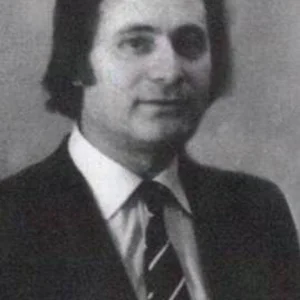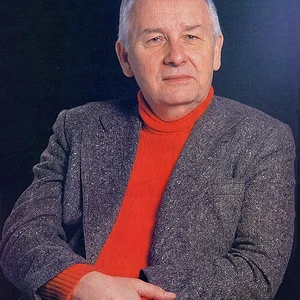

Henryk Górecki was a Polish composer and a major figure in contemporary music during the second half of the 20th century. Initially tied to the serialist avant-garde, he evolved toward a more stripped-down and spiritual style, achieving worldwide fame with his Third Symphony.
Henryk Górecki(1933 — 2010)
Henryk Górecki
Pologne
6 min read
Frequently asked questions
Key Facts
- Born on December 6, 1933, in Czernica, Poland
- Composed his Symphony No. 3 in 1976, known as the “Symphony of Sorrowful Songs”
- The 1992 recording of his Symphony No. 3 achieved exceptional worldwide success for a contemporary work
- A figure of the Polish avant-garde from the 1960s alongside Penderecki and Lutosławski
- Died on November 12, 2010, in Katowice, Poland
Works & Achievements
A symphony in three movements for soprano and orchestra, set to texts of mourning and prayer. In 1992 it became one of the best-selling contemporary works in the world.
A psalm for baritone, choir and orchestra commissioned by Cardinal Wojtyła (the future John Paul II) and premiered in his presence in Kraków.
A landmark orchestral work from his early avant-garde period, which brought him recognition at the Warsaw Autumn Festival.
A vast a cappella choral piece composed after the crackdown on the Solidarność movement, long banned from public performance.
Written for the Kronos Quartet, they reflect his pared-down style and his late international acclaim.
A motet for a cappella choir dedicated to the Virgin Mary, written for John Paul II's third visit to Poland; one of his most frequently sung choral pieces.
Anecdotes
In 1992, Górecki's Third Symphony, known as the “Symphony of Sorrowful Songs,” although composed back in 1976, became an unexpected worldwide hit: a recording with soprano Dawn Upshaw sold over a million copies and climbed the pop charts — something extremely rare for a work of contemporary classical music.
The second movement of this symphony sets a prayer carved by a young 18-year-old prisoner, Helena Wanda Błażusiakówna, on the wall of a Gestapo cell in Zakopane in 1944; in it she begged the Virgin Mary not to weep.
Deeply Catholic in communist Poland, Górecki composed his “Beatus Vir” in 1979 at the request of Cardinal Karol Wojtyła, who had become Pope John Paul II, to honor a Polish martyr; the work was premiered in the pope's presence during his first visit to Poland.
As a young man, Górecki suffered lifelong health problems stemming from a poorly treated childhood accident and from tuberculosis; he had to undergo numerous operations, which never dimmed his creative energy.
Górecki remained deeply attached to his native region of Silesia and the city of Katowice, refusing to settle in the West despite his international fame; he drew his inspiration from folk songs and the spirituality of his homeland.
Primary Sources
Mama, do not cry. Most pure Queen of Heaven, support me always.
Many of my close relatives died in the camps. I had a grandmother who was at Auschwitz. This symphony is not a requiem for the dead, but a song.
My beloved and chosen son, share your wounds with your mother.
Key Places
Village in Silesia where Henryk Górecki was born in 1933, into a modest family of a railway worker.
Major city in Silesia where Górecki studied and then taught at the Conservatory (Academy of Music), of which he was rector. He lived there and died there in 2010.
Institution where Górecki trained in composition and then taught, before resigning from its directorship in 1980 out of political solidarity.
Resort town in the Tatra Mountains where, in 1944, a young female prisoner inscribed on a wall of the Gestapo prison the prayer used in the second movement of the Symphony No. 3.
Polish capital that hosts the Warsaw Autumn Festival, a showcase of contemporary music that brought to light the Polish avant-garde composers, Górecki among them.
Typical Objects

Górecki wrote his music by hand on ruled music paper. His scores bear the marks of crossings-out and corrections that reveal his meticulous work.

The composer's working instrument, on which he tried out his harmonies and structured his works. Górecki often composed at the piano in his Katowice apartment.

The recording medium through which the Symphony No. 3 achieved its worldwide spread in 1992. The Nonesuch CD brought Górecki into the popular music charts.

Objects of Górecki's Catholic devotion, whose faith permeated works such as the Beatus Vir and the Symphony No. 3. The figure of the Virgin Mary is central to his inspiration.

Górecki collected and studied the traditional melodies of his native Silesia and the Polish mountains. These songs nourished his simple and moving melodic writing.

A small metal instrument giving the reference note, useful to the composer and conductor for tuning voices and instruments. A discreet but essential tool of the musician.
School Curriculum
Vocabulary & Tags
Key Vocabulary
Daily Life
Morning
Górecki lived in a modest apartment in Katowice, in industrial Silesia. In the morning, he liked the quiet to work on his scores, reading and reflecting at length before writing a single note.
Afternoon
The afternoon might be devoted to teaching at the Academy of Music, meeting with performers, or studying folk songs. A slow and demanding composer, he could spend weeks on a single passage.
Evening
In the evening, with his family, he listened to music, hosted musician friends, or attended concerts. Deeply attached to his loved ones, he shunned social life and travel.
Food
Górecki shared in traditional Polish fare: soups (*barszcz*, *żurek*), potatoes, cabbage, *pierogi*, and meats as means allowed. The cooking stayed simple in communist Poland, where shortages were frequent.
Clothing
He wore the plain, functional clothes of an Eastern European academic: a suit, shirt, sweater, and thick coat for the harsh Silesian winters. There was nothing ostentatious about this unassuming man.
Housing
He lived in an urban apartment in Katowice, a city shaped by coal mines and industry. He also owned a retreat in the countryside, near the mountains, where he loved to recharge.