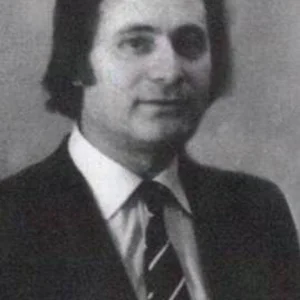

Alfred Schnittke (1934-1998) was a Soviet, later Russian, composer and a major figure of 20th-century music. A theorist and practitioner of “polystylism,” he blended Baroque and Romantic quotations with modern techniques in a dense, expressive body of work.
Alfred Schnittke(1934 — 1998)
Alfred Schnittke
Russie, Union soviétique
7 min read
Frequently asked questions
Key Facts
- Born on 24 November 1934 in Engels (Volga German Republic, USSR)
- Studied and then taught at the Moscow Conservatory from the 1960s onward
- Developed the concept of “polystylism” in the 1970s, blending different musical eras and styles
- Composed nine symphonies, several concerti grossi, and numerous Soviet film scores
- Emigrated to Germany in the 1990s and died in Hamburg on 3 August 1998
Works & Achievements
A manifesto-work of polystylism, blending quotations, jazz, march and sonic chaos. Its difficult premiere made it a symbol of nonconformist Soviet music.
Blends the Baroque (harpsichord, the concerto grosso form) with dissonant modernity. One of his most frequently performed scores worldwide.
An intimate work written in memory of his mother, of great emotional intensity. It illustrates his lyrical, grief-stricken side.
Masterful pages of his string repertoire, often premiered by Gidon Kremer. They concentrate the tension between tonality and atonality.
A sacred work set to the Latin liturgical text, marked by bells and a funereal mood. It reveals his spiritual quest within an atheist state.
Composed just before his first major stroke, dark and foreboding of death. It has become a cornerstone of the contemporary viola repertoire.
A vast symphonic cycle in which he explores the sacred, quotation and collapse; the Ninth, written while ill, had to be reconstructed. They crown his orchestral output.
Scores for Soviet cinema that financed his career and fed his polystylism. A laboratory where he blended every style.
Anecdotes
Born in Engels, in the Volga German Republic, Schnittke grew up in a family where both German and Russian were spoken: his father was a Jew of German origin born in Frankfurt, and his mother was a Volga German. This cultural blending deeply nourished his art of “polystylism,” in which different musical languages coexist within a single work.
To earn a living under the Soviet regime, Schnittke composed the music for more than sixty films. Far from looking down on this bread-and-butter work, he drew from it the idea of mixing styles: he often reused themes written for the cinema in his “serious” works.
From 1985 on, Schnittke suffered a series of strokes; though declared clinically dead on several occasions, he nevertheless kept composing, sometimes with his left hand. His Symphony No. 9, written almost illegibly after his attacks, had to be deciphered and reconstructed by other musicians.
His works were long frowned upon by the Soviet authorities, who deemed his music too “formalist” and Western. His Symphony No. 1 could only be premiered in 1974 in Gorky, far from Moscow, because no major hall in the capital dared to program it.
Having emigrated to Germany in 1990, Schnittke became one of the most performed living composers in the world during the 1980s and 90s, even as illness weakened him. Within a few years his reputation shifted from that of a banned outsider to that of an international celebrity.
Primary Sources
The polystylistic method broadens the range of expressive means; it makes it possible to integrate into music elements of the “low” and the “high,” the banal and the sublime.
I set down the hopeless goal of my life: to establish a unity between serious music and light music, even if I should break my neck doing it.
Film music taught me a great deal: you are forced to handle very different styles quickly, and that is where my idea of polystylism came from.
Key Places
Schnittke's birthplace, on the Volga, the heart of a German-speaking community in the USSR. This multicultural setting shaped his dual identity.
Where the teenage Schnittke discovered the musical life of post-war Central Europe. A decisive early training before the Moscow Conservatory.
Where he studied composition and later taught instrumentation. The center of Soviet musical life, where his style took shape.
The city where his Symphony No. 1 was premiered in 1974, far from Moscow for lack of official approval. A symbol of his marginalization under the regime.
His place of exile from 1990, where he taught at the Hochschule für Musik and where he died in 1998. The final stage of his international recognition.
A prestigious Moscow necropolis where Schnittke is buried alongside great figures of Russian culture. His grave has become a place of remembrance.
Typical Objects

A central instrument in his work, for which he wrote concertos and sonatas, often entrusted to Gidon Kremer. There the violin carries the expressive tension between lyricism and dissonance.

A Baroque instrument that he reintroduced into modern works such as the *Concerto Grosso No. 1*. Its old-fashioned timbre creates an effect of quotation and a collision of eras.

Schnittke wrote his music by hand, and his final scores, composed after his strokes, are almost illegible. They bear witness to his physical struggle to keep composing.

The piano runs throughout his work, from virtuoso playing to subverted sonorities. It serves both as a tool for composition and as experimental sonic material.

A symbol of his work as a composer for Soviet cinema, a source of income and a stylistic laboratory. More than sixty films featured his music.

Bell sonorities, charged with Orthodox and funereal resonance, recur in his symphonies and his *Requiem*. They signal the sacred and death within his musical language.
School Curriculum
Vocabulary & Tags
Key Vocabulary
Daily Life
Morning
Schnittke worked a great deal at home, at his composing desk, filling up scores by hand. Mornings were often devoted to writing, in the quiet of his Moscow apartment.
Afternoon
The afternoon might be taken up by bread-and-butter obligations: composing film music, teaching instrumentation at the Moscow Conservatory, meeting with performers and directors. This commissioned work structured his schedule.
Evening
Evenings were given over to concerts, rehearsals, and circles of nonconformist musicians (Kremer, Rozhdestvensky, Gubaidulina, Denisov). There they played and discussed music that was often left out of the official programmes.
Food
His daily life followed the ordinary routine of urban Soviet intellectuals: simple meals, food subject to shortages and queues. After he emigrated to Germany, his material everyday life changed dramatically.
Clothing
Schnittke wore the sober, unremarkable attire of the Soviet intelligentsia: dark suit, shirt, an overcoat in winter. Nothing extravagant: his image was that of a discreet and focused man.
Housing
He lived mainly in urban apartments, in Moscow and then, from 1990 onward, in Hamburg. After his strokes, illness gradually confined his living space to home and to medical care.