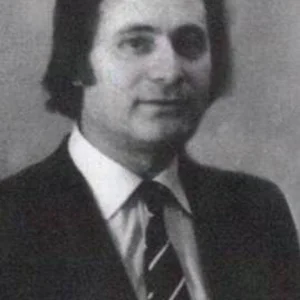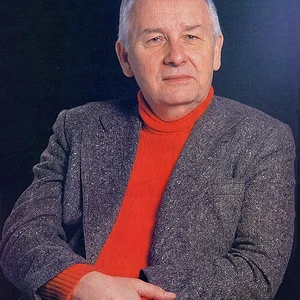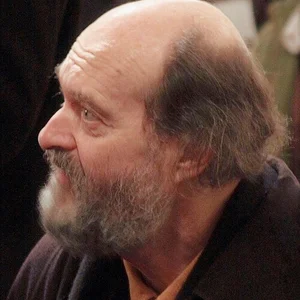

Arvo Pärt is an Estonian composer born in 1935, one of the major figures of contemporary music. After an avant-garde period, he invented the “tintinnabuli” style, founded on simplicity, resonance, and sacred inspiration. He is one of the most frequently performed living composers in the world.
Arvo Pärt(1935 — ?)
Arvo Pärt
Autriche, Estonie, Union soviétique
6 min read
Frequently asked questions
Famous Quotes
« I could compare my music to white light, which contains all colours. Only a prism can divide the colours and make them appear; this prism could be the spirit of the listener.»
Key Facts
- Born on 11 September 1935 in Paide, Estonia
- Composed Nekrolog (1960), the first Estonian twelve-tone work, criticized by the Soviet regime
- Invented the tintinnabuli style in 1976 with the piano piece Für Alina
- Composed major works such as Tabula Rasa, Fratres, and Spiegel im Spiegel (1977-1978)
- Emigrated in 1980, settled in Berlin, then returned to Estonia; a global figure of contemporary sacred music
Works & Achievements
A work for piano, choir and orchestra, openly religious, which defied the Soviet regime and preceded his long period of silence.
A short piano piece that inaugurated the “tintinnabuli” style, founded on extreme simplicity.
A piece arranged for many instrumental ensembles, which became one of Pärt's most frequently performed works.
A double concerto for violins and string orchestra, the pinnacle of the tintinnabuli style and a major international success.
A tribute to the English composer, for string orchestra and bell, at once solemn and luminous.
A meditative piece for a melodic instrument and piano, of great gentleness, very often used in film.
A vast choral work recounting the Passion of Christ according to Saint John, a milestone of his sacred music.
A choral and orchestral work of liturgical inspiration, among his most famous spiritual pages.
Anecdotes
In 1968, after composing his work *Credo*, Arvo Pärt entered a long period of creative silence lasting nearly eight years. Dissatisfied with the avant-garde and pursuing a spiritual quest, he studied Gregorian chant and Renaissance polyphony before completely reinventing his musical language.
It was in 1976, with a short piano piece titled *Für Alina*, that Pärt unveiled his “tintinnabuli” style. The word comes from the Latin *tintinnabulum* (little bell): the music sounds like ringing bells, with very few notes but great depth.
In 1980, under pressure from the Soviet regime that monitored his religious faith and his sacred music, Pärt left Estonia with his family. He first settled in Vienna, then in Berlin, and would not return to live permanently in his homeland until after independence.
For several consecutive years, Arvo Pärt was the most performed living composer in the world according to international rankings, ahead of all other creators of contemporary music. His works are in demand in concert halls around the globe.
A deeply devout member of the Orthodox Church, Pärt says he seeks silence and prayer in his music. He often compares a single note played truly to a flower: in his view, one must know how to step aside to let the sound exist.
Primary Sources
I have discovered that it is enough when a single note is beautifully played. This one note, or a moment of silence, comforts me.
Tintinnabuli is an area I sometimes wander into when I am searching for answers — in my life, my music, my work.
Everything that is unimportant falls away. That is what tintinnabuli is. I work with very few elements — one voice, two voices.
Key Places
Town in central Estonia where Arvo Pärt was born in 1935.
Estonian capital where Pärt studied at the Conservatory and worked as a sound engineer for the national radio.
First stop on Pärt's journey into exile after leaving Estonia in 1980.
City where Pärt settled for the long term during his exile and composed much of his best-known work.
Coastal village where Pärt returned to live and where the Arvo Pärt Centre, which preserves his archives, was inaugurated in 2018.
Typical Objects

The instrument on which Pärt composes and experiments, notably for the famous miniature *Für Alina*. The tintinnabuli was born here from a few isolated notes left to resonate.

Sheets of music paper on which Pärt notes his often stripped-down works, sometimes reduced to a few notes per bar. His manuscripts are now preserved and studied.

A small bell that gave its name to the *tintinnabuli* style. Pärt seeks to imitate the resonance of bells, whose harmonics overlap and float in the air.

A sacred image venerated in the Orthodox Church, to which Pärt belongs. His faith deeply nourishes his sacred music and his quest for silence and prayer.

A recording released by the German label ECM from 1984 onward, which spread Pärt's music throughout the world. The minimalist cover art has become inseparable from his image.

An ensemble of voices for which Pärt composed much of his work, often on religious texts in Latin or Church Slavonic. The human voice lies at the heart of his musical language.
School Curriculum
Vocabulary & Tags
Key Vocabulary
Daily Life
Morning
Pärt is known for his need for calm and silence. The morning of a 20th-century composer might begin with reading, prayer for an Orthodox believer like himself, then work at the desk or piano to jot down a few musical ideas.
Afternoon
The afternoon is devoted to composition itself: searching for the right note, writing on the score, trying things out at the piano. Pärt works slowly and demandingly, crossing out a great deal and paring his music down to the essential.
Evening
The evening might be spent listening to early music — Gregorian chant, Renaissance polyphony — which feeds his inspiration, or in rehearsals and concerts when one of his works is being premiered.
Food
In the Soviet era, the Estonian diet relied on black rye bread, potatoes, herring, dairy products and soups. Food was sometimes scarce and queues were common in the state-run shops.
Clothing
In Soviet Estonia, people dressed plainly, often in clothes made in state factories: thick coats for the harsh Baltic winters, woollen sweaters, simple jackets. Pärt is happy to appear dressed discreetly and without fuss.
Housing
In the USSR, families generally lived in apartments in state-built collective housing blocks, often small and shared. After his exile, Pärt lived in urban homes in Vienna and then Berlin, before returning to the Estonian coast.