 flip
flipSesame and Honey Itria
Sesame and Honey Itria
Why this dish? During the Hephaesteia festivals celebrated in his honor at Athens, cakes were offered to the god and feasts were held. Sesame and honey — sweet offerings par excellence — accompanied weddings and divine festivals. A festive treat for the god honored alongside Athena as protector of the fire arts.
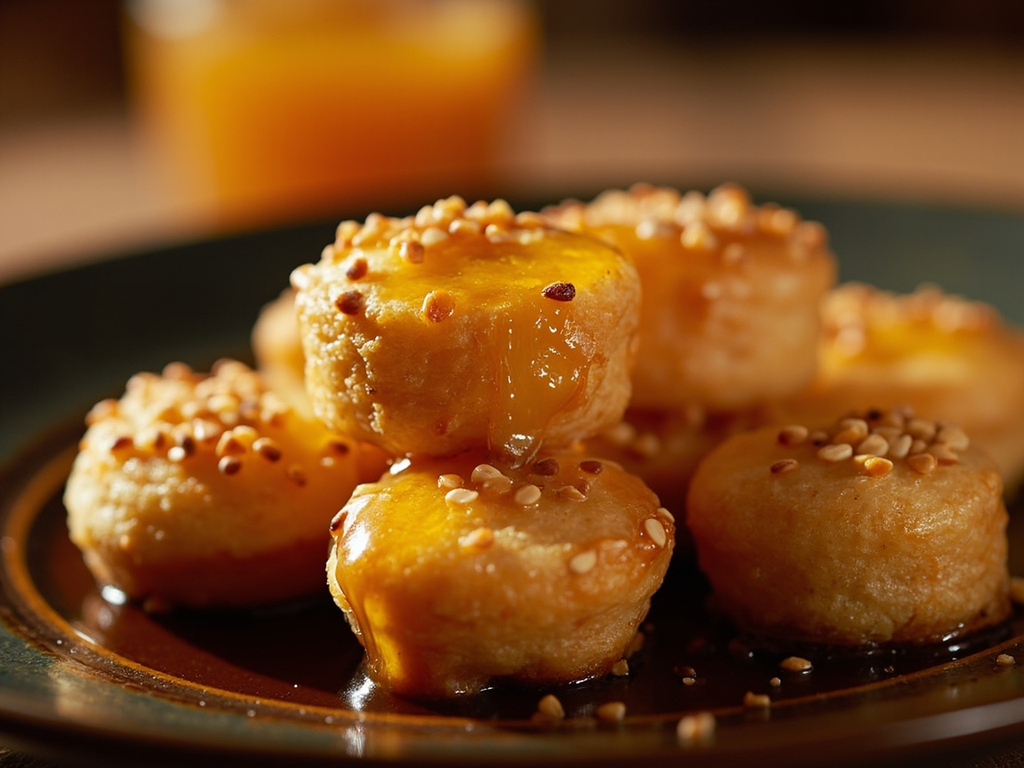
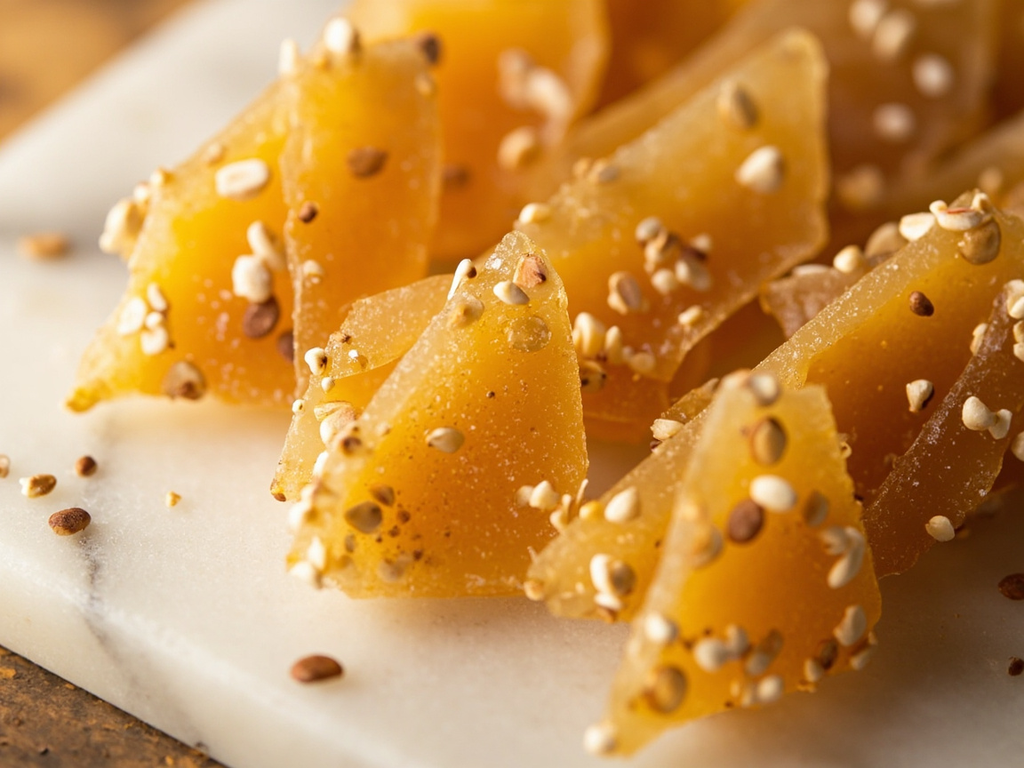
Thin crispy sesame wafers bound with hot honey, claimed ancestors of Greek pasteli. Toast the sesame, drown it in boiling honey, spread, and let set. Sweet, crunchy, fragrant — the banquet confection.
When the gods feast in my honor, it is not my lameness they look at, but what my hands can do — and my hands also know honey. Heat the honey until it sings, throw in the toasted sesame, stir quickly, spread on an oiled stone before it hardens. Cut them while they are warm, mortal, for once cold they resist like tempered bronze. Serve them with the wine mixed with water: this is what sweetens the most mocking tongues.
- •Sesame seeds — a good measure (crunchy base)
- •Honey (thyme honey preferably) — enough to coat (binder and sweetness)
- •Olive oil — a drizzle (non-stick)
Sesame and Honey Itria
Thin crispy sesame wafers bound with hot honey, claimed ancestors of Greek pasteli. Toast the sesame, drown it in boiling honey, spread, and let set. Sweet, crunchy, fragrant — the banquet confection.
Why this dish? During the Hephaesteia festivals celebrated in his honor at Athens, cakes were offered to the god and feasts were held. Sesame and honey — sweet offerings par excellence — accompanied weddings and divine festivals. A festive treat for the god honored alongside Athena as protector of the fire arts.
When the gods feast in my honor, it is not my lameness they look at, but what my hands can do — and my hands also know honey. Heat the honey until it sings, throw in the toasted sesame, stir quickly, spread on an oiled stone before it hardens. Cut them while they are warm, mortal, for once cold they resist like tempered bronze. Serve them with the wine mixed with water: this is what sweetens the most mocking tongues.
Ingredients (period version)
- Sesame seeds — a good measure (crunchy base)
- Honey (thyme honey preferably) — enough to coat (binder and sweetness)
- Olive oil — a drizzle (non-stick)
Ingredients
- Sesame seeds — 200 g (crunchy base)
- Thyme honey (or any blossom honey) — 150 g (binder and sweetness)
- Olive oil — a little for the tray (non-stick)
- Pinch of salt + zest (optional, not ancient) — optional (contrast)
Method
- Toast the sesame seeds dry in a pan until lightly colored and fragrant (watch out, it goes fast).
- In a saucepan, heat the honey over medium heat until it actively simmers (it darkens slightly and froths).
- Pour the hot sesame into the honey, mix vigorously for 1 to 2 minutes to coat well.
- Immediately spread on an oiled tray or stone (or parchment paper), flatten to 5 mm with an oiled spatula.
- Let cool for 5 minutes, then pre-cut into diamonds or rectangles. Let harden completely before separating.
How it was made : The Greeks knew many honey and sesame cakes (itria, sēsamē), served at weddings, festivals, and the symposion. Without sugar — unknown — honey was the only sweetener. Athenaeus mentions several varieties. The exact ancient recipe is not preserved in detail, hence a plausible reconstruction inspired by the pasteli still made in Greece.
The contemporary twist : Cut into small diamond "ingots" and dust with black sesame powder — gold and iron bars for the blacksmith's table.
Sources : Athenaeus of Naucratis, The Learned Banqueters, book XIV (cakes, plakous, sēsamē) · A. Dalby, Siren Feasts: A History of Food and Gastronomy in Greece (1996)
Hephaestus · Charactorium